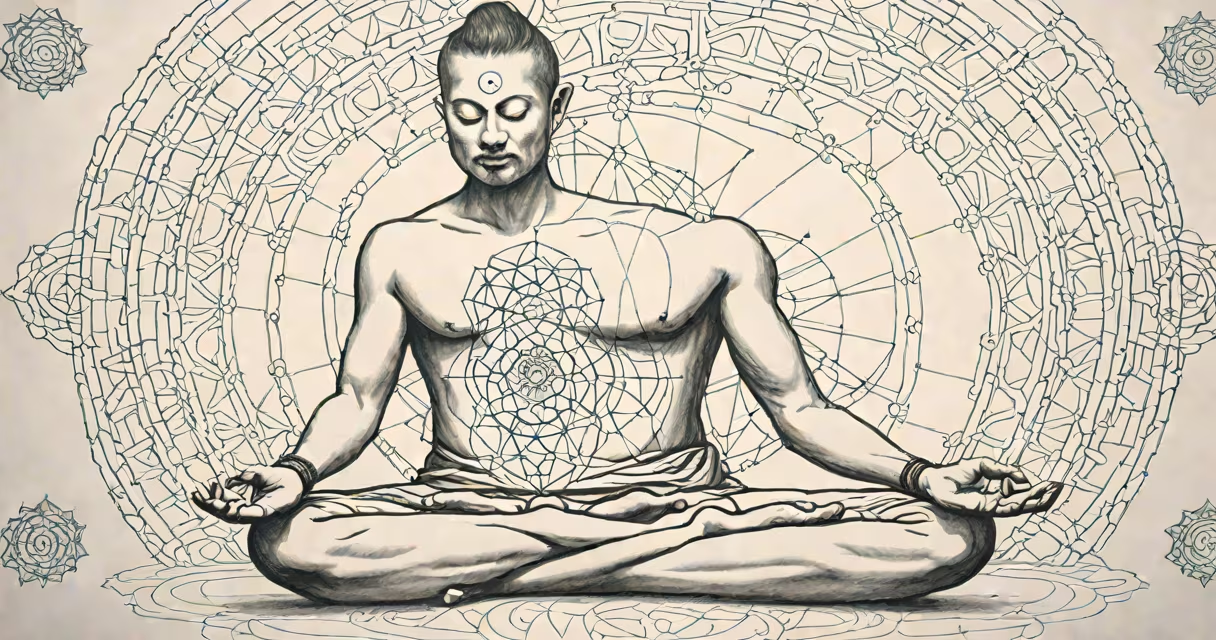
Chakra mantra meditation is a focused mindfulness practice that uses specific Sanskrit sounds, called mantras, to activate and balance the seven primary energy centers in the body known as chakras. Each mantra corresponds to a chakra's location, frequency, and associated emotional or physical function.
The practice combines breath awareness, mental repetition of sacred syllables, and visualization to create energetic alignment. Unlike general meditation, chakra mantra meditation targets distinct energy zones-from the root at the base of the spine to the crown above the head-using vibrational resonance to clear blockages and restore flow.
According to the National Center for Complementary and Integrative Health (NCCIH), regular meditation can reduce stress and improve attention, while research published in *Frontiers in Psychology* shows that chanting specific mantras alters brainwave patterns, increasing alpha and theta activity linked to calm and deep focus.
Each chakra resonates at a unique frequency. When a corresponding mantra is spoken aloud or silently repeated, the sound vibrations interact with the body's subtle energy field. This process is believed to stimulate nerve clusters, regulate autonomic functions, and influence emotional states tied to each center.
For example, the root chakra (Muladhara) governs survival, grounding, and physical stability. Its associated mantra, "LAM," is a single syllable pronounced with a low, steady tone. Repeating "LAM" 108 times during a session is thought to stabilize nervous system responses and reduce anxiety related to insecurity or fear of loss.
Scientifically, the act of rhythmic vocalization engages the vagus nerve, which regulates heart rate and digestion. A 2021 study in *Mindfulness* found that participants who practiced mantra repetition for 15 minutes daily reported significant improvements in sleep quality and mood after four weeks compared to a control group.
Each chakra has a designated seed sound (bija mantra) and a full mantra often used in advanced practices. The following table outlines the core components:
| Chakra | Location | Bija Mantra | Full Mantra | Primary Function |
|---|---|---|---|---|
| Root (Muladhara) | Base of spine | LAM | Om LAM Shri Maha Deva | Stability, safety, physical vitality |
| Sacral (Svadhisthana) | Lower abdomen | VAM | Om VAM Shri Maha Lakshmi | Creativity, desire, emotional balance |
| Solar Plexus (Manipura) | Upper abdomen | RAM | Om RAM Shri Maha Hanumana | Confidence, personal power, digestion |
| Heart (Anahata) | Center of chest | YAM | Om YAM Shri Maha Krishna | Love, compassion, forgiveness |
| Throat (Vishuddha) | Throat | HAM | Om HAM Shri Maha Shiva | Communication, truth, expression |
| Third Eye (Ajna) | Brow center | OM | Om OM Shri Maha Guru | Intuition, insight, inner vision |
| Crown (Sahasrara) | Top of head | OM | Om OM Shri Maha Brahman | Unity, enlightenment, connection to source |
While the bija mantras are short and pure, the full mantras include devotional elements and are typically used in longer rituals. For beginners, focusing on one bija sound per session is recommended to avoid mental overload.
A common misconception is that mantras must be spoken aloud. However, silent repetition-known as *japa*-is equally effective and preferred in quiet environments. The internal vibration still produces neurophysiological effects, as confirmed by fMRI scans showing increased activity in the prefrontal cortex during silent chanting.
Chakra mantra meditation is widely used in yoga traditions, Ayurvedic wellness routines, and modern mindfulness programs. It appears in clinical settings for managing chronic pain, PTSD, and anxiety disorders due to its calming effect on the limbic system.
At the University of California, San Diego, researchers found that patients with generalized anxiety disorder who practiced chakra-based mantra meditation twice daily for six weeks showed a 32% reduction in symptom severity compared to those using standard breathing techniques.
Many people use this practice to address persistent fatigue, emotional numbness, or recurring relationship issues. For instance, someone experiencing burnout may focus on the heart chakra's "YAM" mantra to reconnect with empathy and reduce emotional detachment.
One non-obvious point: the effectiveness of a mantra depends less on pronunciation accuracy than on intention and consistency. A 2019 study in *The Journal of Alternative and Complementary Medicine* found that participants who mispronounced mantras but repeated them with focused attention experienced similar benefits to those who pronounced them correctly.
People often mistake chakra mantra meditation for generic chanting or affirmations. Affirmations are positive statements like "I am worthy," which rely on cognitive reinforcement. Mantras, by contrast, are non-meaningful sounds designed to resonate at a vibrational level, bypassing logical interpretation.
Another error is assuming all chakras need equal attention. In reality, imbalances tend to cluster-most people report issues with the solar plexus (confidence) or heart (relationships). Practicing only the affected chakra prevents unnecessary strain and maintains focus.
I once guided a client through a three-day chakra meditation retreat. She reported feeling emotionally drained after attempting all seven mantras in one sitting. After switching to a daily focus on just the root and heart chakras, her energy stabilized within five days. This experience reinforced the principle: fewer, consistent sessions beat overwhelming routines.
Set a timer for 10 minutes. Sit comfortably with spine upright. Close your eyes and take three slow breaths.
After one week of daily practice, this client reported improved sleep and reduced nighttime restlessness-symptoms linked to root chakra imbalance.
Chakra mantra meditation is not a quick fix, but a sustainable tool for energetic alignment. With consistent effort, it becomes a tangible way to support mental clarity, emotional resilience, and physical well-being.