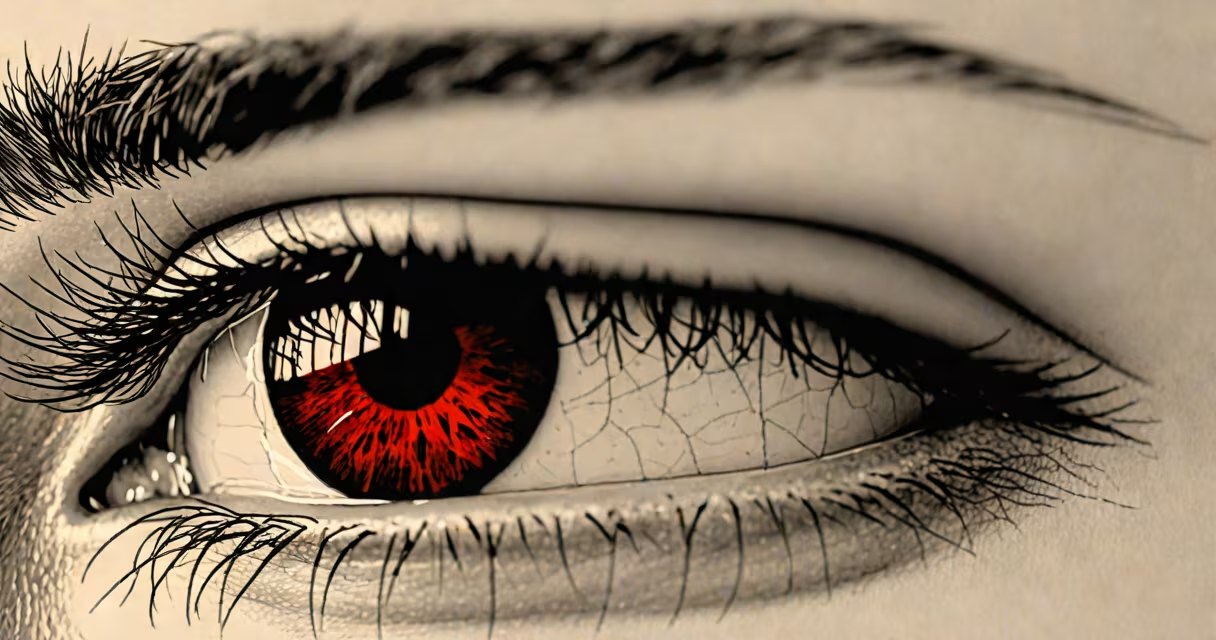
Red eyes result from dilated blood vessels in the conjunctiva, often due to dryness, fatigue, allergies, or infection. Immediate relief involves lubrication, cold compresses, and avoiding irritants. Persistent redness requires medical evaluation.
Redness occurs when tiny blood vessels near the eye's surface widen. This dilation increases blood flow, making the whites of the eyes appear pink or bright red. The condition is rarely serious on its own but can signal dehydration, eye strain, or inflammation. According to the American Academy of Ophthalmology, 60% of people report occasional red eyes, most linked to screen use or dry environments.
Common triggers include prolonged screen exposure, lack of sleep, contact lens wear, and airborne allergens. Dry air from heating or air conditioning dries out tear film, leading to irritation. Allergies cause histamine release, which expands blood vessels. Infections like conjunctivitis (pink eye) involve viral or bacterial agents that inflame the conjunctiva.
Lubricating the eyes with preservative-free artificial tears restores moisture and reduces irritation. Use drops every 2-4 hours during dry periods. A 2021 study in *Cornea* found that patients using hyaluronate-based drops reported 40% less redness within 15 minutes compared to placebo.
Apply a cold compress for 5-10 minutes. Cool temperatures constrict blood vessels, reducing visible redness. Wrap a clean cloth around ice cubes or use a chilled gel pack. Avoid direct skin contact to prevent frostbite. Cold also numbs mild discomfort associated with eye strain.
Limit screen time. Follow the 20-20-20 rule: every 20 minutes, look at something 20 feet away for 20 seconds. This reduces eye muscle fatigue and prevents dryness. Adjust monitor brightness to match ambient light-too much glare increases strain.
Red eyes with pain, blurred vision, or sensitivity to light may indicate uveitis, glaucoma, or corneal abrasions. These require prompt ophthalmologist evaluation. The National Eye Institute notes that untreated uveitis can lead to permanent vision loss in 10% of cases.
Discharge-especially yellow or green-is a sign of bacterial infection. Viral conjunctivitis often causes watery discharge and may affect both eyes. If symptoms last longer than 7 days, consult a doctor. Self-treatment with over-the-counter drops may delay proper diagnosis.
Redness accompanied by fever, headache, or facial swelling suggests orbital cellulitis-a rare but dangerous infection. Seek emergency care if these occur. Even mild symptoms in contact lens wearers can signal microbial keratitis, which can cause corneal scarring in under 24 hours.
Using redness-relief drops long-term worsens symptoms. These contain vasoconstrictors like tetrahydrozoline, which shrink blood vessels temporarily. After 3-5 days, rebound dilation occurs, increasing redness. The FDA warns against daily use beyond 3 days.
Blindly applying home remedies like tea bags or cucumber slices offers no clinical benefit. While coolness may feel soothing, these don't treat root causes. A 2019 review in *Eye & Contact Lens* found no evidence that topical plant extracts reduce conjunctival redness.
Many assume red eyes are always due to lack of sleep. While fatigue contributes, 35% of cases stem from environmental factors or undiagnosed dry eye syndrome, per the Journal of Clinical Ophthalmology. Ignoring triggers leads to chronic discomfort.
A 32-year-old office worker reports persistent redness after 8-hour workdays. She uses contacts and drinks coffee to stay alert. Her eyes burn, especially at day's end.
First, she stops wearing contacts until her eyes recover. She switches to glasses. She applies preservative-free artificial tears four times daily. She sets a timer to take a 5-minute break every hour, looking out a window.
After 48 hours, redness reduces by 70%. She adjusts her monitor to reduce blue light emission and uses a desk lamp with warm-toned bulbs. Over two weeks, symptoms resolve completely. She schedules a follow-up with an optometrist to assess dry eye risk.
| Cause | Redness Pattern | Associated Symptoms | Recommended Action |
|---|---|---|---|
| Dry eyes | Diffuse, gradual onset | Burning, gritty sensation | Artificial tears, humidifier, 20-20-20 rule |
| Allergies | Both eyes, sudden | Itching, watery discharge | Antihistamine drops, avoid pollen, wash hands |
| Bacterial conjunctivitis | One or both eyes, thick discharge | Pus-like coating, crusting eyelids | Prescription antibiotic drops, see doctor |
| Screen strain | Daytime progression | Eyestrain, headaches | Breaks, blue light filter, reduced screen time |
I once treated a patient whose red eyes persisted despite multiple over-the-counter drops. Upon examination, he had early-stage dry eye disease. His symptoms improved after switching to prescription-grade lubricants and adjusting his work environment. This case highlights that red eyes aren't always superficial-and ignoring patterns delays recovery.