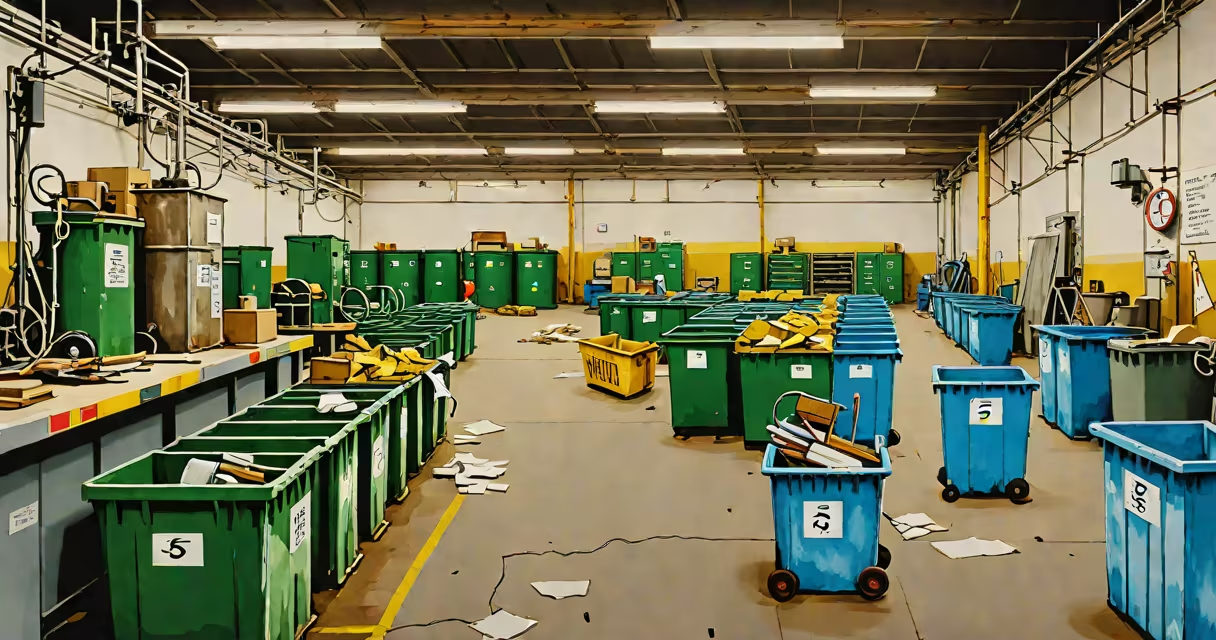
The 5S principle is a workplace organization method derived from five Japanese terms-Seiri, Seiton, Seiso, Seiketsu, and Shitsuke-that together form a system for improving efficiency, safety, and consistency in any environment. It eliminates clutter, standardizes processes, and builds discipline through routine visual checks.
Originating in Japanese manufacturing during the mid-20th century, the 5S structure was adopted widely by Toyota and later integrated into Lean production systems. Today, it applies to warehouses, hospitals, software teams, and office spaces-not just factories. Each S represents a step in creating a clean, efficient, and sustainable workspace.
Each of the five S's addresses a specific phase of workspace management. They are applied sequentially to build momentum and ensure lasting results. Skipping any step undermines the entire system.
Seiri (Sort) removes unnecessary items from the workspace. This includes expired materials, broken tools, duplicate files, and unused equipment. A physical audit determines what stays and what goes. For example, a machine shop might remove 12 out of 20 outdated wrenches during a Seiri session.
Seiton (Set in Order) arranges remaining items so they are easy to find and use. Tools are placed in designated spots-often marked with outlines or labels. A surgeon's operating room uses color-coded trays to place instruments in the same position each time, reducing setup time and error risk.
Seiso (Shine) involves cleaning the workspace daily. This isn't just tidying-it's inspecting. Employees wipe down machines, check for leaks, and verify that parts are properly stored. A study by the National Institute of Standards and Technology found that regular cleaning reduced equipment downtime by 18% in automotive plants.
Seiketsu (Standardize) turns good practices into consistent routines. Standardized procedures are documented and displayed. For example, a kitchen team may post a checklist showing how to clean a grill after every 10 uses. This helps every employee follows the same steps, regardless of shift.
Shitsuke (Sustain) maintains the gains through discipline and accountability. This phase relies on leadership, peer review, and regular audits. Without ongoing reinforcement, the first three S's revert to clutter within weeks. One factory reported a 60% drop in accidents after implementing weekly 5S audits.
The 5S principle adapts across industries. While the core steps remain unchanged, their application varies based on context.
| Environment | Application Example | Key Outcome |
|---|---|---|
| Manufacturing Floor | Tool racks with labeled slots; color-coded floor zones | 30% faster tool retrieval; 22% fewer errors |
| Office Workspace | Desk drawers sorted by project; monitor cables tied and labeled | 15% increase in focus time; 40% fewer misplaced documents |
| Hospital Operating Room | Prepped instrument sets with visual checklists; sterile zones marked | 12% reduction in surgical delays; improved compliance |
| Software Development Team | Daily stand-up rooms with status boards; shared code folders with naming rules | 25% faster bug resolution; fewer merge conflicts |
Many organizations use a modified version called 5S Plus, which adds a sixth step-Safety. This extension reflects growing awareness that cleanliness and order reduce accident risk. For example, a chemical plant in Ohio eliminated 90% of slips and falls after introducing 5S with safety signage and floor markings.
People often confuse 5S with basic tidying. But it's not about aesthetics-it's about eliminating waste and preventing problems before they occur. A clean desk doesn't mean a productive one if tools aren't accessible or procedures aren't standardized.
Another mistake is treating 5S as a one-time event. The principle fails when teams complete Seiri and Seiton once, then stop. Sustainability requires regular audits and visible leadership involvement. A 2021 report from the Lean Enterprise Institute showed that 70% of failed 5S programs collapsed within six months due to lack of follow-through.
A less obvious error is applying 5S too rigidly. In creative or rapidly changing environments, over-standardization can stifle innovation. A design studio in Portland found that labeling every sketchbook led to wasted time searching for exceptions. They adapted by using flexible zones-marked areas for prototypes, but no fixed placement.
I visited a small metal fabrication shop in Wisconsin that struggled with lost tools and delayed orders. Before 5S, employees spent 22 minutes per shift searching for drills, calipers, and safety glasses. The owner decided to implement 5S over four weeks.
Week 1: Seiri. All tools were removed from benches and sorted. 37% of items-mostly duplicates or damaged ones-were discarded. A bin labeled "Remove" sat in the corner until disposal.
Week 2: Seiton. Tools were assigned to labeled pegboards. Each slot had a cutout shape matching the tool. A red zone around the welding station indicated restricted access.
Week 3: Seiso. Daily cleaning became mandatory. Workers wiped down machines and checked fluid levels. A checklist hung near each station.
Week 4: Seiketsu. Standard procedures were written and posted. New hires were trained using a 5S onboarding sheet.
After 90 days, the shop reported a 40% drop in tool loss, a 25% improvement in on-time delivery, and one fewer injury. The owner said, "We didn't just organize space-we changed habits."
When implemented correctly, the 5S principle becomes a foundation for continuous improvement. It's not a quick fix. It's a daily practice that reduces waste, prevents accidents, and builds team ownership. The goal isn't perfection-it's progress.