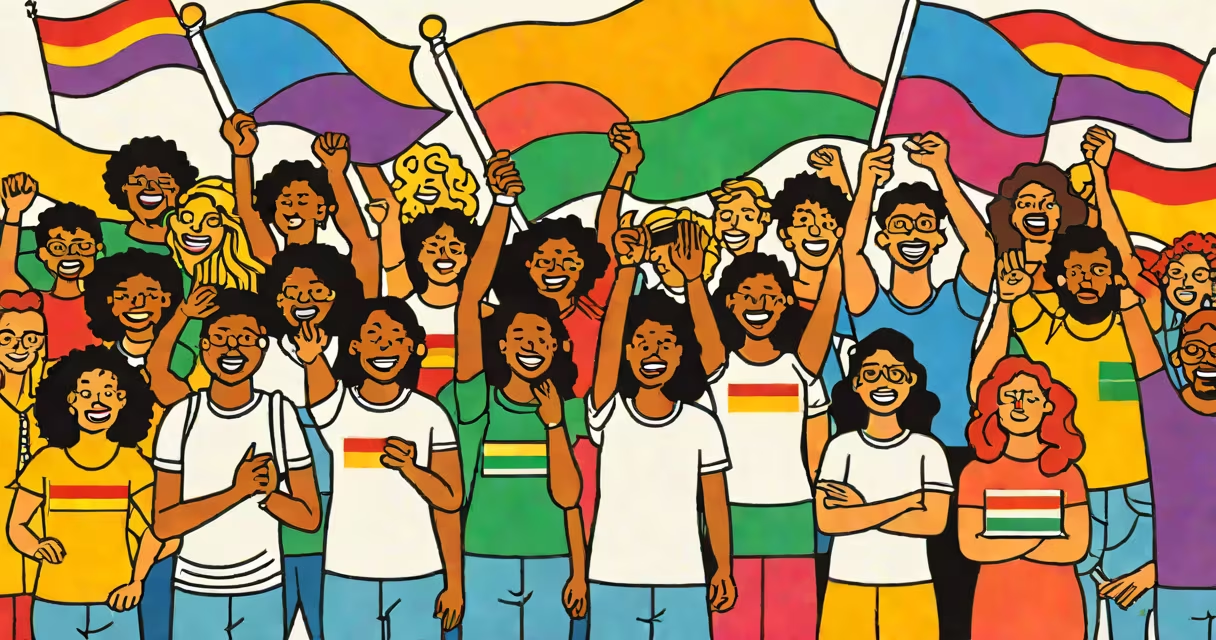
The "I" in LGBTQIA stands for intersex, referring to individuals born with physical sex characteristics that don't fit typical definitions of male or female. The "A" stands for asexual, describing people who experience little or no sexual attraction. Together, they extend the acronym's scope to include identities often overlooked in mainstream discussions of gender and sexuality.
Intersex people may have chromosomes, gonads, or genitalia that differ from typical male or female patterns. These differences can be visible at birth or discovered later in life. According to the Intersex Human Rights Australia, approximately 1 in 2,000 babies are born with intersex traits. This statistic underscores that intersex is not rare, yet it remains underrepresented in public discourse.
Asexuality is a sexual orientation characterized by a lack of sexual attraction to others. It is not the same as celibacy, which is a choice to abstain from sex. Asexuality is a valid identity, and many asexual people form meaningful romantic relationships. The Asexual Visibility and Education Network (AVEN) reports that around 1% of adults identify as asexual, though rates may be higher among younger populations due to increased awareness.
Adding "I" and "A" to the original LGBTQ acronym acknowledges diversity beyond gender and sexual orientation. Without them, the community risks excluding people whose identities don't align with normative assumptions about sex, gender, or desire.
For example, a person assigned female at birth may be intersex and have XY chromosomes. They may also identify as a woman and be attracted to men. Their identity includes aspects of both intersex and heterosexual, but the inclusion of "I" ensures their biological reality is recognized. Similarly, an asexual person may be gay or bisexual for romantic attraction but not sexually attracted to anyone. Their identity requires the "A" to be fully represented.
These additions reflect a shift toward intersectional inclusivity. The Human Rights Campaign notes that LGBTQIA+ communities are most effective when they center the experiences of those historically marginalized within the movement. Including intersex and asexual people strengthens the collective voice.
One frequent misunderstanding is that intersex is a third gender. It is not. Intersex refers to variations in sex characteristics, not gender identity. A person can be intersex and identify as male, female, non-binary, or another gender. The distinction between sex (biological traits) and gender (identity and expression) is critical.
Another misconception is that asexuality means a lack of emotional connection. This is false. Asexual people can form deep romantic bonds, engage in long-term partnerships, and experience love. Some identify as aromantic (lack of romantic attraction), while others are romantically inclined. The spectrum of asexual experience is broad and varied.
Some assume that adding letters to LGBTQIA dilutes the acronym's meaning. But research from the Williams Institute shows that inclusive terminology improves mental health outcomes for LGBTQ+ youth. When young people see themselves reflected in symbols and language, they report lower rates of depression and suicidal ideation.
The expanded acronym includes multiple identities, each with distinct meanings:
| Letter | Meaning | Example |
|---|---|---|
| L | Lesbian | Woman attracted to women |
| G | Gay | Man attracted to men (commonly used broadly) |
| B | Bisexual | Person attracted to more than one gender |
| T | Transgender | Person whose gender identity differs from assigned sex at birth |
| Q | Queer or Questioning | Identity label reclaimed by many; questioning refers to exploring identity |
| I | Intersex | Individual with sex characteristics that do not fit typical definitions |
| A | Asexual | Person who experiences little or no sexual attraction |
Each letter represents a distinct dimension of identity. The inclusion of "I" and "A" doesn't replace earlier letters-it adds layers of understanding. For instance, a transgender man who is asexual and intersex may go through all three aspects of his identity simultaneously, requiring support systems that recognize this complexity.
In 2021, I attended a Pride event in Portland where a panel included an intersex activist and an asexual speaker. Both were visibly nervous at first, but as the conversation unfolded, audience members began asking thoughtful questions. One attendee asked, "Why include intersex if we're talking about gender?" The speaker responded, "Because sex and gender are different. Ignoring intersex people erases half of the population's biological diversity."
Later, a participant shared that they had only recently learned about asexuality and realized it explained their lifelong disinterest in sex. They said, "I thought I was broken. Now I feel seen." This moment illustrated how accurate labeling fosters belonging.
Another example comes from healthcare policy. In 2022, the American Medical Association updated its guidelines to include intersex care standards and asexual patient needs. The AMA emphasized that providers must avoid pathologizing intersex bodies and must screen for mental health concerns in asexual patients, who are often misdiagnosed with disorders of desire.
Language shapes perception. When organizations use LGBTQIA+ instead of LGBTQ, they signal openness to diversity. A 2023 study published in the journal *Sexual and Relationship Therapy* found that workplaces using inclusive language reported 34% higher retention rates among LGBTQIA+ employees compared to those using shortened acronyms.
Media representation affects public understanding. The Netflix series *Heartstopper* features a character who identifies as asexual. His storyline focuses on friendship, emotional intimacy, and going through social expectations-not on sexual activity. This portrayal helped normalize asexuality for millions of viewers.
When the "I" and "A" are omitted, people are left out. A 2020 survey by GLAAD found that 62% of intersex respondents felt excluded from LGBTQ+ spaces. Similarly, 47% of asexual respondents said they avoided events because they feared being misunderstood.