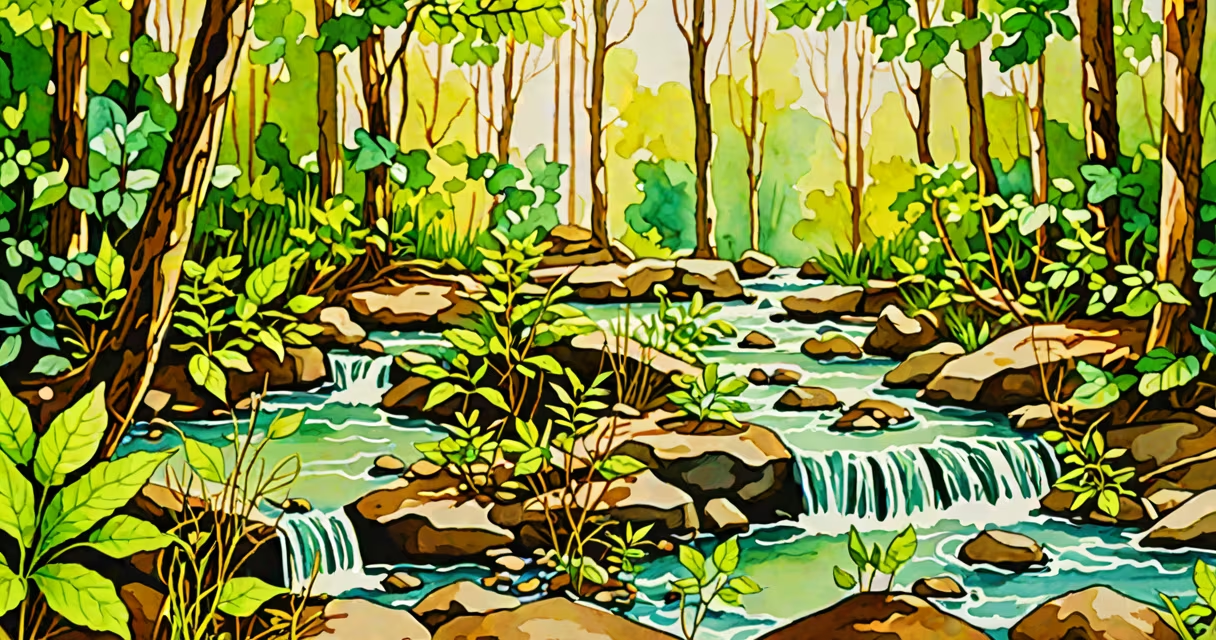
Elements of nature are the fundamental physical substances-such as water, air, earth, fire, and metal-that exist independently in the natural world and serve as foundational components of ecosystems, human culture, and scientific models.
These elements are not abstract concepts. They are measurable, observable, and interdependent. Water shapes landscapes through erosion. Air transports seeds and pollutants. Earth supports plant life and stores carbon. Fire alters terrain and influences climate patterns. Metal-like iron or copper-forms geological deposits and enables industrial systems.
Modern science identifies specific chemical elements-oxygen, hydrogen, nitrogen, carbon, calcium-as the building blocks of living organisms and planetary matter. These are distinct from the traditional four or five classical elements used in philosophy and spiritual systems. The difference matters: science measures atoms; traditions interpret energy and symbolism.
Nature operates through cycles driven by interactions between physical elements. The water cycle depends on evaporation (air), condensation (temperature), precipitation (water), and infiltration (earth). Photosynthesis relies on sunlight (energy), carbon dioxide (air), and water (liquid), producing oxygen and glucose.
For example, a forest system uses sunlight to power trees. Roots absorb water and minerals from soil (earth). Trees release oxygen into the atmosphere. Decomposers break down fallen leaves, returning nutrients to the soil. This loop sustains biodiversity and regulates atmospheric composition.
Climate change disrupts these balances. Increased CO₂ levels alter ocean acidity-water reacting with carbon dioxide forms carbonic acid. This harms coral reefs, which depend on stable mineral-rich water and sunlight. The disruption shows how one element's imbalance affects multiple others.
Classifications vary by context. Scientific, cultural, and philosophical frameworks define elements differently.
| Structure | Elements | Use Case |
|---|---|---|
| Classical (ancient) | Earth, Water, Air, Fire | Philosophy, medicine, ritual |
| Five-phase (Chinese Wuxing) | Wood, Fire, Earth, Metal, Water | Traditional Chinese medicine, feng shui |
| Scientific (periodic table) | Oxygen, Hydrogen, Carbon, Nitrogen, Calcium, Iron, etc. | Biology, geology, chemistry |
The classical model-earth, water, air, fire-originated in Greek philosophy. Aristotle described them as the basic constituents of all matter. He believed each had intrinsic qualities: earth was cold and dry; water was cold and moist; air was hot and moist; fire was hot and dry. These traits shaped early medical theories, such as humoral balance.
The Chinese Wuxing system adds wood and metal. Wood represents growth and flexibility. Metal symbolizes structure and discipline. These elements interact through generating and overcoming cycles. For example, fire melts metal, while metal cuts wood. This structure guides agricultural timing and architectural design in East Asia.
Modern science recognizes 118 chemical elements. Of these, only nine-hydrogen, helium, lithium, beryllium, boron, carbon, nitrogen, oxygen, and fluorine-are abundant in biological systems. Oxygen makes up 65% of the mass of the human body. Carbon forms the core of all known life. These are not symbolic-they are detectable, quantifiable, and essential.
People often confuse "elements of nature" with "natural resources." A resource is something humans extract or use-like timber, oil, or minerals. An element is a substance that cannot be broken down further by chemical means. Soil contains elements like silicon and potassium, but it is not itself an element.
Another error is treating fire as a standalone element. In reality, fire is a visible manifestation of rapid oxidation-a chemical reaction involving fuel, oxygen, and heat. It is not a substance but a process. While ancient thinkers classified fire as a primary element, modern physics sees it as energy release, not matter.
A lesser-known fact: water is not a pure element. It is a compound-two hydrogen atoms bonded to one oxygen atom (H₂O). Yet in everyday language, people refer to "water" as a natural element. This reflects how cultural usage diverges from scientific accuracy.
I once observed this confusion during a community workshop on sustainable gardening. Participants listed "water" and "sunlight" as elements of nature. While both are critical to plant growth, sunlight is electromagnetic radiation-not a material element. Water is a compound. Only hydrogen and oxygen qualify as elements in the strict sense.
Understanding elements of nature enables better environmental management. For instance, urban planners use hydrological models based on water flow, soil permeability, and air temperature to prevent flooding. Cities like Rotterdam use green roofs and permeable pavements to mimic natural water absorption-reducing runoff and heat retention.
In agriculture, soil health depends on balanced mineral content. A study by the USDA found that soils deficient in zinc or manganese reduced crop yields by up to 30%. Zinc is an essential trace element for enzyme function in plants. Farmers test soil and apply fertilizers containing these elements to restore balance.
Fire management in California forests relies on understanding combustion dynamics. Fire spreads faster in dry vegetation (fuel), high wind (air), and steep slopes (earth). Firefighters use predictive models based on these elements to plan evacuations and controlled burns.
Even art and design draw from natural elements. The Japanese concept of *shibui* values simplicity and subtle beauty derived from natural materials-wood, stone, clay. Artists use the inherent properties of these elements to create enduring work. A ceramic bowl shaped by hand reflects earth's texture, fire's transformation, and water's role in shaping clay.
Elements of nature are not metaphorical. They are tangible, measurable, and interconnected. Whether discussing the role of oxygen in respiration or the impact of iron in soil fertility, these elements define how life persists and evolves.
When you see a river carving rock, consider the interaction of water (compound), earth (mineral), and time. When you feel wind, recognize air (mixture of gases) moving due to pressure differences. These are not poetic abstractions-they are physical realities governed by laws of chemistry and physics.