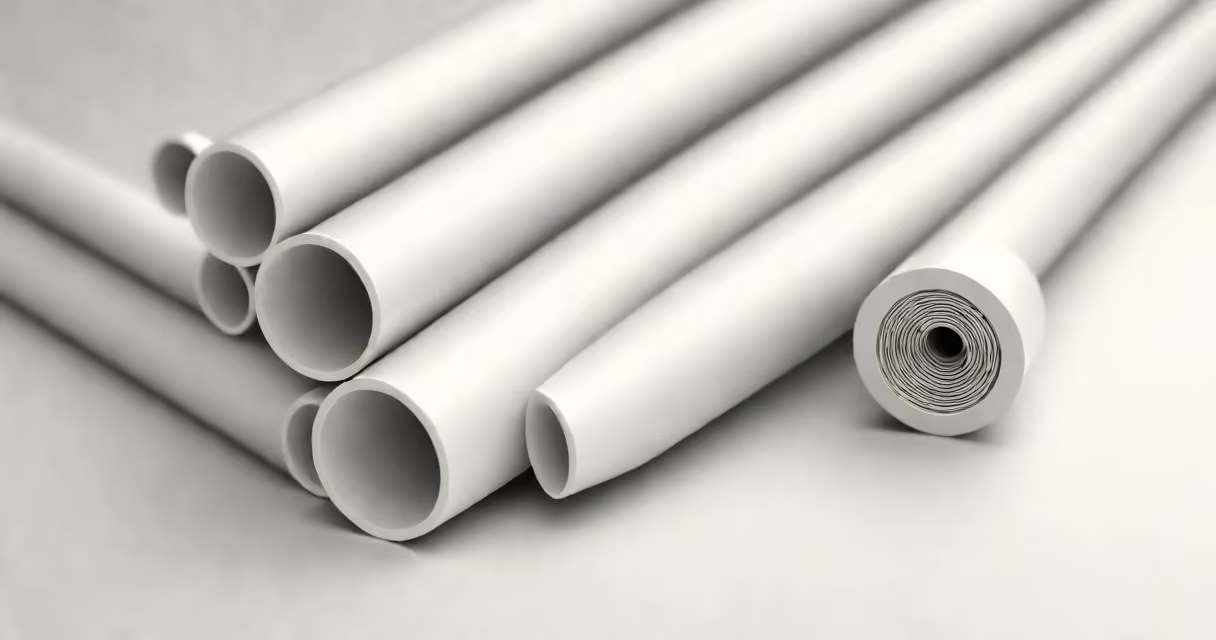
PVC, or polyvinyl chloride, appears as a smooth, rigid plastic with a consistent matte or slightly waxy surface. It's typically white, gray, or off-white in standard construction forms, though it can be tinted for specific uses. This synthetic polymer is engineered for durability and resistance to moisture, chemicals, and weathering.
PVC's visual identity stems from its manufacturing process. It's formed through extrusion or molding, resulting in uniform thickness and clean edges. The surface lacks texture, showing no grain or pores. When light hits it, it reflects diffusely-not like glass-but with a soft sheen. Bent or curved pieces retain their shape without warping, indicating structural stability.
Common forms include pipes, sheets, and profiles. Pipes are cylindrical, hollow, and often marked with manufacturer codes and pressure ratings. Sheets appear flat, cut to size, and used in signage, flooring, or window frames. Profiles, such as those for window sashes or fencing, have complex cross-sections with internal chambers for strength.
Visual cues distinguish PVC from similar materials. Unlike wood, it shows no grain patterns. Unlike rubber, it doesn't flex or compress under pressure. Its rigidity sets it apart from softer plastics like polyethylene. A quick test: tapping a PVC pipe produces a dull, hollow sound-distinct from metal's ring or wood's thud.
Color and finish offer immediate clues. Standard PVC is opaque white or gray. Clear PVC exists but is less common and more fragile. Tinted versions-blue for water lines, green for irrigation-add functional identification. Surface markings often include brand logos, size (e.g., 1.5-inch diameter), and standards compliance (e.g., ASTM D1784).
When damaged, PVC fractures cleanly rather than tearing. A broken edge reveals a dense, non-porous interior. Burnt samples emit a sharp, acrid odor-unlike burning wood or paper-and leave a black residue. These traits help differentiate PVC from bioplastics or composites.
Two primary forms of PVC dominate applications: rigid (uPVC) and flexible (flexible PVC). Rigid PVC is used in construction and plumbing. Flexible PVC contains plasticizers to increase elasticity and is found in cables, hoses, and seals.
| Type | Appearance | Typical Use | Distinctive Feature |
|---|---|---|---|
| Rigid PVC (uPVC) | Hard, smooth, matte finish; usually white or gray | Pipes, window frames, decking | Resists bending; holds shape under load |
| Flexible PVC | Soft, pliable; may have a slight sheen or textured surface | Electrical wire insulation, garden hoses, gaskets | Can be stretched; retains form after compression |
For example, a 1-inch-diameter white pipe running through a basement wall is likely rigid PVC. It will feel cool to the touch, resist dents, and show no signs of wear. In contrast, a black hose with a ribbed texture and flexibility is probably flexible PVC, designed to withstand repeated bending during yard work.
PVC is often mistaken for other plastics due to visual similarity. It's not the same as ABS (acrylonitrile butadiene styrene), which is more impact-resistant and often used in LEGO bricks. ABS tends to be darker and more brittle. PVC also differs from polycarbonate-a transparent, shatter-resistant plastic used in safety goggles and bulletproof panels.
A frequent error is assuming all white plastic pipes are PVC. Some systems use HDPE (high-density polyethylene), which feels softer and has a more granular surface. HDPE pipes also lack the sharp, clean edges typical of extruded PVC. When in doubt, check for manufacturer stamps or consult local building codes.
Another misconception: PVC is inert. While it resists corrosion and chemical degradation, prolonged UV exposure causes yellowing and brittleness. Outdoor installations require UV-stabilized formulations. A 10-year-old white fence panel left in direct sunlight may crack or fade-signs of material aging, not poor quality.
I once inspected a residential drainage system during a home inspection. The main pipe was 4 inches in diameter, white, and marked "PVC Schedule 40." It ran beneath the foundation with no joints-just smooth sections joined by solvent cement. The surface had no scratches or discoloration. When tapped, it produced a low, solid tone. This confirmed it was rigid PVC, rated for underground burial and wastewater flow.
Compare that to a flexible PVC cable jacket I pulled from a ceiling fixture. It was black, thin, and easily bent. When twisted, it returned to shape. The outer layer showed fine, evenly spaced ribs-standard design for strain relief. This difference in structure and function highlights how form follows purpose in PVC applications.
Understanding what PVC looks like prevents misuse. Using rigid PVC in a high-flex application leads to cracking. Using flexible PVC in a load-bearing role causes deformation. Knowing the visual and tactile differences ensures correct selection and safe installation.