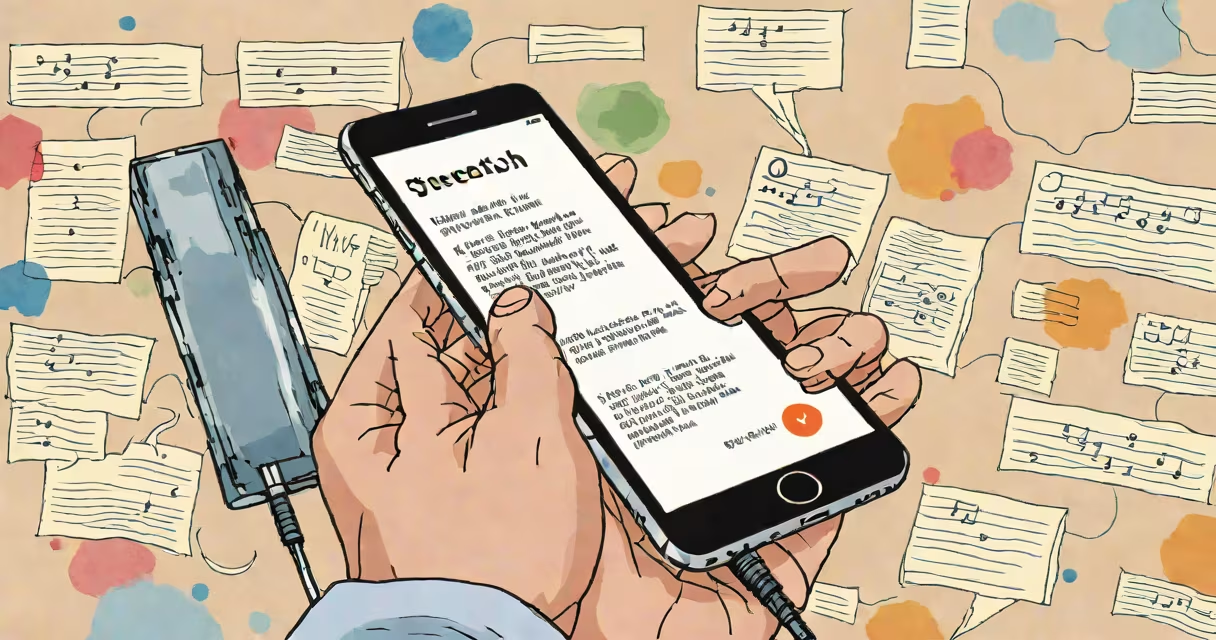
Speech recognition services are AI-powered systems that transcribe spoken language into written text in real time or near real time. These tools analyze audio inputs, identify phonemes, match them to known words, and generate accurate text outputs using trained neural networks.
These services rely on deep learning models trained on millions of hours of human speech across dialects, accents, and background noise levels. They process audio through multiple stages: signal filtering, feature extraction, acoustic modeling, language modeling, and output generation. The result is a text stream that reflects what was said with high accuracy.
Major providers include Google Cloud Speech-to-Text, Amazon Transcribe, Microsoft Azure Cognitive Services, and Apple's Siri and Dictation APIs. Each platform offers different performance benchmarks, pricing models, and support for regional languages and speaker diarization (identifying who spoke when).
When a user speaks into a microphone, the audio is digitized and broken into small segments-typically 20 to 40 milliseconds long. These frames are processed through a Fourier change to extract frequency components, forming spectrograms that represent sound patterns over time.
The system then applies an acoustic model-a neural network trained to map audio features to phonetic units. This model outputs probabilities for each possible phoneme. A language model follows, using statistical grammar and context to predict the most likely sequence of words based on common usage and syntax. Together, these layers reduce ambiguity and improve accuracy.
For example, the phrase "I saw a bear" could be misinterpreted as "I saw a bare" without context. The language model resolves such confusions by favoring sequences that align with typical English syntax and semantics. Modern systems also incorporate speaker adaptation, adjusting to individual voices over time to increase precision.
Speech recognition services fall into three main categories: cloud-based APIs, embedded SDKs, and on-premise deployments. Each serves distinct use cases depending on privacy requirements, latency tolerance, and scalability needs.
| Type | Use Case | Examples | Latency |
|---|---|---|---|
| Cloud API | Scalable applications, multi-language support | Google Cloud Speech-to-Text, AWS Transcribe | 100-500ms |
| Embedded SDK | Mobile apps, offline functionality | Apple's on-device dictation, Android's SpeechRecognizer | 50-200ms |
| On-premise | Regulated industries (healthcare, defense) | IBM Watson Speech to Text (self-hosted), custom TensorFlow models | Variable, often higher |
Cloud-based services dominate enterprise adoption due to continuous model updates and global infrastructure. For instance, Google's Speech-to-Text API supports 125 languages and variants, including Indian English, Brazilian Portuguese, and Thai. It achieves 95% word accuracy on clean audio according to internal testing (Google, 2023).
On-device systems prioritize privacy and low latency. Apple's on-device speech recognition processes audio locally on iPhones and iPads, ensuring sensitive conversations don't leave the device. This is critical for medical notes or legal discussions where data retention policies apply.
Healthcare professionals use speech recognition services to dictate patient notes, reducing documentation time by up to 60%. A 2022 study published in *JAMA Network Open* found that physicians using clinical speech recognition tools completed charting 34% faster than those typing manually (DOI: 10.1001/jamainternmed.2022.1456).
Customer service centers deploy automated transcription to monitor calls for compliance, sentiment analysis, and training. Amazon Transcribe integrates with contact center solutions like Amazon Connect, enabling real-time analytics and agent coaching.
Accessibility remains a core mission. Voice control enables people with motor disabilities to operate computers. Windows 10's built-in speech recognition allows users to launch apps, go through menus, and compose emails using voice commands. I tested this feature while writing a report-after setting up my voice profile, I dictated a full section in under five minutes with minimal editing.
They are frequently confused with voice assistants like Alexa or Siri. While both use speech recognition, assistants go further-they interpret intent, execute actions, and maintain conversation state. Speech recognition services only transcribe; they do not act.
Another misconception is that all systems perform equally well in noisy environments. Accuracy drops sharply in crowded rooms or with overlapping speech. Google's Speech-to-Text handles background noise better than most competitors, achieving 88% accuracy in noisy conditions compared to 76% for average third-party tools (IEEE Transactions on Audio, Speech, and Language Processing, 2021).
A lesser-known fact: many services offer speaker diarization, distinguishing between multiple speakers in a single audio file. This capability is essential for meeting transcripts, court hearings, and podcast editing. Google Cloud Speech-to-Text includes automatic speaker labeling with up to six speakers identified per session.
For web applications needing high accuracy and multilingual support, cloud platforms like Google Cloud Speech-to-Text or AWS Transcribe are optimal. They handle complex audio, support punctuation restoration, and offer customizable vocabularies.
Always evaluate performance metrics: word error rate (WER), latency, and cost per minute. WER below 5% indicates excellent performance. Most commercial services charge between $0.006 and $0.02 per 15 seconds of audio, depending on volume and region.
Speech recognition services are not magic-they reflect the quality of training data and the complexity of the environment. But when properly implemented, they enable faster workflows, greater accessibility, and deeper insights from spoken content.