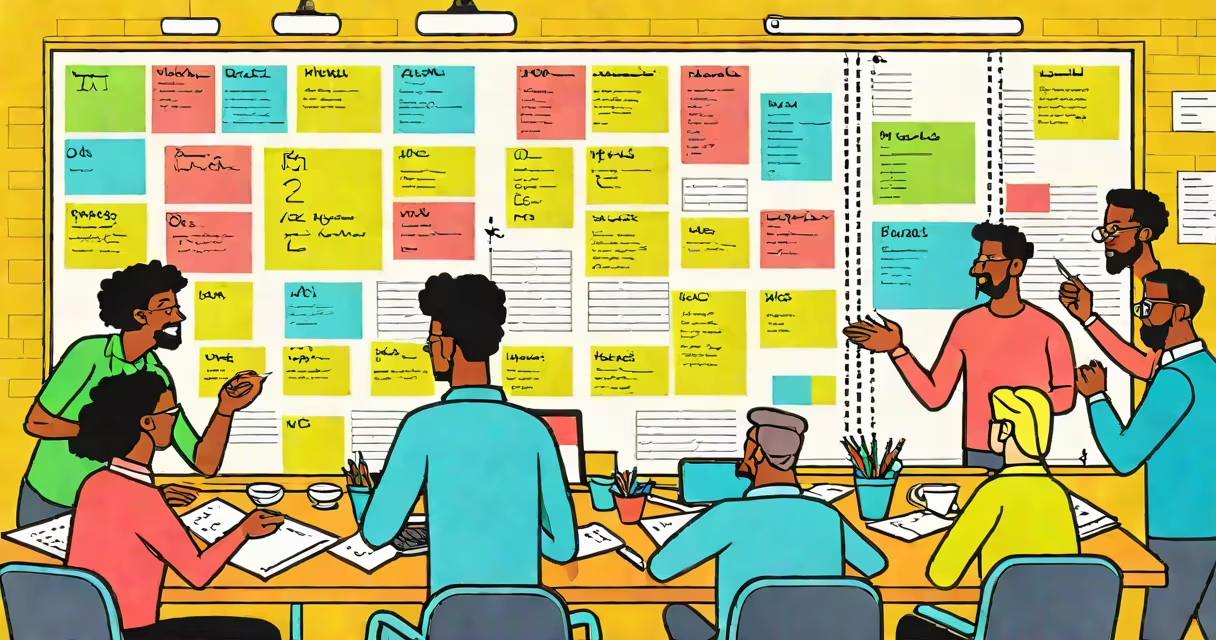
Agile methodology is a structured yet adaptive approach to project management that prioritizes continuous iteration, cross-functional teamwork, and customer feedback. It emerged in software development to address rigid, linear processes that often failed to meet evolving user needs. Instead of delivering a final product after months of work, Agile teams release functional increments every few weeks, adjusting based on real-world input.
The foundation of Agile lies in the Agile Manifesto, published in 2001 by 17 software developers. It values individuals and interactions over processes and tools, working software over complete documentation, customer collaboration over contract negotiation, and responding to change over following a plan. These principles remain central to all Agile implementations, regardless of industry.
Agile methodology is not a single method but a family of practices. Common frameworks include Scrum, Kanban, and Extreme Programming (XP). Each adapts the core values to different workflows. For example, Scrum uses time-boxed sprints, daily stand-up meetings, and defined roles like Product Owner and Scrum Master. Kanban focuses on visualizing workflow through boards and limiting work-in-progress to prevent bottlenecks. XP emphasizes test-driven development and pair programming to improve code quality.
Agile operates in cycles called iterations or sprints, typically lasting two to four weeks. Each cycle begins with a planning session where the team selects tasks from a prioritized backlog-a list of features, bugs, and enhancements ranked by business value. During the sprint, the team holds brief daily meetings (stand-ups) to sync progress, identify blockers, and adjust priorities.
At the end of each sprint, the team demonstrates a potentially shippable product increment to stakeholders. This allows immediate feedback. If users report issues or suggest improvements, those changes are added to the backlog and may be addressed in the next sprint. This rapid feedback loop reduces the risk of building features that don't meet actual needs.
A real-world example: A fintech startup developing a mobile banking app used two-week sprints. After Sprint 3, they released a basic login and balance-check feature. User testing revealed confusion around password recovery. The team added a redesigned flow in Sprint 4, which reduced support tickets by 60% compared to the previous version. Without Agile, this issue might have gone unnoticed until the final launch, costing time and money to fix.
While Agile is a mindset, specific frameworks provide structure. The most widely adopted are Scrum and Kanban. Both focus on transparency, inspection, and adaptation-but through different mechanisms.
| Structure | Time Structure | Workflow Visualization | Best For |
|---|---|---|---|
| Scrum | Sprints (2-4 weeks) | Backlog, Sprint Board, Burndown Chart | New product development, complex projects with changing requirements |
| Kanban | Continuous flow | Columns (To Do, In Progress, Done), WIP limits | Ongoing maintenance, service operations, high-volume task processing |
| Extreme Programming (XP) | Short iterations (1-2 weeks) | Task board, automated testing dashboard | High-risk coding environments requiring frequent integration and testing |
Each structure enforces accountability through regular ceremonies. Scrum includes sprint planning, daily stand-ups, sprint review, and retrospective meetings. Kanban relies on visual signals and pull-based work allocation. Teams using Agile report higher morale and faster delivery times. According to a 2023 study by the Project Management Institute, organizations using Agile delivered projects 28% faster than those using traditional waterfall methods.
One non-obvious distinction: Agile is not synonymous with "fast." Speed is a side effect of disciplined iteration, not the goal. A team can move slowly but consistently deliver value. Conversely, rushing without feedback leads to technical debt and poor user satisfaction. Agile's success depends on sustainable pace and continuous improvement-not burnout.
Many assume Agile is only for software teams. While it originated in tech, companies in healthcare, education, and manufacturing apply Agile principles. A hospital system in Oregon used Agile to redesign patient intake forms. By running weekly sprints with nurses, administrators, and patients, they reduced form completion time by 40% in five months. The process wasn't about coding-it was about user-centered design and rapid prototyping.
Another misconception is that Agile eliminates planning. On the contrary, it requires more deliberate planning at multiple levels. Teams plan sprints, but also maintain a long-term roadmap. The Product Owner continuously reprioritizes the backlog based on market shifts and user behavior. This changing planning prevents teams from building outdated features.
Some confuse Agile with "chaos" due to its flexibility. But Agile is highly structured. Roles are defined, rituals are time-boxed, and outcomes are measured. A team I observed at a logistics firm used Kanban to manage warehouse inventory updates. They set WIP limits of three items per lane. Over six months, this reduced errors by 55% and improved on-time reporting accuracy.
Start small. Choose one team, one project, and one structure-like Scrum. Hold a sprint planning meeting to define goals and select backlog items. Use a physical or digital board to track progress. After each sprint, hold a retrospective to reflect on what went well and what didn't. Adjust the process accordingly.
Agile methodology is not a one-size-fits-all solution. Its power lies in customization. Teams tailor ceremonies, tools, and roles to their context while staying aligned with the core values. The result is a resilient, responsive way to build products and services that truly serve users.