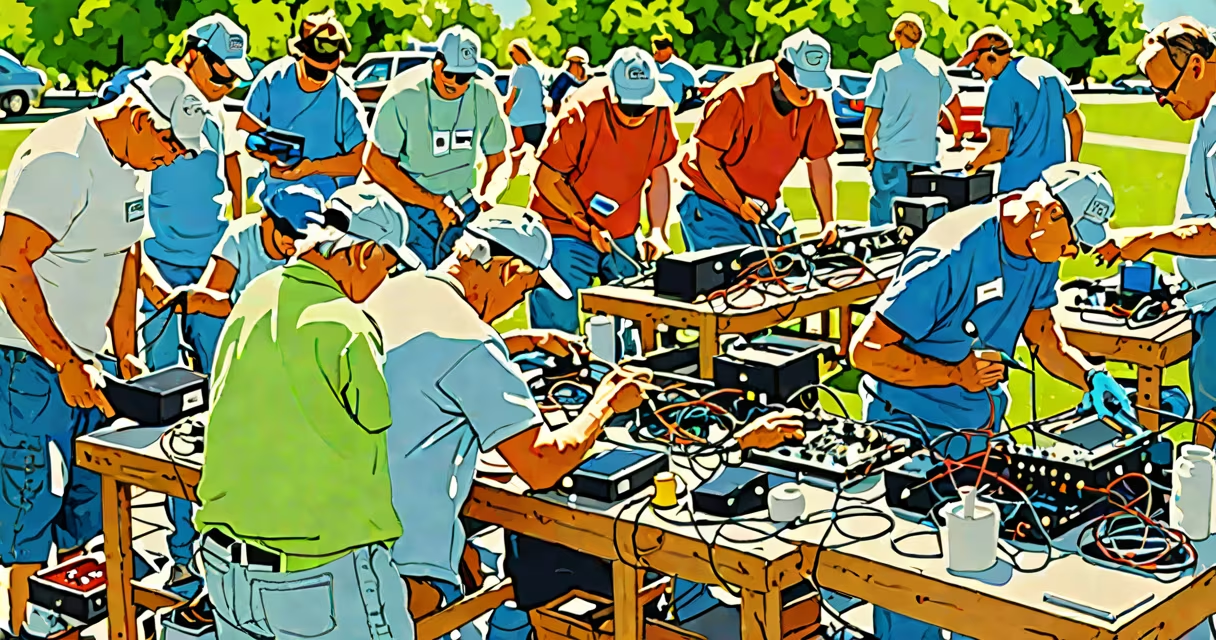
A fix it up event is a community-driven gathering where people bring broken household items-such as small appliances, clothing, or electronics-to be repaired on-site by skilled volunteers. These events promote sustainability by extending product lifespans and reducing landfill waste. They often occur monthly in public libraries, community centers, or parks.
Participants typically arrive with items they've used for years but stopped using due to minor failures. A volunteer technician assesses the issue, then either fixes it during the event or advises on how to do so later. Common repairs include replacing zippers, soldering loose wires, fixing leaky faucets, or resewing torn seams. The goal is not just to restore function but to teach attendees how to maintain their belongings.
These events operate under the principle of repair democracy: anyone can participate, regardless of skill level. No formal training is required to attend. Many organizers provide tools and materials, though bringing your own can speed up the process. Events are free or low-cost, funded through grants, donations, or municipal support.
Events follow a consistent structure. A host organization secures a venue-often a library or school gym-and advertises the date and time via social media, flyers, and local newsletters. Volunteers sign up in advance and are assigned roles based on expertise: electrical, textile, mechanical, or software repair.
On the day, participants arrive with labeled bags containing their items. Each item gets a tag with a number. Volunteers work at stations set up around the room. For example, one station may handle small kitchen appliances, another textiles, and a third electronics. A coordinator tracks progress and ensures safety protocols are followed.
Repair sessions last 60 to 90 minutes. If a repair cannot be completed, the volunteer provides instructions for a DIY fix or recommends a specialist. Some events offer follow-up workshops, such as "how to replace a battery in a cordless drill." Afterward, attendees receive a checklist of maintenance tips tailored to their repaired item.
Common items brought to fix it up events fall into four categories: textiles, small electronics, home goods, and metal/wooden objects. Each category requires different tools and material knowledge.
| Type | Examples | Typical Materials | Common Fixes |
|---|---|---|---|
| Textiles | Sweaters, jeans, shoes | Cotton, wool, leather, synthetic blends | Re-stitching, patching, heel replacement |
| Small Electronics | Blenders, hair dryers, clocks | Plastic casings, copper wiring, plastic gears | Replacing switches, cleaning contacts, re-soldering joints |
| Home Goods | Leaky faucets, wobbly tables, broken lamps | Brass fittings, wood, glass, rubber seals | Tightening screws, replacing washers, reinforcing joints |
| Metal/Wooden Objects | Bicycles, garden tools, picture frames | Steel, aluminum, pine, oak | Sharpening blades, tightening bolts, re-gluing joints |
For example, at a 2023 event in Portland, Oregon, a participant brought a 1980s cassette player with a stuck rewind button. The volunteer diagnosed a bent metal tab inside the mechanism. Using needle-nose pliers and a steady hand, the tab was gently realigned. The device played perfectly within 15 minutes. This repair extended the life of a 45-year-old item that would otherwise have been discarded.
These events address both environmental and social challenges. According to the Environmental Protection Agency (EPA), over 10 million tons of electronic waste were generated in the U.S. in 2022, with less than 20% properly recycled. Fix it up events divert usable items from landfills and reduce demand for new manufacturing.
The United Nations Environment Programme (UNEP) reports that extending the average lifespan of consumer goods by just one year could cut global carbon emissions by 400 million metric tons annually. Repairing a toaster instead of buying a new one saves roughly 12 kg of CO₂ equivalent-equivalent to driving a car 50 km.
Many attendees report increased confidence in handling everyday repairs. A 2022 survey by the Repair.org coalition found that 78% of participants felt more capable of fixing things at home after attending at least two events. This shift reduces reliance on disposable products and fosters resilience in communities.
Fix it up events are not repair shops. They do not offer warranties or guarantee success. Volunteers are unpaid and work within their comfort zones. Complex issues-like motherboard failure in a laptop-are referred to professional technicians.
Another misconception is that these events only serve low-income individuals. While accessibility is a core value, participants come from all income levels. At a 2023 event in Austin, Texas, attendees included engineers, retirees, and high school students. The focus is on learning, not charity.
Some assume repairs require rare parts. Most fix it up events use universal tools and standard components. For instance, a broken zipper pull can be replaced with a $1 part available at any hardware store. The challenge lies in technique, not sourcing.
I once attended a fix it up event in Seattle where a woman brought her mother's vintage sewing machine. It hadn't worked in 20 years. With help from a retired machinist volunteer, we cleaned the oil reservoir, adjusted the tension, and replaced a frayed belt. It sewed perfectly on the first try. The emotional impact was immediate-the woman cried. That moment reminded me that repair is not just technical; it's cultural and personal.
Organizers welcome volunteers with basic tool-handling skills. Training is usually provided on-site. You don't need to be an expert to contribute. Even sorting tools or guiding attendees helps.
To find a fix it up event near you, search "repair café" or "fix it up event" along with your city name. National networks like Repair.org and the European Repair Café movement list upcoming events globally. Some cities host monthly events; others run seasonal ones.
Fix it up events are more than temporary fixes. They are sustained efforts to reclaim ownership of our belongings and rethink consumption. By joining one, you're not just saving a toaster-you're supporting a culture where things are valued, cared for, and kept in use.