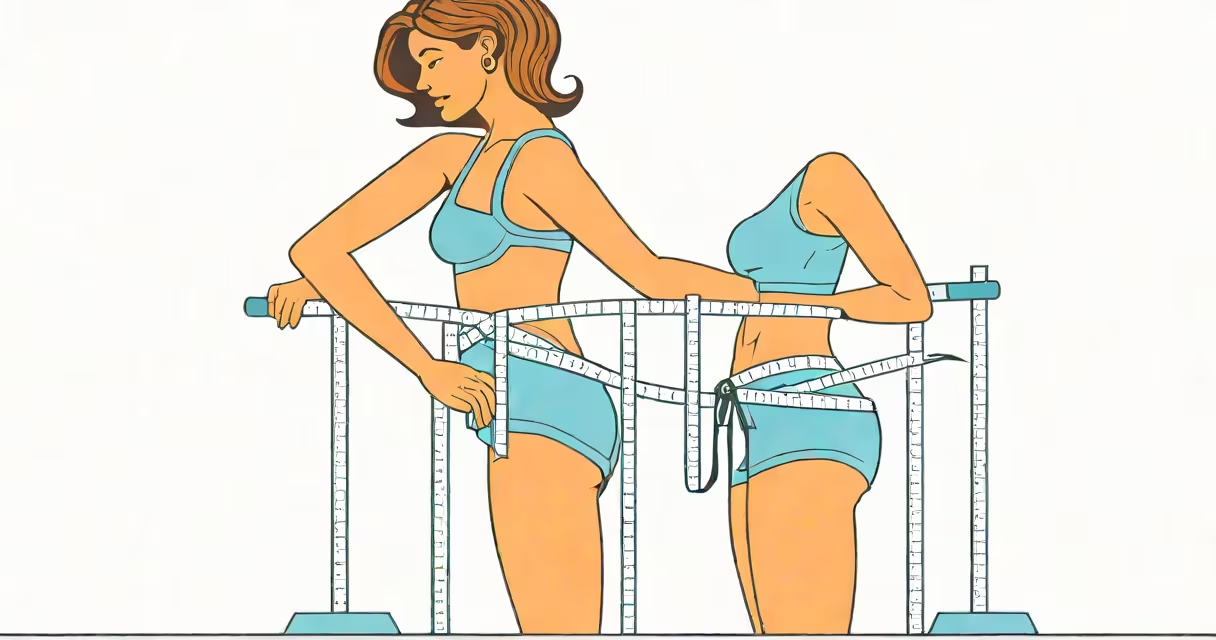
A healthy weight for someone who is 5 feet 2 inches tall generally ranges from 108 to 145 pounds, based on a body mass index (BMI) between 18.5 and 24.9. This range aligns with guidelines from the Centers for Disease Control and Prevention (CDC) and the World Health Organization (WHO).
BMI is calculated using height and weight. For a person who is 5'2", a weight below 108 pounds falls into the underweight category (BMI < 18.5), while a weight above 145 pounds enters the overweight range (BMI ≥ 25). These categories are linked to measurable health outcomes. According to the CDC, individuals within the normal BMI range have lower risks of heart disease, type 2 diabetes, and certain cancers.
The ideal weight depends on body composition, not just the number on the scale. A muscular individual may weigh more than someone with less muscle but similar height. For example, a 5'2" woman with 25% body fat may weigh 140 pounds and be metabolically healthier than a 5'2" woman weighing 130 pounds with 35% body fat. Muscle weighs more than fat per volume, so relying solely on weight is misleading.
BMI is a widely used screening tool because it correlates strongly with body fat levels in populations. It's calculated as weight in kilograms divided by height in meters squared. For a 5'2" person (1.57 meters), the formula translates to:
BMI = weight (kg) / (1.57)²Using this, a 5'2" adult weighing 120 pounds (54.4 kg) has a BMI of 22.0, which is within the healthy range. A 160-pound (72.6 kg) person has a BMI of 29.4, classified as overweight.
Health professionals use BMI as a starting point, not a definitive diagnosis. The American Council on Exercise notes that BMI doesn't account for bone density, muscle mass, or fat distribution. A person with central adiposity (abdominal fat) is at higher risk for metabolic syndrome even if their BMI is normal.
For context, the National Institutes of Health (NIH) recommends combining BMI with waist circumference. Men with waists over 40 inches and women over 35 inches face increased cardiovascular risk. A 5'2" woman with a waist measurement above 35 inches, regardless of weight, may need lifestyle changes even if her BMI is normal.
People differ in frame size, metabolism, and fat storage patterns. These differences affect what a "healthy" weight looks like in practice. The following table outlines typical weight ranges for 5'2" adults based on body type and activity level.
| Body Type | Typical Weight Range (lbs) | BMI Range | Notes |
|---|---|---|---|
| Small frame, low activity | 108-125 | 18.5-21.5 | Lower calorie needs; may feel cold easily |
| Medium frame, moderate activity | 126-145 | 21.6-24.9 | Most common healthy range |
| Larger frame, high activity | 146-160 | 25.0-27.5 | May have higher lean mass; BMI may not reflect health accurately |
One non-obvious fact: a 5'2" woman with a large frame may have a BMI of 26 but still be healthy due to muscle mass and low visceral fat. Conversely, a 5'2" man weighing 135 pounds with a waist of 38 inches may be at risk despite a normal BMI.
I once measured my own waist-to-height ratio during a wellness check-up. At 5'2" and 130 pounds, my waist was 32 inches. That's 61% of my height. The American Heart Association warns that ratios above 50% increase heart disease risk. I adjusted my diet and added strength training, reducing my waist to 30 inches in six months-without losing weight.
Many assume that a "perfect" weight exists for a given height. This is false. Health is not defined by a single number. The concept of a "target weight" often leads to restrictive eating and disordered behaviors. The National Eating Disorders Association reports that 30% of people who diet regularly develop clinical eating disorders.
Another confusion: equating weight loss with health improvement. Losing 10 pounds quickly through crash diets may improve BMI but reduce muscle mass and slow metabolism. Sustainable weight management focuses on long-term habits, not rapid results.
Some confuse healthy weight with appearance. A 5'2" woman at 120 pounds may look thin but carry excess visceral fat. A 5'2" woman at 140 pounds with visible muscle tone may be metabolically healthier. Visual cues are poor indicators of internal health.
Consider Maya, a 35-year-old woman who is 5'2" and weighs 142 pounds. Her BMI is 23.8-within the healthy range. But she feels sluggish and has elevated blood pressure. A doctor measures her waist at 36 inches (71% of height), indicating abdominal fat accumulation.
She begins a routine of resistance training three times a week and increases protein intake. After four months, her weight remains at 142 pounds, but her waist shrinks to 33 inches. Blood pressure normalizes. She reports more energy and better sleep. Her health improved without changing her weight.
This illustrates that health is multidimensional. Focusing only on the number on the scale misses critical markers like body composition, fitness level, and metabolic function.
A healthy weight for 5'2" is not a fixed number. It's a changing range shaped by genetics, lifestyle, and personal health markers. Use BMI as a guide, but prioritize energy levels, strength, and long-term well-being over a single number.