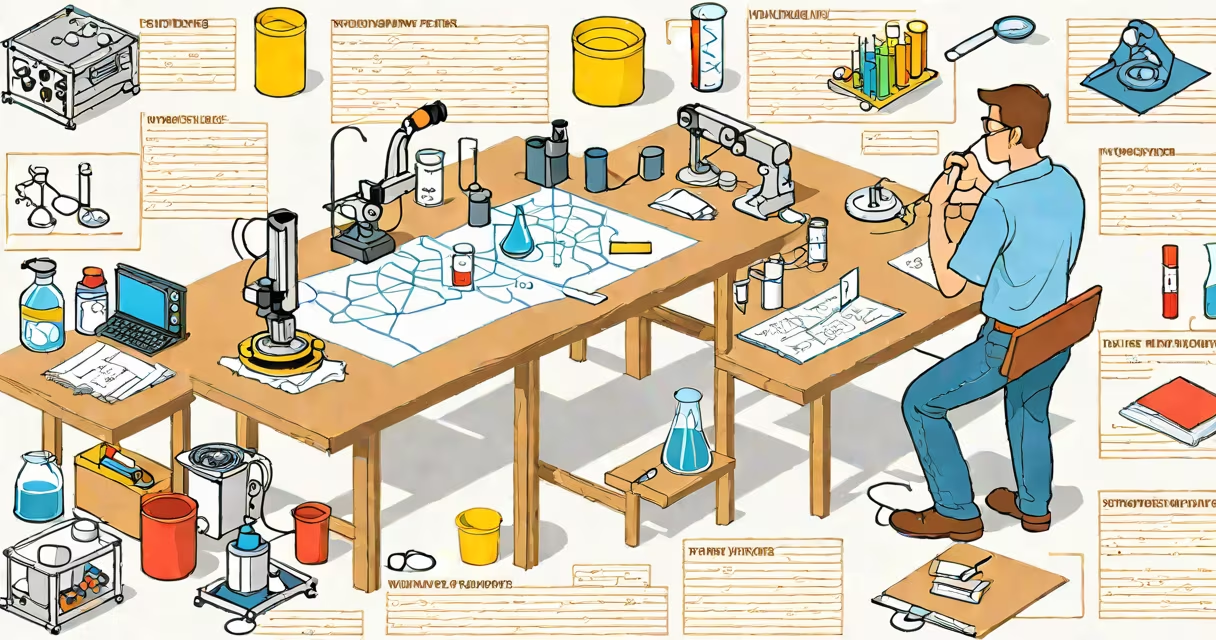
A performance task is an assessment that requires students to demonstrate understanding by completing a complex, real-world activity rather than answering multiple-choice or short-answer questions. It evaluates applied knowledge, critical thinking, and communication skills through observable outcomes.
Unlike traditional exams, performance tasks measure how well a student can use their learning in context. For example, instead of selecting the correct definition of photosynthesis, a student might grow bean plants under different light conditions and explain how light affects growth. This hands-on approach reveals deeper comprehension than recall alone.
According to the National Council on Measurement in Education, performance tasks are designed to reflect authentic work in academic disciplines and professional fields. They are especially effective in assessing higher-order thinking, such as analysis, synthesis, and problem-solving, which standardized tests often fail to capture.
Performance tasks begin with a clear prompt that presents a scenario requiring application of knowledge. Students then complete a series of steps-research, planning, execution, documentation, and presentation-to produce a tangible outcome. This process mirrors how professionals solve problems in real settings.
Each task includes specific criteria for success, usually outlined in a rubric. Teachers score responses based on predefined levels of quality across dimensions like accuracy, organization, use of evidence, and clarity of explanation. Scoring is consistent because each criterion is tied to observable behaviors, not subjective judgment.
For instance, a high school history class might assign a performance task where students recreate a 19th-century political debate using primary source documents. The teacher scores each group on argument strength, historical accuracy, and collaboration. A student who cites Lincoln's Gettysburg Address correctly and explains its relevance earns full credit for content accuracy.
Performance tasks fall into four main categories based on the nature of the output required. Each type targets different skills and is suited to various subject areas.
| Type | Focus Area | Example | Common Subjects |
|---|---|---|---|
| Product-Based | Design, creation, construction | Build a model bridge that supports 5 pounds using only paper and tape | Science, engineering, art |
| Written Response | Argumentation, explanation, analysis | Write a letter to a city council member arguing for or against a local park expansion | English, social studies, civics |
| Demonstration | Procedural skill, physical execution | Perform a musical piece from memory and explain interpretive choices | Music, physical education, foreign language |
| Oral Presentation | Verbal communication, persuasion, delivery | Deliver a 5-minute speech on climate change solutions to a mock United Nations audience | Language arts, public speaking, science |
Product-based tasks are common in STEM classrooms. A middle school science unit on ecosystems might require students to build a terrarium that sustains life for two weeks. The task measures understanding of interdependence, nutrient cycles, and environmental balance through design and maintenance.
One non-obvious distinction: performance tasks are not the same as projects. While both involve extended work, projects often include open-ended goals and student choice. Performance tasks have defined objectives and measurable criteria aligned to standards. A project might ask students to "explore renewable energy," while a performance task specifies "design a solar-powered water pump that moves 1 liter of water per minute."
Performance tasks are widely used in K-12 education, particularly in state assessments and curriculum frameworks. The Smarter Balanced Assessment Consortium uses performance tasks in math and English language arts to evaluate college and career readiness. These tasks appear in summative exams and are scored using detailed rubrics.
In higher education, performance tasks appear in clinical training, teacher certification, and capstone courses. Nursing students must perform patient care simulations under supervision. Teacher candidates submit lesson plans and video recordings of instruction for evaluation. These tasks ensure competence beyond theoretical knowledge.
Classroom teachers use performance tasks as formative assessments to inform instruction. After a unit on fractions, a fifth-grade teacher might assign students to create a recipe that serves six people using fractional measurements. Observing how students adjust ingredient amounts reveals misconceptions in proportional reasoning.
I once observed a sixth-grade class where students designed a community garden layout using scale drawings and plant spacing charts. One group misapplied area calculations and ended up with overcrowded beds. The teacher used this error during a follow-up lesson to clarify how to compute square footage in real space-a moment of insight that wouldn't have emerged from a worksheet.
Performance tasks are sometimes confused with open-ended questions or essays. But while essays assess writing proficiency, performance tasks assess the integration of knowledge, skills, and processes. A student may write a well-structured essay on climate change but still fail to propose a feasible policy solution in a performance task.
Another misconception is that performance tasks are too time-consuming for regular classroom use. However, research from the Educational Testing Service shows that brief performance tasks-lasting 30 to 45 minutes-can be embedded weekly without disrupting pacing. A single task can replace three traditional quiz questions and provide richer feedback.
Some educators assume performance tasks are only suitable for advanced learners. Yet, when scaffolded properly, they benefit all students. A fourth-grade math task asking students to plan a budget for a class field trip can be adapted for different skill levels by adjusting the number of variables or complexity of constraints.
Performance tasks are not inherently subjective. When paired with a detailed rubric, scoring becomes consistent across raters. The rubric defines what "excellent" looks like in each category-such as "uses at least three accurate data points to support conclusions"-making results comparable and defensible.
For example, a biology class evaluating a student's report on antibiotic resistance included a rubric with four levels: emerging, developing, proficient, and exemplary. Each level described specific behaviors-like "identifies at least two mechanisms of resistance" or "explains how misuse accelerates mutation rates." This structure ensured fair grading across 32 student submissions.
When designing a performance task, align it directly to learning standards. The Common Core State Standards emphasize tasks that require students to "analyze texts" or "solve real-world problems." A task asking students to compare two news articles about a local election and identify bias meets these goals better than a fill-in-the-blank test on media literacy terms.
Performance tasks are not a substitute for all forms of assessment. They complement traditional methods by measuring application, not just recognition. When used appropriately, they deepen learning, reveal gaps in understanding, and prepare students for challenges beyond the classroom.