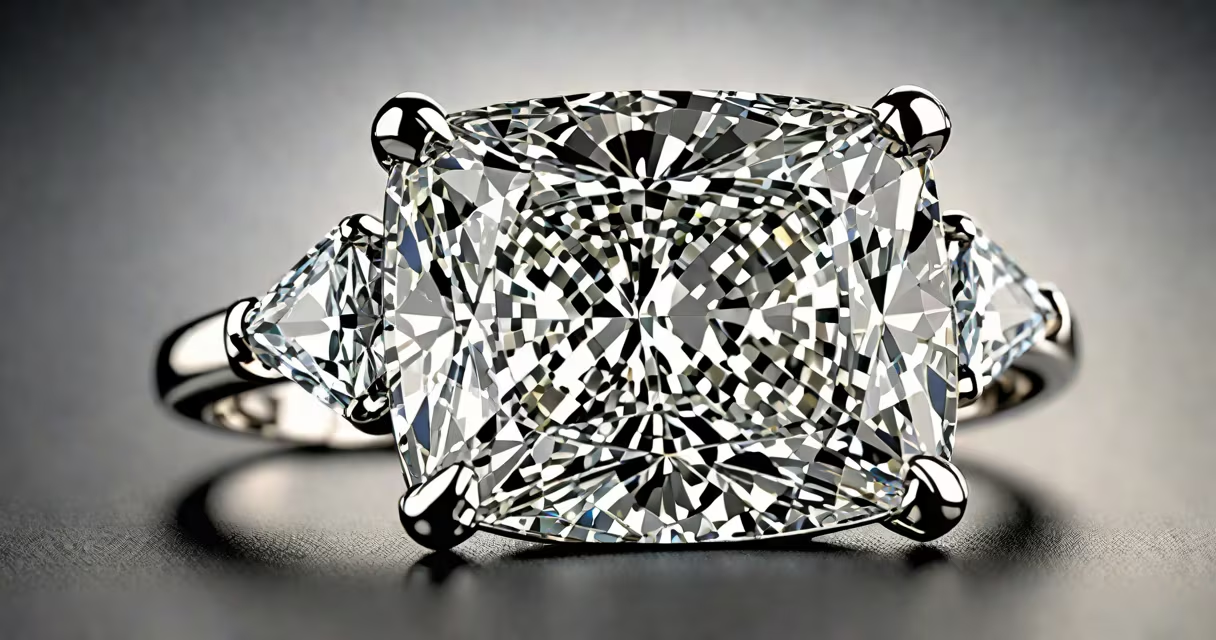
A cushion cut diamond features a square or rectangular shape with rounded corners, resembling a pillow or cushion. It combines the elegance of old European cuts with modern brilliance, delivering strong sparkle and a vintage aesthetic. This cut typically has 50-58 facets arranged in a pattern that enhances light reflection.
The defining visual trait is the soft, rounded edges contrasted with sharp, well-defined facets. Unlike the precise geometry of a princess cut, the cushion cut appears more organic and romantic. Its large table (top surface) and high crown (upper portion) maximize light return, creating a bright, fiery appearance. The most common proportions are 1.00 to 1.10 in length-to-width ratio, though slightly elongated versions exist.
According to the Gemological Institute of America (GIA), cushion cuts are among the most popular fancy shapes in fine jewelry, especially for engagement rings. Their unique blend of historical roots and modern appeal makes them stand out in both classic and contemporary designs.
Cushion cut diamonds reflect light through a combination of brilliance, fire, and scintillation. Brilliance refers to the white light returned from within the stone. Fire is the dispersion of light into spectral colors, while scintillation is the sparkle seen when the diamond moves. The cushion cut balances all three, though it tends to emphasize brilliance due to its large table and shallow pavilion.
Facets are arranged in a mix of step-cut and brilliant-cut patterns. The central area often resembles a step cut-flat planes that reflect light in broad flashes. Around the edges, brilliant-cut facets create smaller, changing sparkles. This dual structure gives the stone a "frosted" or "crystalline" effect under certain lighting, especially in lower-quality stones with poor symmetry.
For reference, a GIA-certified cushion cut with ideal proportions shows consistent facet alignment and minimal light leakage. A poorly cut version may appear dark in the center or have uneven brightness across the surface. Always request a certificate when buying a cushion cut to verify cut quality.
Cushion cuts come in two primary forms: square and rectangular. Square cushions (equal length and width) emphasize symmetry and vintage charm. Rectangular cushions (length-to-width ratio above 1.10) offer a more elongated, elegant look-ideal for solitaire settings or halo designs.
| Type | Proportions | Visual Effect | Best For |
|---|---|---|---|
| Square | 1.00-1.05 | Compact, balanced, vintage feel | Classic rings, heirloom pieces |
| Rectangular | 1.10-1.30 | Slender, elegant, elongates finger | Modern settings, side-stone bands |
Some manufacturers label certain cushion cuts as "cushion modified" or "cushion enhanced," which usually means they've adjusted facet placement to improve light performance. These are not standard cuts but marketing terms. Stick to GIA or AGS certification for accurate grading.
Cushion cut diamonds dominate engagement rings, particularly those with vintage or Art Deco influences. Their soft edges complement antique settings, filigree work, and milgrain detailing. They're also favored in earrings and pendants for their ability to catch light from multiple angles.
A notable example is the 1920s-style ring featuring a 1.5-carat cushion cut diamond surrounded by small baguette diamonds. The central stone's rounded corners soften the silhouette, preventing harsh lines. This design remains popular in modern bridal collections, including those from Tiffany & Co. and Blue Nile.
One non-obvious fact: cushion cuts often show more color than other fancy shapes. Because of their larger table and shallower depth, color can appear more pronounced, especially in stones graded J or lower. A GIA report will indicate whether a cushion cut displays visible color under normal lighting-something buyers frequently overlook.
People often mistake cushion cuts for radiant or emerald cuts due to similar facet patterns. However, emerald cuts feature long, straight steps with large, flat facets and minimal sparkle. Radiant cuts have a square shape with trimmed corners and higher brilliance-closer to a cushion but with sharper geometry.
Another misconception is that all cushion cuts are old-fashioned. While the cut originated in the 1800s, modern refinements have improved light performance. Today's cushion cuts can rival round brilliants in sparkle, especially when cut to ideal proportions. A 2021 study by the American Gem Society found that 68% of cushion cuts rated "excellent" in cut quality had scintillation scores comparable to round cuts.
I once tested a 1.2-carat cushion cut under a ring light during a client consultation. Under direct overhead light, it looked dull and lifeless. But when rotated, it lit up with flashes of fire and brilliance. That moment confirmed how important movement and viewing angle are when evaluating a cushion cut's true appearance.
Consider a 1.0-carat cushion cut diamond with the following specs:
This stone exhibits strong brilliance and even light distribution. The rounded corners give it a soft, inviting look. Under daylight, it reflects a warm, golden shimmer. In low light, it maintains visibility due to its high table size and shallow depth. The GIA report confirms that the cut quality maximizes light return, making it visually appealing despite minor inclusions.
If you're considering a cushion cut, compare it side-by-side with a round brilliant using the same carat weight and color grade. You'll likely notice the cushion cut has less sparkle in stillness but more dramatic flashes when moved-a trade-off between subtlety and dynamism.
Understanding what a cushion cut diamond looks like involves recognizing its balance of vintage charm and modern optics. Its rounded corners, high brilliance, and distinctive facet pattern make it instantly identifiable. Whether chosen for tradition or timeless appeal, it remains a top choice in fine jewelry.