Geothermal energy is renewable because it relies on heat continuously generated within Earth's core, which humans cannot deplete in practical timeframes. Unlike fossil fuels, it does not depend on finite resources that take millions of years to form.
Earth's interior maintains temperatures exceeding 6,000°C at the core. This heat slowly migrates outward through rock layers, warming underground water and steam reservoirs. Geothermal systems tap into this heat via wells drilled into the crust, using the resulting steam or hot water to generate electricity or provide direct heating. Because the planet's internal heat is constantly renewed by radioactive decay and residual formation heat, the resource is effectively inexhaustible on human timescales.
The U.S. Department of Energy confirms that geothermal energy is classified as renewable under federal guidelines due to its low environmental impact and continuous availability. According to the International Renewable Energy Agency (IRENA), geothermal plants operate at capacity factors above 90%, far higher than solar or wind, making it one of the most consistent renewable sources available.
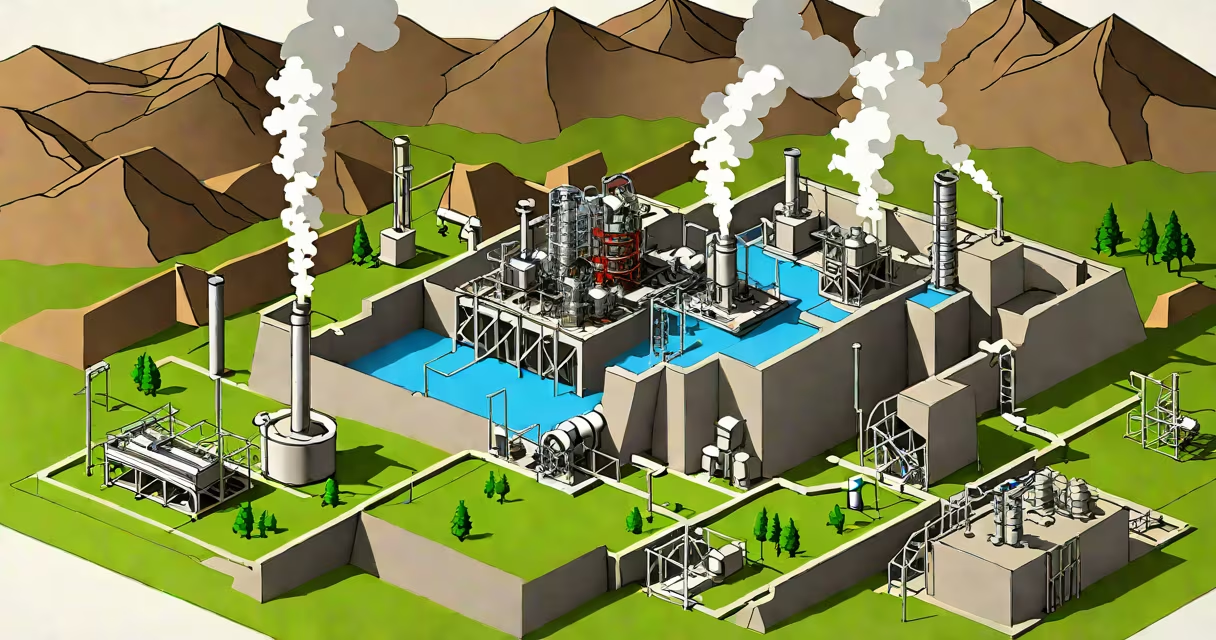
Geothermal energy extraction begins with drilling into subsurface reservoirs where water or steam exists under pressure. Wells reach depths between 1,000 and 5,000 meters, depending on local geology. Once the hot fluid reaches the surface, it drives turbines connected to generators, producing electricity. After use, the cooled fluid is reinjected into the ground to maintain pressure and sustain the system.
There are three main types of geothermal power plants: dry steam, flash steam, and binary cycle. Dry steam plants, like those at The Geysers in California, use naturally occurring steam directly from underground. Flash steam plants, the most common type, release high-pressure hot water into lower-pressure chambers, causing it to "flash" into steam. Binary cycle plants use a secondary fluid with a lower boiling point than water; the hot geothermal fluid heats this fluid, turning it into vapor to drive turbines.
A working example: The Hellisheiði Power Station in Iceland produces 303 megawatts of electricity and heats over 90% of Reykjavík's buildings. It uses flash steam technology and reinjects 98% of extracted fluids back into the reservoir, minimizing environmental disruption.
Geothermal energy originates from three primary sources: residual heat from planetary formation, radioactive decay of elements like uranium and thorium in Earth's mantle, and gravitational compression. These processes have been ongoing for over 4.5 billion years and continue at a steady rate.
Not all geothermal resources are equal. Location determines viability. High-grade resources exist near tectonic plate boundaries-such as the Ring of Fire-where magma is close to the surface. Low-grade resources require enhanced geothermal systems (EGS), where water is injected into hot dry rock to create artificial reservoirs. EGS remains experimental but could expand access beyond volcanic zones.
| Type | Operating Principle | Best For | Example Location |
|---|---|---|---|
| Dry Steam | Uses natural steam directly | High-temperature sites | The Geysers, USA |
| Flash Steam | Expands high-pressure hot water into steam | Most widespread application | Hellisheiði, Iceland |
| Binary Cycle | Transfers heat to a secondary fluid | Low-to-moderate temperature zones | Salton Sea, California |
Geothermal energy is deployed where geological conditions allow for accessible heat. Countries with significant tectonic activity-like Iceland, Kenya, Indonesia, and the Philippines-have large-scale geothermal capacity. The Philippines generates nearly 18% of its electricity from geothermal sources, the highest share globally.
Direct-use applications include district heating, greenhouse cultivation, fish farming, and industrial drying. In Boise, Idaho, a city-wide geothermal district heating system provides warmth to over 500 buildings using water heated to 60°C from shallow wells.
One non-obvious fact: geothermal plants emit less than 5% of the CO₂ per kWh compared to coal plants. A 2021 study by the National Renewable Energy Laboratory (NREL) found that typical geothermal operations release only 37 grams of CO₂ equivalent per kilowatt-hour-lower than most renewables except wind and solar in optimal locations.
Some confuse geothermal energy with geothermal heat pumps (GHPs), which extract heat from shallow ground for building climate control. GHPs are renewable but not the same as power-generating geothermal plants. The latter rely on deeper, hotter sources and produce electricity; the former use ambient ground temperature differences for heating and cooling.
Another misconception is that geothermal energy is limited to volcanic regions. While ideal sites are near tectonic boundaries, enhanced geothermal systems (EGS) aim to enable energy from stable continental crust. Pilot projects in Utah and Nevada show promise, though they face technical challenges in creating permeable rock networks at depth.
I once visited the Chena Hot Springs Resort in Alaska, where a small binary-cycle plant powers the entire complex. The site sits above a 120°C geothermal reservoir, but the team had to drill 1,200 meters to reach it. What surprised me was how quiet the operation was-no noise, no fumes, just a single turbine humming softly. That experience confirmed how smoothly geothermal integrates into remote communities.
Geothermal energy is renewable. Its sustainability stems from Earth's enduring internal heat, not from finite materials. With proper management, it offers a stable, low-emission alternative to fossil fuels.