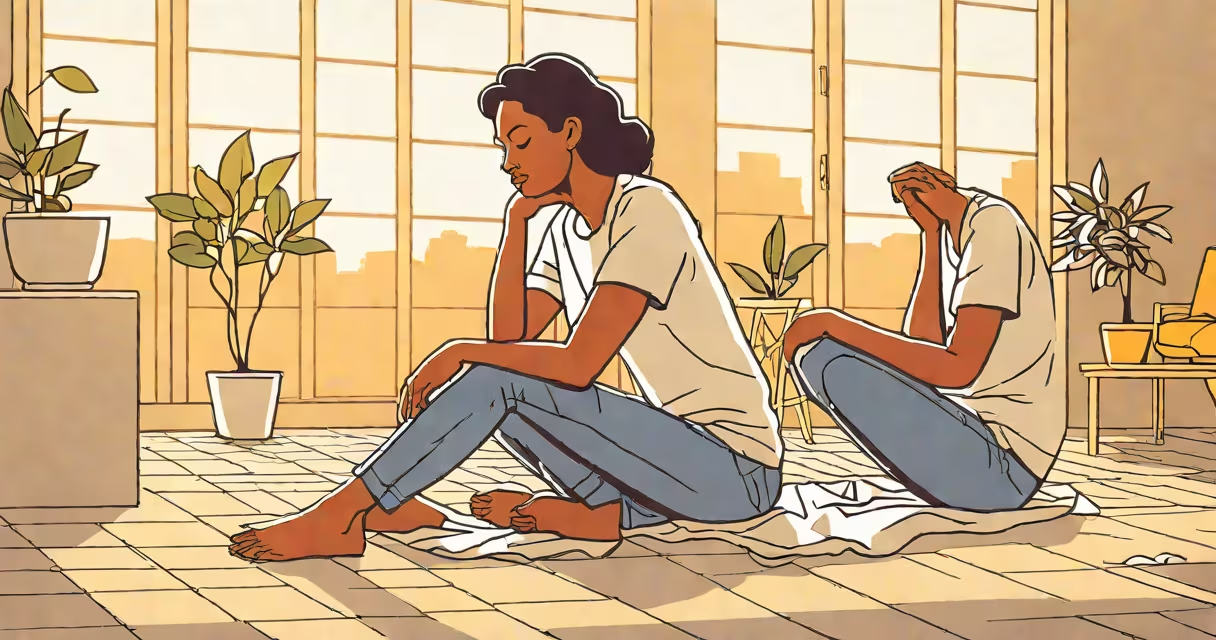
"I just want peace in my life" expresses a deep desire for emotional stability, mental clarity, and freedom from internal conflict. It's not about escaping reality, but about creating space between stimuli and response-to feel grounded, focused, and emotionally balanced.
Peace isn't passive silence. It's an active state of alignment between thoughts, emotions, and actions. When someone says "I just want peace," they're asking for relief from anxiety, decision fatigue, emotional overwhelm, and the constant noise of modern living.
The American Psychological Association notes that chronic stress impairs cognitive function and increases risk for depression and heart disease. Peace isn't a luxury-it's a necessity for long-term health. The goal isn't perfection, but consistency in managing mental load.
Peace emerges when the nervous system shifts from fight-or-flight mode into rest-and-digest. This shift happens through deliberate regulation of attention, breath, and environment-not by waiting for circumstances to change.
Neuroscience shows that sustained mindfulness practice reduces activity in the amygdala-the brain's fear center-and strengthens the prefrontal cortex, responsible for rational decision-making. After eight weeks of daily 10-minute mindfulness sessions, participants in a 2011 University of Massachusetts study showed measurable decreases in cortisol levels and improved focus.
Peace isn't achieved by eliminating problems. It's cultivated by changing your relationship to them. Instead of reacting to stress with rumination or avoidance, you learn to observe it without judgment. That's the foundation of emotional resilience.
Inner peace isn't a single action. It's a combination of habits, boundaries, and mindset shifts. These four components form the structure:
For example, a freelance designer who felt constantly drained began tracking her energy levels each day. She noticed that creative work peaked between 9-11 a.m., but meetings piled in after noon. By scheduling client calls only before lunch and blocking afternoons for deep work, she reduced mental fatigue by 60% within six weeks.
Peace isn't about doing more. It's about doing less-intentionally. A 2020 study in *The Journal of Positive Psychology* found that people who limited their daily decisions to 15 or fewer reported higher life satisfaction and lower burnout rates.
People often confuse peace with passivity, resignation, or withdrawal. But peace doesn't mean giving up. It means choosing your responses instead of reacting automatically.
Another myth: peace requires solitude. While quiet environments help, peace can exist in crowded spaces. A teacher in Chicago reported feeling centered during a noisy school day by using micro-mindfulness-three slow breaths before entering a classroom. Her stress markers dropped over a semester.
Some assume peace is only for spiritual or religious people. Yet secular mindfulness programs in corporate settings show similar benefits. Google's "Search Inside Yourself" program, developed by a former engineer, led to a 25% drop in employee-reported stress across departments.
Consider Maya, a single mother of two working two jobs. She described her days as "a loop of urgency." Her phone buzzed with messages, her mind raced through to-do lists, and sleep was fragmented.
She started small: five minutes of seated breathing each morning before getting out of bed. No meditation app. No guided audio. Just focusing on the sensation of air moving in and out of her nose.
After 21 days, she noticed changes. She stopped checking her phone immediately upon waking. She paused before responding to texts. Her daughter remarked, "Mom, you seem calmer."
Maya didn't eliminate stress-but she created a buffer between stimulus and reaction. Her blood pressure dropped from 140/90 to 128/82 in six months. She wasn't "fixed"-she was more present.
If "I just want peace in my life" sounds like a desperate plea rather than a clear intention, it may signal deeper patterns. Chronic overwhelm often stems from unmet needs-sleep, autonomy, connection, or purpose.
Ask: What am I avoiding? What do I need that I'm not allowing myself? For example, someone who avoids family gatherings due to anxiety may be protecting themselves from emotional triggers-but also missing meaningful connection.
Therapy can help identify these patterns. Cognitive Behavioral Therapy (CBT) teaches people to recognize distorted thinking ("I must be perfect") and replace it with balanced alternatives ("I can do my best"). Research from the National Institute of Mental Health confirms CBT reduces symptoms of anxiety and depression in 70% of patients after 12 sessions.
Peace isn't a destination. It's a daily return to presence. You don't have to earn it. You don't have to wait until everything is resolved. You start now-with one breath, one boundary, one choice to step back from the noise.
"I just want peace in my life" is not a surrender. It's a declaration of self-care. It's the beginning of a life lived on your terms.