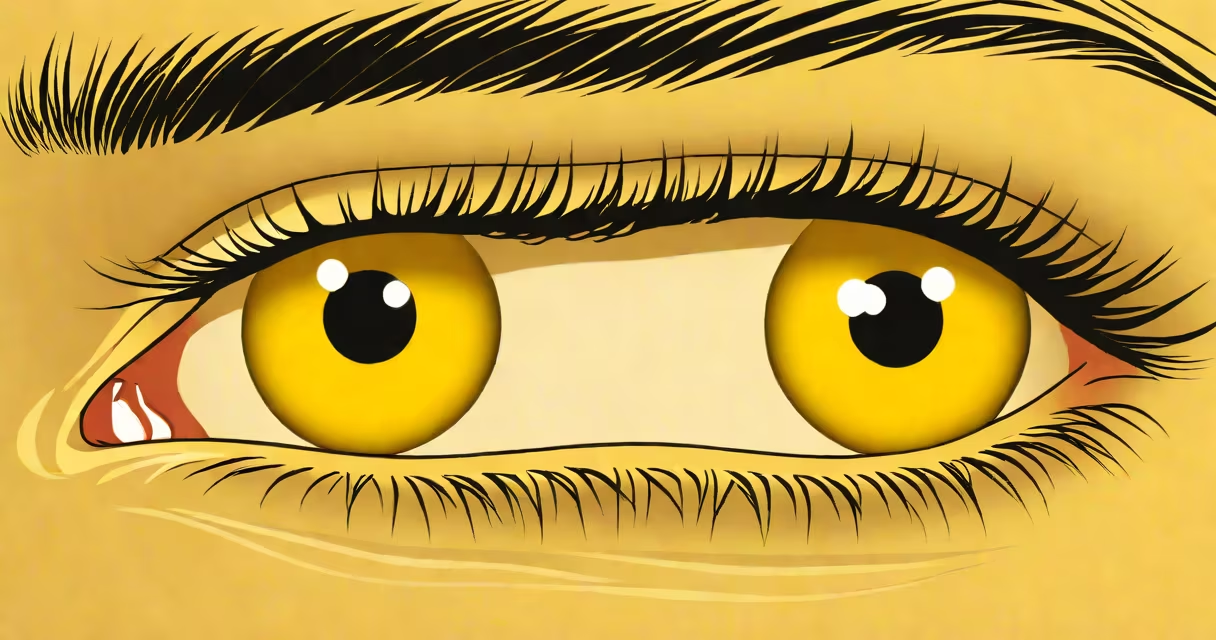
Yellow eyes indicate jaundice, a condition caused by excess bilirubin in the bloodstream, often signaling liver dysfunction, bile duct obstruction, or hemolytic anemia. Bilirubin is a pigment formed during red blood cell breakdown; when the liver cannot process it efficiently, it accumulates and deposits in tissues, turning the whites of the eyes yellow first.
Jaundice appears when serum bilirubin exceeds 2.5 mg/dL. The yellowing typically begins in the sclera-the white part of the eye-before spreading to the skin. This early onset makes eye color change a sensitive clinical marker. The American Liver Foundation notes that jaundice is not a disease itself but a symptom of underlying conditions requiring medical evaluation.
Not all yellowing is due to liver problems. Hemolysis, where red blood cells break down faster than normal, increases bilirubin production. In newborns, physiological jaundice resolves within days. But in adults, persistent yellow eyes demand investigation. The most common cause is liver disease, including hepatitis, cirrhosis, or fatty liver disease. Bile duct blockages from gallstones or tumors can also prevent bilirubin excretion.
Bilirubin forms when hemoglobin from aging red blood cells is broken down in the spleen. The liver processes this unconjugated bilirubin into a water-soluble form called conjugated bilirubin, which is excreted into bile. If any step fails-liver damage, bile duct blockage, or excessive red cell destruction-bilirubin builds up in the blood.
When bilirubin levels rise above normal, it diffuses into tissues. The sclera, rich in collagen and thin, shows discoloration earlier than skin. Skin may appear yellow later, especially on the palms and soles. Some people mistake this for sun exposure or fatigue, but the hue is distinct-golden or lemon-colored, not orange.
A 2021 study in *Gastroenterology* found that 68% of patients presenting with jaundice had underlying liver disease, while 15% had hemolytic disorders. Only 17% had no identifiable cause after testing. This highlights that yellow eyes are rarely benign and should prompt diagnostic workup.
Jaundice is categorized by where the bilirubin imbalance occurs: pre-hepatic (before the liver), hepatic (within the liver), or post-hepatic (after the liver).
| Type | Origin | Key Cause | Lab Pattern |
|---|---|---|---|
| Pre-hepatic | Before liver processing | Hemolytic anemia, sickle cell crisis | Elevated unconjugated bilirubin |
| Hepatic | Liver cell damage | Hepatitis B/C, alcohol-related liver disease | Both unconjugated and conjugated bilirubin high |
| Post-hepatic | After liver, in bile flow | Gallstones, pancreatic cancer, primary biliary cholangitis | High conjugated bilirubin, elevated alkaline phosphatase |
For example, a 45-year-old man with a history of heavy drinking developed yellow eyes, dark urine, and pale stools. Blood tests showed elevated conjugated bilirubin and ALT/AST enzymes. Ultrasound revealed fatty liver and enlarged gallbladder. He was diagnosed with alcoholic hepatitis and treated with corticosteroids and abstinence from alcohol.
Non-liver causes include Gilbert's syndrome-a genetic condition affecting bilirubin metabolism. It affects 3-7% of the population and causes mild, intermittent jaundice triggered by fasting, dehydration, or stress. Unlike severe liver disease, Gilbert's is harmless and requires no treatment.
Yellow eyes are often mistaken for carotenemia, a condition where high intake of beta-carotene-rich foods-like carrots, sweet potatoes, or squash-causes yellow-orange skin discoloration. Unlike jaundice, carotenemia does not affect the sclera. The whites of the eyes remain white. This distinction is critical: if the eyes stay clear, the issue is dietary, not medical.
Another confusion arises with conjunctivitis, which causes redness and irritation. While inflamed eyes may look yellowish due to swelling and congestion, the color is diffuse and lacks the consistent golden tint of bilirubin deposition. A simple test: press gently on the forehead. In jaundice, the yellow persists under pressure; in inflammation, it fades temporarily.
One overlooked fact: jaundice can appear in people with normal liver function if they have rapid hemolysis. A patient with sickle cell trait who experienced a vaso-occlusive crisis developed yellow eyes despite normal LFTs. Labs confirmed elevated unconjugated bilirubin and reticulocytosis. The yellowing resolved after hydration and pain control.
Yellow eyes are not a minor concern. They require prompt evaluation. The Mayo Clinic advises seeing a doctor within 48 hours if yellowing persists beyond two days, especially with fever, abdominal pain, or dark urine.
I once observed a 60-year-old woman with gradual yellowing of her eyes and skin. She delayed care for three weeks, attributing it to aging. By the time she presented, her bilirubin was 12 mg/dL, and imaging revealed a pancreatic tumor obstructing the common bile duct. She underwent surgery and chemotherapy. Early diagnosis could have improved outcomes.
Testing includes a complete blood count, liver function tests, bilirubin levels, and imaging such as ultrasound or MRI. If jaundice is sudden and severe, hospitalization may be needed for diagnosis and management.
While rare, yellow eyes can occur in autoimmune disorders like primary sclerosing cholangitis. A 2020 review in *Hepatology* linked this condition to increased risk of colorectal cancer, underscoring the need for regular screening.
Understanding what it mean when your eyes yellow is essential. It's not just a visual change-it's a warning sign. Recognizing the difference between benign causes like diet and serious ones like liver failure saves lives. Don't ignore yellow eyes. Get tested.