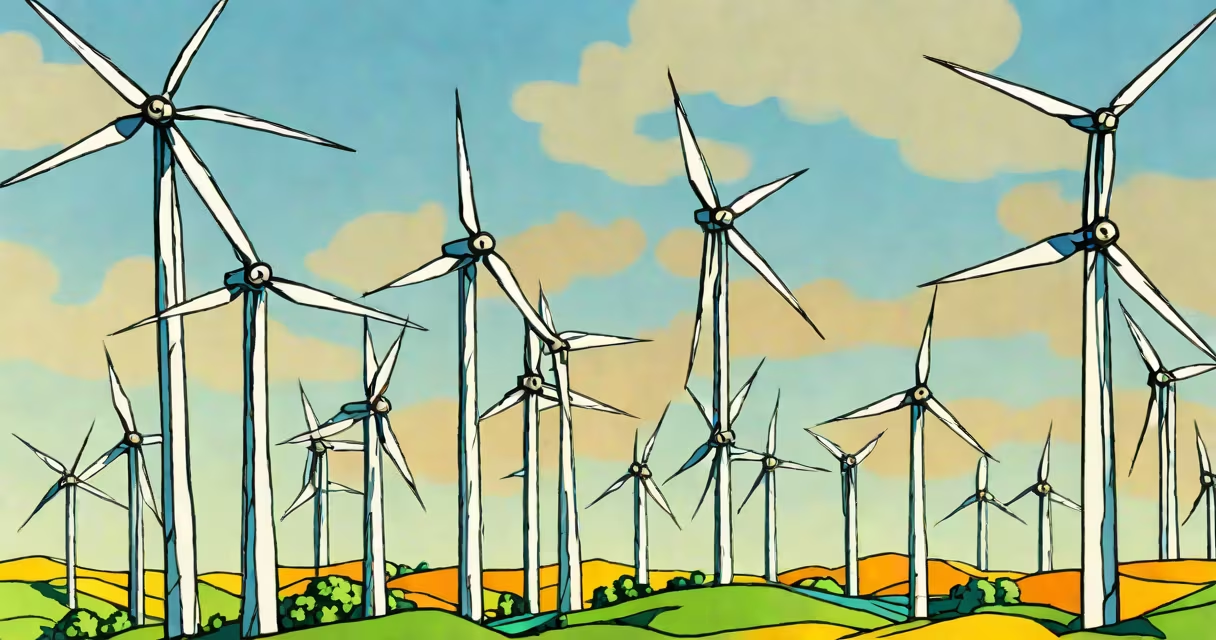
Wind is a renewable resource because it is naturally replenished through atmospheric processes driven by solar heating, with no finite supply and zero greenhouse gas emissions during energy conversion.
Wind forms when the sun heats Earth's surface unevenly, causing air to rise and cooler air to rush in and replace it. This movement creates wind currents. These patterns occur continuously, driven by daily and seasonal solar cycles. Unlike fossil fuels, which take millions of years to form and deplete when burned, wind is constantly renewed. The U.S. Energy Information Administration confirms that wind energy systems generate electricity without consuming fuel or releasing carbon dioxide during operation.
Wind turbines capture kinetic energy from moving air. Blades rotate around a central hub connected to a generator. As the rotor spins, it turns a shaft inside the generator, producing electricity via electromagnetic induction. Modern turbines can convert 40-50% of wind's kinetic energy into electrical power under optimal conditions. A single utility-scale turbine can power 1,500 homes annually, depending on location and wind speed.
Wind originates from solar radiation. The sun heats land and water differently-land warms faster than oceans. Warm air rises, creating low-pressure zones. Cooler air from high-pressure areas flows in to fill the gap, generating wind. This cycle repeats daily and seasonally. The National Renewable Energy Laboratory (NREL) estimates that global wind resources could meet current worldwide electricity demand 20 times over, making wind one of the most abundant renewable sources.
Unlike coal or oil, wind doesn't diminish when used. Extracting wind energy doesn't reduce future wind availability. Even in regions with lower average wind speeds, consistent patterns allow for reliable energy production. For example, the Great Plains in the U.S. see sustained winds averaging 6.5 m/s (14.5 mph) at 80 meters above ground-ideal for turbine placement.
A common misconception is that wind is inconsistent or unreliable. While wind varies hourly, long-term forecasts and grid integration technologies minimize disruptions. In 2023, wind supplied 10% of U.S. electricity, with Texas leading in capacity. Denmark generated 53% of its electricity from wind in 2022, proving large-scale reliability.
Wind energy systems fall into two main categories based on scale and application:
| Type | Scale | Use Case | Capacity Range |
|---|---|---|---|
| Utility-scale | Large | Grid-connected power plants | 2-15 MW per turbine |
| Small-scale | Residential or community | Home backup, off-grid sites | 1-10 kW per unit |
Utility-scale systems dominate national grids. They require consistent wind patterns and access to transmission lines. Small-scale units serve remote homes or farms. A 5-kW turbine installed on a rural property in Iowa can offset 80% of household electricity use, reducing reliance on diesel generators.
Offshore wind farms represent a growing segment. Floating turbines in deeper waters access stronger, steadier winds. The Hornsea Project in the UK, operational since 2020, hosts 174 turbines and generates enough power for over 1 million homes. Offshore wind capacity is projected to grow 15-fold globally by 2050, according to the International Energy Agency.
Some assume wind energy requires constant wind. In reality, turbines operate efficiently at wind speeds between 13-25 km/h (8-15 mph). Below 3 m/s (6.7 mph), they shut down to prevent damage. Above 25 m/s (56 mph), they feather blades to avoid mechanical stress. Modern turbines have automated safety protocols that activate at extreme speeds.
Another myth is that wind turbines harm birds. Studies show bird mortality rates from turbines are low compared to buildings, vehicles, and cats. The American Bird Conservancy reports that wind facilities cause approximately 140,000 to 328,000 bird deaths annually in the U.S.-a fraction of the 600 million birds killed each year by collisions with windows and vehicles.
There's also confusion between wind and other renewables. While solar panels convert sunlight directly into electricity, wind turbines rely on air movement. Both are renewable, but their deployment depends on geography. Solar works best in arid, sunny climates; wind thrives in coastal or elevated regions. Combining both maximizes output. In California, solar and wind together supplied 52% of state electricity in 2023.
In 2021, the town of Greensburg, Kansas, rebuilt after a tornado destroyed 95% of its infrastructure. The city adopted a 100% renewable energy plan centered on wind. Six turbines were installed on nearby farmland, each rated at 1.5 MW. Together, they produce 18 megawatts-enough to power 5,000 homes annually.
The project reduced local emissions by 70,000 tons of CO₂ per year. Maintenance costs averaged $25,000 annually, covered by a public-private partnership. The town now hosts a visitor center explaining how wind supports resilience and sustainability. This model demonstrates how wind energy integrates into community planning.