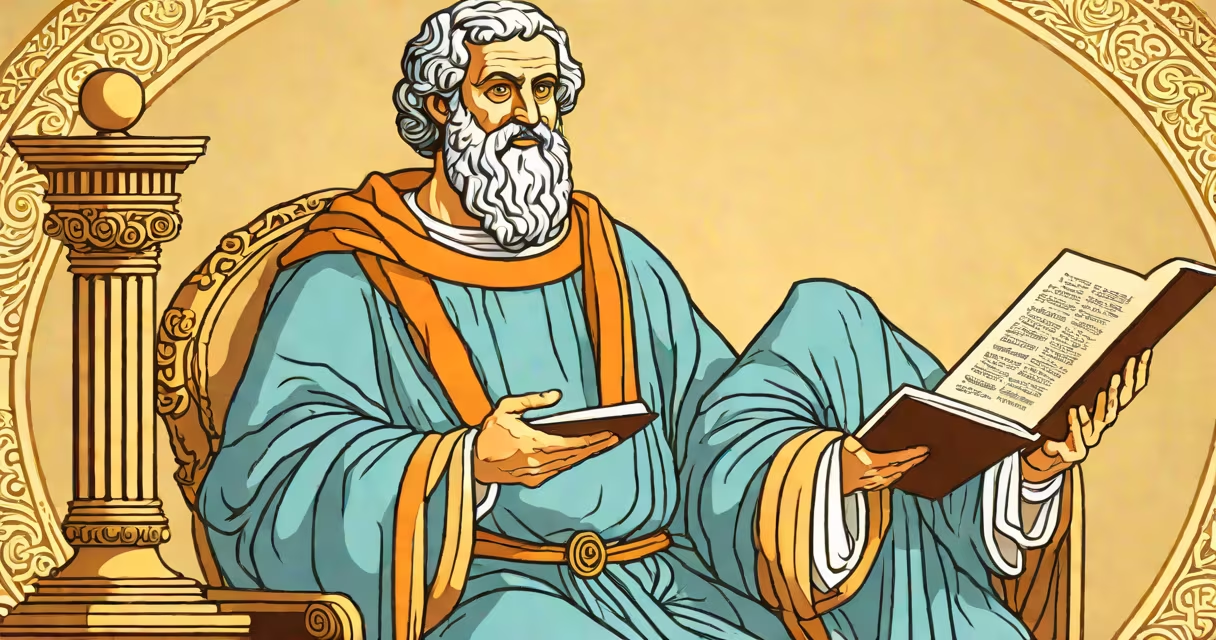
Aristotle defined the purpose of life as eudaimonia-human flourishing achieved through virtuous action guided by reason. This state is not pleasure or wealth, but the fulfillment of one's nature as a rational being.
Aristotle believed every entity has a telos, or inherent end. For humans, that end is not mere survival or comfort, but the exercise of reason in accordance with virtue. He argued that we are not born with purpose, but develop it through habit, education, and deliberate choice. The goal is not happiness as fleeting emotion, but lasting well-being rooted in moral and intellectual excellence.
He distinguished between hedonic pleasure-short-term gratification-and eudaimonia, which requires effort, discipline, and alignment with one's rational nature. A person who lives wisely, courageously, justly, and temperately achieves this higher form of life. This is not a passive state; it demands active engagement with ethical choices daily.
Aristotle's view rests on a hierarchy of human capacities. We possess appetites, emotions, and reason. The purpose of life emerges when reason governs the lower parts of the soul. A life lived in balance-where desires are shaped by rational judgment-is the mark of a good life.
For example, courage is not the absence of fear, but the ability to act rightly despite it. A soldier who charges into battle not out of recklessness, but because they assess the situation and choose the right course, embodies courage. This is not instinct-it is trained judgment.
He emphasized that virtues are habits formed through repetition. You don't become just by wishing to be just-you become just by doing just acts consistently. Over time, the behavior becomes part of your character. This process is central to achieving eudaimonia.
Aristotle identified three elements essential to living a purposeful life:
He did not dismiss external conditions. In Nicomachean Ethics, Book I, he writes: "Happiness is the highest good, and it is complete and self-sufficient." But he also notes that a person cannot live well without friends, resources, and a stable environment. Still, these are tools-not ends in themselves.
Many assume Aristotle meant that purpose is found in individual achievement or personal success. That is incorrect. His purpose is relational and communal. A person cannot flourish in isolation. Friendship, civic participation, and shared deliberation are necessary for full development.
Another error is equating eudaimonia with modern ideas of "success" or "self-actualization." While Maslow's hierarchy of needs echoes Aristotle's idea of growth, the Greek philosopher grounded purpose in ethical action, not psychological fulfillment. Eudaimonia is not about feeling good-it's about doing good.
A third misconception is that Aristotle believed virtue is automatic. He explicitly rejected this. In Nicomachean Ethics, Book II, he states: "Virtue is a state of character concerned with choice, and choice is about what is in our power." This means we must actively choose to do what is right, even when it's hard.
Consider a teacher who spends evenings preparing lessons, listens carefully to students' concerns, and corrects papers with thoughtful feedback. They do not do this for praise or pay. Their motivation is a desire to cultivate understanding in others.
This teacher exemplifies Aristotle's model. They exercise practical wisdom (phronesis)-judging correctly what actions benefit students. They show courage by addressing classroom challenges, justice by treating all students equally, and temperance by avoiding burnout. Their life is not defined by outcomes but by consistent ethical effort.
Even if the school system resists change, the teacher persists. This persistence is not blind optimism-it is reasoned commitment to a good that transcends immediate results. This is eudaimonia in motion.
Aristotle's purpose differs sharply from existentialist views like those of Camus or Sartre, who argue life has no inherent meaning. For them, purpose is created through individual choice in an indifferent universe. Aristotle, by contrast, believed meaning exists in nature itself-the human capacity for reason and moral action defines what is good.
Also, while modern psychology often frames well-being as emotional satisfaction, Aristotle saw it as functional excellence. A person may feel happy while lying in bed all day, but that life lacks telos. True flourishing requires engagement, contribution, and growth.
There is a subtle but important difference between "purpose" and "goal." A goal is something you achieve-like graduating or earning a promotion. Purpose is the ongoing direction of your life. Aristotle's purpose is not a destination, but a way of being.
I once observed a retired professor who volunteered at a community literacy program. He had no formal incentive, yet attended weekly sessions, corrected essays patiently, and encouraged hesitant learners. When asked why, he said, "I've spent my life teaching. Now I'm still learning how to teach better."
His routine wasn't driven by recognition. It was consistent with his identity as a thinker and educator. He was not seeking joy-but he experienced deep satisfaction. That moment reflected Aristotle's vision: purpose as continuity of meaningful action.
Modern life often reduces purpose to productivity or consumption. Aristotle reminds us that purpose is not found in doing more, but in doing well-with care, clarity, and character.
Research supports this. A 2021 study published in Journal of Positive Psychology found that people who engage in regular prosocial behavior report higher levels of long-term well-being. This aligns with Aristotle's claim that virtue leads to flourishing, not just moral correctness.
Another study from the University of Pennsylvania (2019) showed that individuals who define success for character rather than wealth report greater life satisfaction. This mirrors Aristotle's argument that eudaimonia is not about external markers, but internal alignment.
When you ask, "What is my purpose?" Aristotle's answer is not a single task or role. It is a way of living: choosing wisely, acting justly, growing in understanding. Your purpose is not discovered-it is practiced.
Aristotle's purpose of life is not a doctrine to follow blindly. It is a challenge: to live deliberately, to grow in character, and to seek the good not for reward, but because it is right.