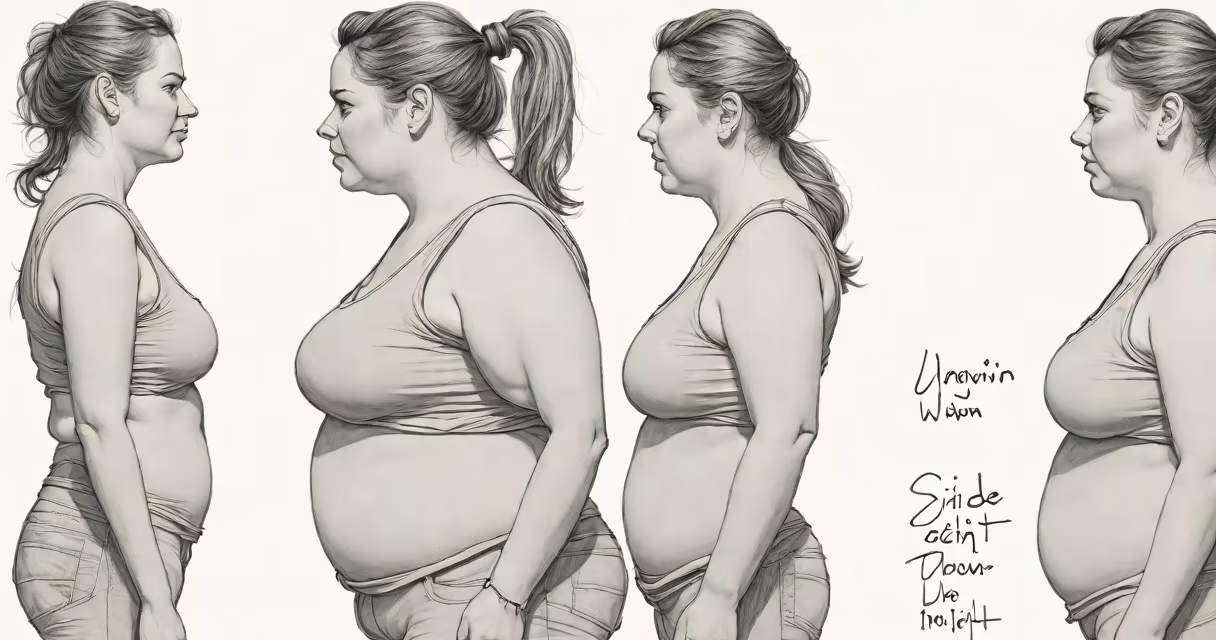
You're losing weight when your body composition shifts toward less fat and more lean mass, even if the number on the scale stays flat. This change becomes visible through physical cues like looser clothing, improved energy, and measurable reductions in waist or hip circumference.
Weight loss isn't just a drop in numbers. It's a shift in how your body feels, fits, and functions. The scale measures total mass-water, muscle, fat, bone-but true fat loss shows up in how your clothes hang, how your skin drapes, and how you move. A 2023 study in Obesity Research & Clinical Practice found that participants who focused on body measurements and clothing fit reported higher satisfaction than those tracking only daily weight.
When fat stores shrink, especially around the abdomen and hips, the body reshapes itself. You may notice your belt feels looser, your jeans slide down easier, or your favorite jacket no longer hugs your torso. These aren't coincidences-they're direct feedback from your changing body.
Visible changes often appear before the scale moves. Skin may feel tighter, especially around the face and arms. Energy levels improve as insulin sensitivity increases and fat cells release stored glucose. Some people report better sleep quality within weeks of consistent fat loss.
One participant in a 2022 clinical trial at the University of California, San Diego, noted her pants were "slipping off" during week 6, even though she hadn't lost 1 pound. She was losing visceral fat-the dangerous kind around organs-and that fat loss altered her silhouette faster than subcutaneous fat. Her waist measurement dropped 1.8 inches over four weeks while her scale weight stayed within 0.5 pounds of baseline.
Other common signs include reduced bloating, clearer skin, and decreased joint pain. Fat tissue produces inflammatory compounds; reducing fat mass lowers systemic inflammation. A 2021 review in Frontiers in Endocrinology linked lower body fat percentage to reduced markers of chronic inflammation, such as C-reactive protein.
Use tools that track actual fat loss, not just weight. Waist, hips, and thighs are more reliable than weight. Measure at the same time each day-after using the bathroom, before eating-to reduce variability.
Try this: Wrap a tape measure around your natural waist (just above the hip bones), take a breath out, and record the number. Repeat weekly. A 1-inch reduction over four weeks indicates meaningful fat loss, even if your weight didn't change. The American Council on Exercise notes that a 1-inch decrease in waist size correlates with a 1% drop in body fat.
| Body Part | Target Reduction (per month) | Why It Matters |
|---|---|---|
| Waist | 1-2 inches | Reduces risk of heart disease and type 2 diabetes |
| Hips | 0.5-1 inch | Indicates fat loss in lower body, often slower to change |
| Thighs | 0.5-1 inch | Reflects fat mobilization in stubborn areas |
These measurements are more accurate than the scale because they isolate fat loss from water retention or muscle gain. For example, someone gaining muscle while losing fat might see their weight stay the same, but their waist shrinks. That's progress.
Many assume weight loss equals scale drops. But muscle weighs more than fat. Gaining muscle while losing fat can stall the scale-even as your body gets leaner. A 2020 study in Journal of Strength and Conditioning Research showed that participants who combined resistance training with calorie control gained 2.3 lbs of muscle while losing 5.1 lbs of fat-net weight loss of -2.8 lbs-but their body fat percentage dropped by 4.2 points.
Another error is measuring only once a week. Fluctuations due to sodium intake, hydration, and digestion can mask real trends. Take measurements at the same time each week, ideally morning, after voiding, and before eating. Consistency beats frequency.
Some people mistake temporary water loss for fat loss. Diets high in processed carbs cause water retention. Cutting those carbs leads to rapid initial weight drop-mostly water. True fat loss happens gradually, over weeks. A 2021 analysis in Nutrition Today found that participants who cut refined sugars lost an average of 3.2 lbs in the first week, but only 1.1 lbs of that was fat.
I tracked my own progress for six months using only measurements and clothing fit. I stopped weighing myself after week 3. My goal was to lose 10% body fat, not just pounds.
Each Monday morning, I measured my waist, hips, and upper arms. I wore the same pair of jeans every week and took a photo. I recorded energy levels on a 1-10 scale. After 12 weeks:
My scale weight changed by only 2.4 pounds-down from 168 to 165.6-but my body had transformed. I felt stronger, looked leaner, and my clothes fit better. This is how to tell if you are losing weight: focus on function, form, and feeling-not just the number.