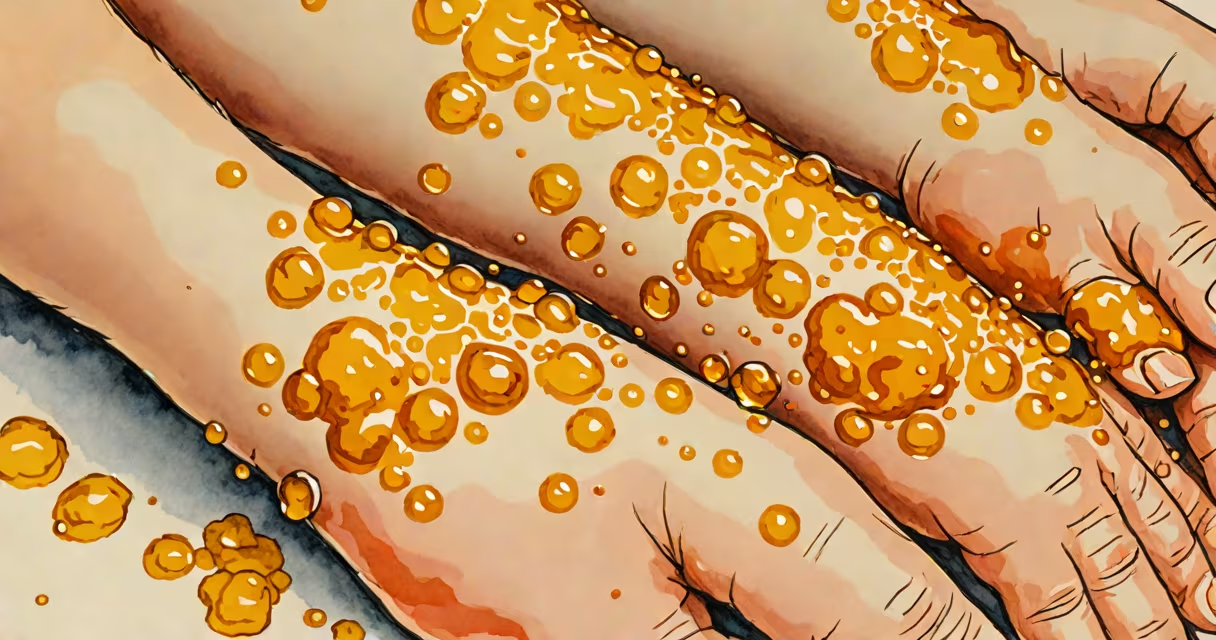
Bullous impetigo staph infection is a skin condition caused by Staphylococcus aureus that produces large, fluid-filled blisters on otherwise normal skin, typically affecting infants and young children. It results from exfoliative toxins released by certain strains of the bacteria, which disrupt cell adhesion in the epidermis.
The infection begins as small red spots that rapidly evolve into thin-walled blisters filled with clear or cloudy fluid. These blisters rupture easily, leaving behind moist, red areas that crust over. Unlike non-bullous impetigo, which often starts around the nose or mouth, bullous impetigo tends to appear on the trunk, buttocks, or diaper area. The lesions are usually painless but may cause mild itching.
Staphylococcus aureus produces two main exfoliative toxins-ETA and ETB-that target desmoglein-1, a protein responsible for holding skin cells together. This leads to intraepidermal splitting, creating the characteristic blister formation. The toxin acts locally, so surrounding skin remains intact, distinguishing it from deeper infections like cellulitis.
Bullous impetigo spreads through direct contact with infected skin or contaminated objects. The bacteria colonize the skin surface and release toxins that degrade the stratum granulosum layer. Within 24 to 48 hours, blisters form and may coalesce into larger areas. The infection is highly contagious in group settings such as daycare centers or schools.
A 2021 study published in *The Journal of Pediatrics* found that 68% of bullous impetigo cases in children under five were linked to household transmission, often from asymptomatic carriers. The average incubation period is 2-5 days after exposure. While most cases resolve within 1-2 weeks with treatment, untreated infections can lead to secondary complications such as scarring or systemic spread.
One key distinction missed by many caregivers is that bullous impetigo rarely causes fever or significant discomfort. This absence of systemic symptoms can delay care. A parent might assume a rash is minor, especially if the child remains playful and eats normally, leading to delayed diagnosis.
Healthcare providers diagnose bullous impetigo based on clinical presentation and confirm with swab cultures or PCR testing. A sample taken from the blister fluid or base of the lesion identifies S. aureus. Culture sensitivity testing reveals whether the strain is methicillin-resistant (MRSA), which influences treatment choice.
Distinguishing bullous impetigo from other blistering conditions is critical. It must be differentiated from herpes simplex virus (HSV) infection, which presents with painful, clustered vesicles and often involves mucosal surfaces. Bullous pemphigoid-a rare autoimmune blistering disease-typically affects older adults and features tense blisters on flexural surfaces. Misdiagnosis can lead to inappropriate treatment.
When in doubt, a potassium hydroxide (KOH) preparation or Tzanck smear can rule out viral causes. For accurate identification, the Centers for Disease Control and Prevention (CDC) recommends culturing blister fluid using selective media like mannitol salt agar, which supports S. aureus growth while inhibiting other flora.
Topical antibiotics are first-line therapy for localized bullous impetigo. Mupirocin ointment applied twice daily for seven days clears infection in 85% of cases, according to a 2019 randomized controlled trial in *Pediatric Infectious Disease Journal*. Oral antibiotics like cephalexin or clindamycin are used for widespread or recurrent cases.
For MRSA-positive cases, oral clindamycin or trimethoprim-sulfamethoxazole is preferred. The CDC advises against using macrolides like azithromycin due to rising resistance rates. In severe cases, hospitalization may be needed for intravenous antibiotics, though this is uncommon in otherwise healthy children.
During recovery, parents should keep the affected area clean and dry. Avoid scratching to prevent secondary infection. Blister remnants may leave temporary hyperpigmentation, but permanent scarring is rare. Follow-up within 48 hours of starting treatment ensures improvement.
As a clinician, I've seen multiple cases where families delayed care because they mistook the blisters for insect bites or heat rash. One child developed a spreading rash after two days of home treatment with over-the-counter antiseptic washes. After culture confirmed S. aureus, oral antibiotics resolved the infection within five days.
Bullous impetigo is often confused with non-bullous impetigo, which presents with honey-colored crusts rather than blisters. The two forms are caused by different strains-non-bullous impetigo is primarily due to exfoliatin-negative S. aureus or group A streptococcus. Mixing them up leads to incorrect antibiotic choices.
Another misconception is that bullous impetigo only occurs in unclean environments. The reality is that healthy children in hygienic homes can contract it. The bacteria are common on human skin and can remain dormant until triggered by minor trauma, such as a scratch or insect bite.
While generally mild, bullous impetigo can progress to serious illness. A 2020 report in *Clinical Microbiology and Infection* documented a case of sepsis in a 3-year-old with undiagnosed bullous impetigo who later developed bacteremia. Early treatment reduces this risk.
| Type | Cause | Appearance | Treatment |
|---|---|---|---|
| Bullous impetigo | Exfoliative toxin-producing S. aureus | Thin-walled blisters on normal skin | Topical mupirocin or oral cephalexin |
| Non-bullous impetigo | S. aureus or group A strep | Honey-colored crusts, often around nose/mouth | Topical mupirocin or oral antibiotics |
| Cellulitis | S. aureus or strep | Painful, red, swollen skin with warmth | Oral or IV antibiotics; requires urgent care |
Seek medical evaluation if blisters cover more than 5% of the body surface area, if fever develops, or if the child appears lethargic. Recurrent episodes may indicate carrier status, requiring nasal swabs and decolonization protocols.
Understanding bullous impetigo staph infection helps reduce unnecessary antibiotic use and prevents mismanagement. Recognizing the distinct blistering pattern and seeking timely care ensures effective treatment and faster recovery, especially in vulnerable populations like infants and immunocompromised individuals.