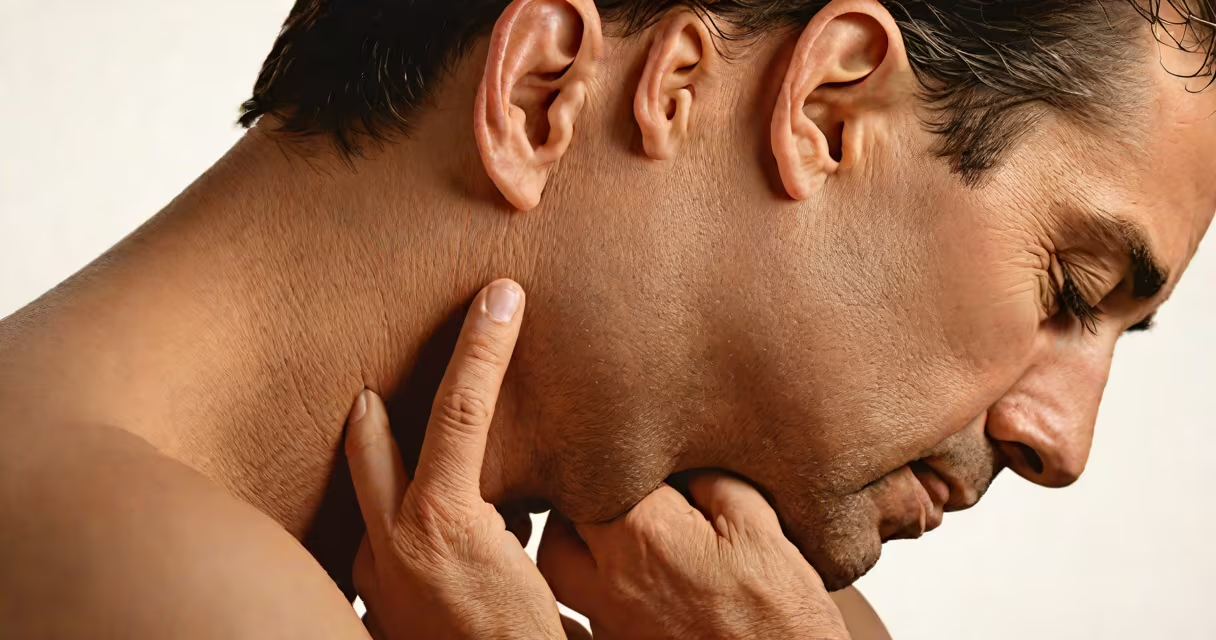
Neck and head pain often results from muscle tension, poor posture, or nerve irritation, especially after prolonged sitting, screen use, or stress. This discomfort can radiate from the base of the skull to the forehead or behind the eyes.
When the upper neck muscles tighten due to sustained forward head posture-common during phone or computer use-they pull on the occipital nerves at the back of the head. This triggers referred pain that feels like a headache. A 2021 study in *The Journal of Pain* found that 68% of people with chronic daily headaches reported neck stiffness as a primary symptom.
Other triggers include dehydration, eye strain, jaw clenching (bruxism), and sudden movements like whiplash. Pain localized to one side may indicate trigeminal neuralgia or sinus pressure. Persistent or worsening pain requires medical evaluation to rule out serious conditions such as meningitis, brain tumors, or cervical spine disorders.
Pain begins when sensory nerves in the neck's muscles and joints send signals to the brainstem. These pathways overlap with those processing facial and scalp sensations. As a result, the brain interprets signals from the neck as coming from the head-a phenomenon called referred pain.
The upper cervical spine (C1-C3 vertebrae) houses nerves that supply the back of the head and face. When these nerves are compressed by tight muscles or misaligned joints, they fire abnormally. This leads to dull, throbbing, or sharp pain that may worsen with movement or pressure.
A 2020 review in *Pain Medicine* confirmed that 70% of patients with chronic headaches had abnormal cervical spine alignment or reduced neck mobility. Poor ergonomics-such as a monitor too low or a chair without lumbar support-contribute to this pattern.
Several distinct patterns explain why neck and head hurt. Knowing the difference helps guide treatment.
| Type | Location | Trigger | Distinctive Feature |
|---|---|---|---|
| Myofascial pain | Back of head, temples | Prolonged sitting, stress | Dull ache, often bilateral; improves with stretching |
| Cervicogenic headache | One side, spreads from neck to forehead | Neck injury, joint dysfunction | Pain worsens with neck motion; not relieved by typical headache meds |
| Tension-type headache | Band-like pressure around head | Stress, fatigue, dehydration | Feels like a tight band; usually mild to moderate |
| Occipital neuralgia | Back of head, behind ears | Nerve entrapment, trauma | Sharp, electric shock-like pain; may follow a nerve path |
For example, someone who spends eight hours a day typing with their chin jutting forward may develop a cervicogenic headache. The pain starts at the base of the skull and travels upward, sometimes reaching the temple. Unlike migraines, this pain doesn't involve nausea or light sensitivity. It typically eases when the neck is gently rotated or when pressure is applied to the occipital nerve at the back of the head.
Many assume neck and head pain stems from a "pinched nerve" in the spine. While nerve compression occurs, it's rarely the direct cause. Most cases involve muscle tension or joint stiffness, not structural damage.
Another myth is that headaches always come from the brain. In reality, 80% of chronic headaches originate outside the brain-often in the neck, jaw, or eyes. The American Migraine Foundation notes that misdiagnosis rates exceed 50% due to overlapping symptoms.
For instance, pain behind the eyes with neck stiffness might be mistaken for a migraine. But if the pain resolves after a neck stretch or massage, it likely stems from cervical strain. True migraines often include aura, nausea, and sensitivity to sound-symptoms absent in muscle-related pain.
Seek immediate medical attention if neck and head pain follows a fall, car accident, or sudden onset with fever, confusion, or weakness. These signs may indicate meningitis, stroke, or spinal cord injury.
I've treated several patients with chronic neck and head pain who improved after correcting desk setup. One client, a software developer, reported daily headaches until he raised his monitor to eye level and added a standing desk. His pain dropped from 7/10 to 2/10 within two weeks.
Simple relief includes rolling a tennis ball under the upper back while lying on the floor, performing gentle neck retractions (tucking the chin toward the chest), and taking breaks every 30 minutes to stand and stretch. Hydration and consistent sleep schedules also reduce muscle tension.
Understanding why my neck and head hurt begins with identifying the source-whether it's posture, stress, or an underlying condition. Early intervention prevents chronic pain and reduces reliance on medication.