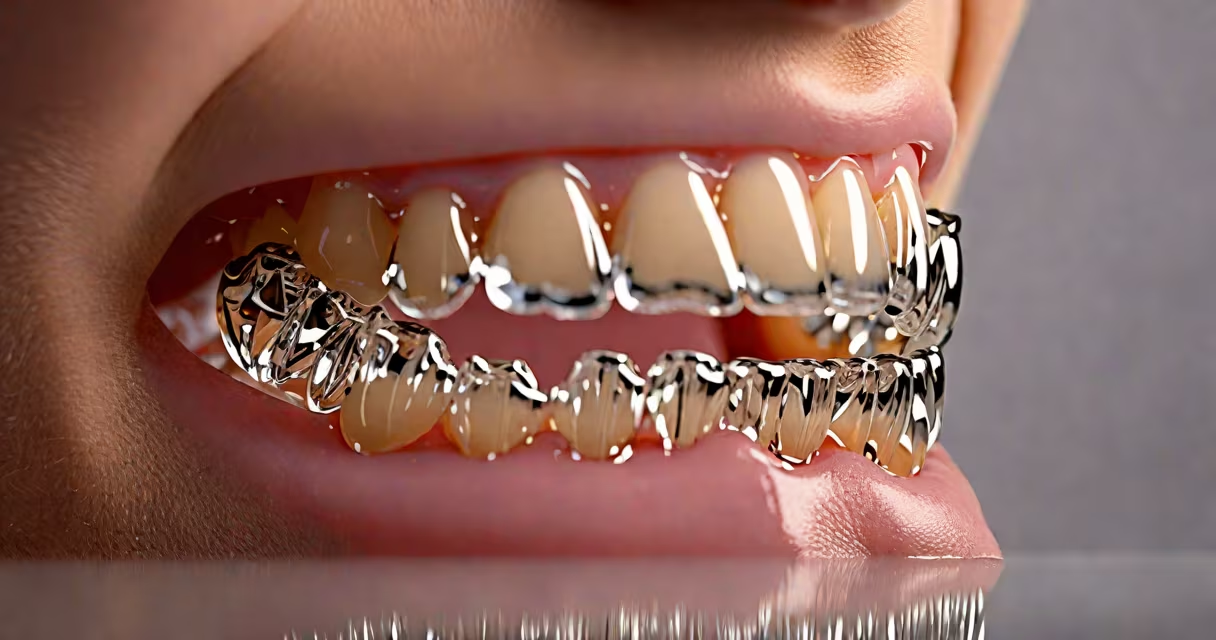
A retainer is a custom-fitted dental appliance worn after braces to stabilize newly aligned teeth and prevent them from shifting back to their original positions. Without consistent wear, teeth can gradually revert to their pre-treatment alignment due to bone remodeling and muscle memory.
Teeth don't settle into place immediately after braces. The periodontal ligament-the connective tissue anchoring each tooth to the jawbone-remains stretched during orthodontic movement. As it slowly contracts over months, teeth have a natural tendency to drift. A retainer applies gentle, continuous pressure to counteract this force and maintain the corrected position.
The American Association of Orthodontists confirms that retention is a critical phase of treatment, with most patients advised to wear a retainer full-time for the first six months after braces removal. After that, nighttime wear continues for at least two years, and often longer, depending on individual risk factors such as genetics, age, and initial misalignment severity.
Retainers function through controlled, low-force application. They resist the subtle forces exerted by tongue pressure, chewing, and facial muscles that constantly push teeth toward their former positions. This balance prevents relapse, which occurs when teeth move out of alignment after orthodontic correction.
There are two primary types: removable and fixed. Removable retainers-often clear aligner-style or wire-and-plastic designs-are worn daily, typically at night. Fixed retainers consist of a thin metal wire bonded to the back of the lower front teeth. These remain in place permanently unless removed by a dentist.
Research published in the *American Journal of Orthodontics and Dentofacial Orthopedics* shows that 60% of patients experience some degree of tooth movement within the first year after removing braces if they do not wear a retainer consistently. Movement is most pronounced in the lower incisors, which are prone to crowding due to natural tooth size discrepancies and jaw space limitations.
| Type | Wear Schedule | Best For | Duration |
|---|---|---|---|
| Clear removable | Full-time for 6 months, then nightly | Most patients; aesthetic preference | At least 2 years, often longer |
| Wire-and-plastic | Same as above | Patients with high relapse risk | 2+ years |
| Fixed (bonded) | Permanent unless removed | Lower front teeth; severe crowding history | Lifetime, unless clinical decision to remove |
Many patients assume that because their teeth look straight, the orthodontic work is complete. This belief leads to early discontinuation of retainer wear-often resulting in visible relapse within months. Teeth may appear stable at first, but underlying shifts occur silently.
One overlooked factor is the role of oral habits. Tongue thrusting, nail biting, and chewing on pens apply pressure that can displace teeth. A study in the *Journal of Clinical Orthodontics* found that patients who engaged in these behaviors were 3.4 times more likely to require a second round of orthodontic treatment if they stopped wearing their retainer.
Another misconception is that retainers are only needed for a few months. While full-time wear is recommended initially, many dentists extend the nighttime wear period indefinitely. Some recommend lifelong retention for patients with significant initial crowding or those who had surgical orthodontics.
Consider a 16-year-old patient who completed two years of traditional braces treatment. Their lower front teeth were severely crowded. After removal, the orthodontist prescribed a Hawley retainer to be worn full-time for six months, then nightly thereafter.
After four months, the patient stopped wearing the retainer due to discomfort and forgetfulness. Within nine months, a follow-up exam revealed a 2 mm shift in the lower central incisors. The teeth had begun to rotate inward, creating a gap between the upper and lower front teeth. Radiographs showed increased bone density around the roots, indicating active remodeling. The orthodontist recommended restarting full-time wear and adding a fixed retainer to the lower arch.
This case illustrates that even minor deviations can trigger long-term instability. The cost of correcting relapse averages $2,500 to $4,000-nearly half the original braces fee-according to the American Dental Association's 2023 survey of orthodontic practices.
If you lose your retainer, notice gaps forming between teeth, or feel your bite has changed, contact your orthodontist promptly. Delaying action increases the likelihood of needing additional treatment. Most clinics offer replacement retainers at a fee, but early intervention can prevent costly corrections.
I once observed a patient who wore her retainer inconsistently for over a year. She returned after two years with noticeable crowding and required a second set of braces. Her orthodontist noted that the bone had reorganized around the old tooth positions, making re-alignment harder than the first time.
Consistent retainer use is not optional-it's essential to preserve the outcome of your orthodontic treatment. Skipping retention undermines months or years of effort and financial investment. Your smile remains stable only with ongoing commitment.