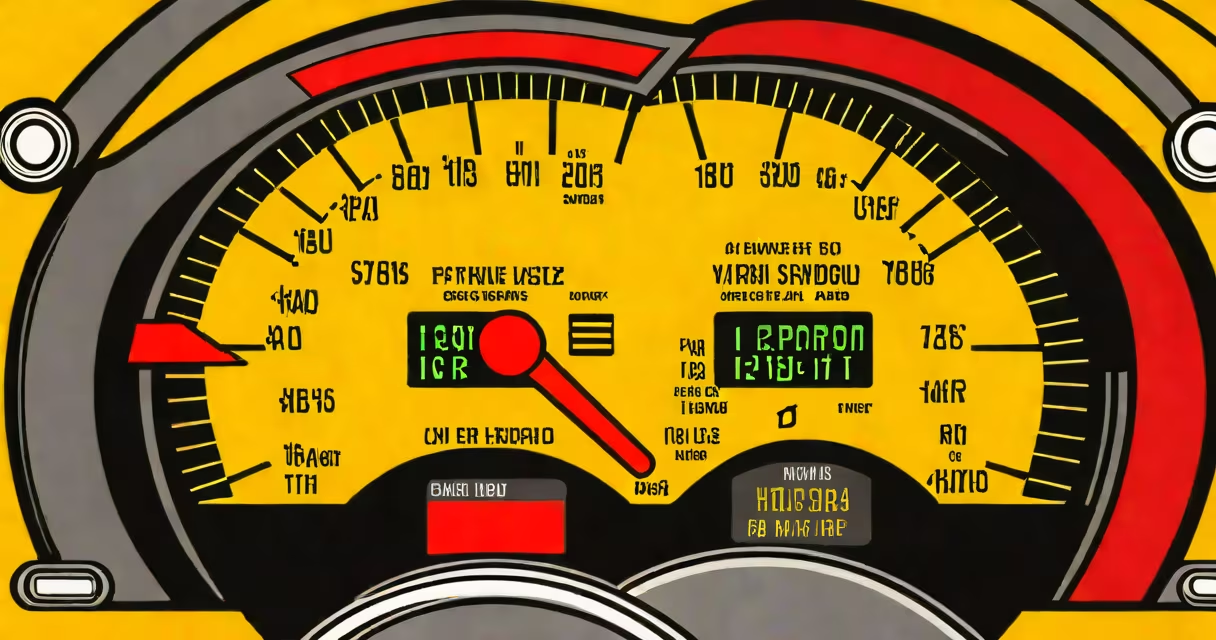
The symbol for the check engine light is a yellow or orange icon resembling a stylized engine with internal components visible, often labeled "Check Engine" or shown as a simplified engine outline. This symbol activates when the vehicle's onboard diagnostics detect a malfunction affecting emissions, fuel efficiency, or engine performance.
It appears on the dashboard during startup as part of a self-test sequence. If it remains illuminated after the engine starts, or turns on while driving, it indicates a fault detected by the OBD-II (On-Board Diagnostics II) system. The light may flash briefly during startup and then turn off if no issues are found.
According to the National Highway Traffic Safety Administration (NHTSA), the check engine light is standardized under SAE J2162, which defines the visual design and function of all vehicle warning lights in the U.S. The standard specifies that the symbol must be legible and use a yellow or amber color to indicate a condition requiring attention.
The check engine light is triggered by the vehicle's electronic control module (ECM), which monitors sensors throughout the engine and emissions systems. When a sensor reports data outside acceptable parameters-such as oxygen levels, coolant temperature, or catalytic converter efficiency-the ECM logs a trouble code and activates the warning light.
For example, if the oxygen sensor detects too much unburned fuel in the exhaust, the ECM records a P0171 code (indicating a lean fuel mixture) and turns on the check engine light. The light stays on until the issue is resolved or the system is reset manually.
Modern vehicles use OBD-II scanners to read these codes. A mechanic or owner with a compatible scanner can retrieve the specific code causing the light, such as P0300 (random cylinder misfire) or P0420 (catalytic converter inefficiency).
Many drivers assume the check engine light means "engine failure" or requires immediate towing. That's incorrect. The light indicates a problem needing attention, but not all issues are urgent. A loose gas cap, for instance, can trigger the light and cause a P0455 code-but it's fixable with a $10 part.
Another common mix-up is confusing the check engine light with the battery warning light (a battery icon with a minus sign) or the oil pressure light (a wrench over an oil can). These serve different functions: the check engine light relates to emissions and drivability, not fluid levels or electrical health.
A non-obvious fact: the light may blink rapidly (once per second) when a serious issue occurs-like a misfire that could damage the catalytic converter. The NHTSA warns that driving with a flashing check engine light increases the risk of expensive repairs. If the light flashes, reduce speed and seek service promptly.
Different behaviors signal varying urgency. The following table outlines common patterns:
| Light Behavior | Meaning | Recommended Action |
|---|---|---|
| Steady on (yellow/orange) | System detected a fault. Not an emergency, but needs diagnosis. | Get the vehicle scanned within 1-2 weeks. May affect emissions or fuel economy. |
| Blinks rapidly (1/sec) | Severe issue-often a misfire. Could damage catalytic converter. | Stop driving if possible. Avoid high speeds. Get towed to a shop. |
| Flashes intermittently | Intermittent fault. May be due to wiring or sensor instability. | Monitor driving behavior. Scan for codes if it persists. |
For example, my 2015 Honda Civic displayed a steady check engine light after a long drive. I used a $20 OBD-II scanner and retrieved code P0172-indicating a rich fuel mixture. After checking the air intake hose, I found a small crack allowing excess air into the system. Replacing the hose cost $15 and cleared the code.
The check engine light does not mean "oil change needed." While low oil pressure triggers a separate red oil warning light, the check engine light is unrelated to oil level or quality. However, a failing oil pressure sensor can sometimes set a code that triggers the check engine light, leading to confusion.
That's why it's critical to distinguish between warning systems. According to the American Automobile Association (AAA), 30% of drivers misinterpret the check engine light as a routine maintenance reminder. This leads to delayed repairs and increased repair costs.
I once saw a customer bring in a 2018 Toyota Camry with the check engine light on. They assumed it was time for an oil change. After scanning, we found a P0171 code linked to a vacuum leak. Fixing the hose cost $80-far less than the $200+ for an oil change they were prepared to pay.
If the light is steady, schedule a diagnostic scan. Many auto parts stores offer free code reading. If the light blinks, stop driving and have the vehicle towed. Do not ignore a flashing light-it can cause irreversible damage.
Once the code is known, address the root cause. For example, a P0420 code points to a failing catalytic converter. Replacing it costs $1,000-$2,500, but ignoring it results in failed emissions tests and reduced fuel economy.
Understanding the symbol for the check engine light prevents unnecessary repairs and avoids safety risks. It's not a generic alert-it's a precise signal from your car's computer. Knowing what it means and how to respond keeps your vehicle running safely and efficiently.