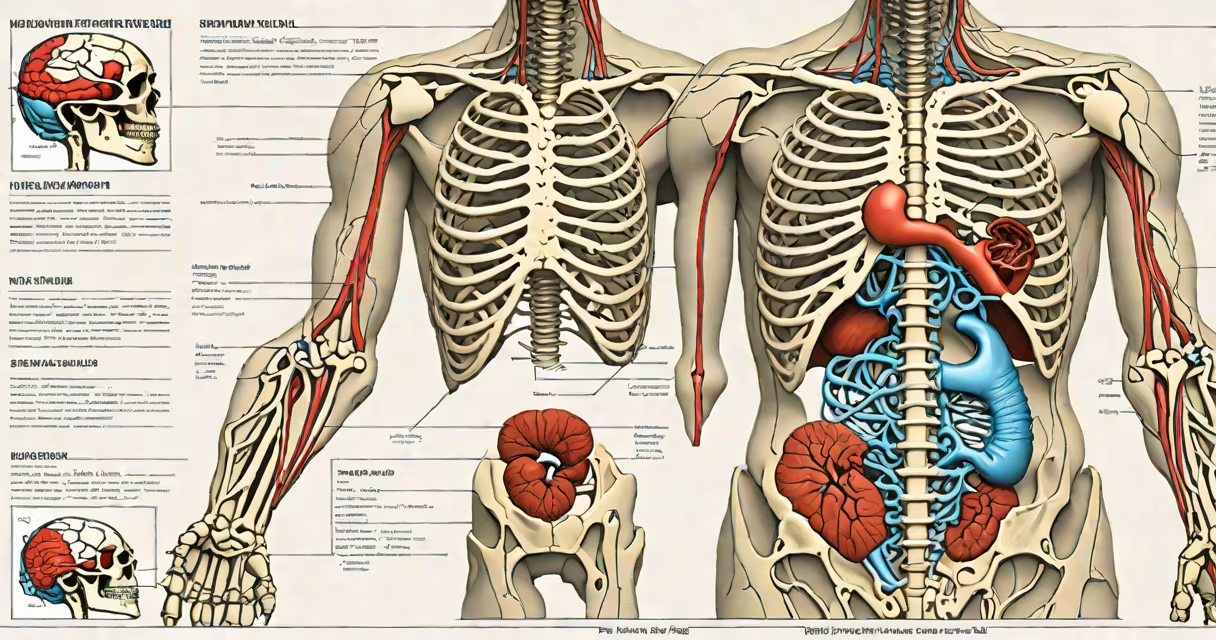
What is inside our body consists of trillions of cells organized into tissues, organs, and interconnected systems that regulate life-sustaining processes like respiration, digestion, circulation, and neural signaling. These components operate continuously, maintaining balance and responding to internal and external changes.
The human body contains approximately 37.2 trillion cells, according to a 2013 study published in *The Anatomical Record* by researchers at the University of Maryland and the University of Colorado. These cells form 206 bones, 75 muscles, 78 organs, and over 100 distinct tissue types. Each system performs specialized tasks while coordinating with others through chemical and electrical signals.
For example, the digestive system breaks down food into nutrients using enzymes produced in the pancreas and stomach lining. These nutrients travel via blood vessels to cells throughout the body. The liver filters toxins, the kidneys remove waste, and the lungs exchange oxygen and carbon dioxide-all within seconds of each breath.
At the most basic level, what is inside our body begins with cells-the fundamental units of life. Each cell contains organelles such as mitochondria (energy producers), ribosomes (protein builders), and a nucleus housing DNA. Cells group into tissues like epithelium (skin), connective tissue (tendons), muscle (heart and limbs), and nervous tissue (brain and nerves).
Tissues combine to form organs. The heart pumps blood through 60,000 miles of blood vessels. The brain sends electrical impulses at speeds up to 268 mph along neurons. The small intestine absorbs 90% of dietary nutrients through villi-tiny finger-like projections that increase surface area by 30 times.
Organs work in systems. The circulatory system transports oxygen, hormones, and immune cells. The endocrine system releases insulin from the pancreas to regulate blood sugar. The immune system deploys white blood cells to fight infections. These systems don't act independently-they communicate via hormones, neurotransmitters, and cytokines.
There are 11 major systems in the human body, each with specific responsibilities:
| System | Primary Functions | Key Organs/Components |
|---|---|---|
| Skeletal | Support, protection, movement, mineral storage | Bones, cartilage, joints |
| Circulatory | Oxygen/nutrient delivery, waste removal, immunity | Heart, blood vessels, blood |
| Respiratory | Oxygen intake, CO₂ expulsion | Lungs, diaphragm, trachea |
| Digestive | Food breakdown, nutrient absorption | Mouth, esophagus, stomach, intestines, liver |
| Nervous | Information processing, coordination | Brain, spinal cord, peripheral nerves |
| Endocrine | Hormone regulation of metabolism, growth, reproduction | Pituitary, thyroid, adrenal glands, pancreas |
| Reproductive | Genetic continuity, hormone production | Ovaries/testes, uterus, prostate |
| Urinary | Fluid balance, toxin filtration | Kidneys, ureters, bladder, urethra |
| Integumentary | Barrier protection, temperature control | Skin, hair, nails |
| Muscular | Movement, posture, heat generation | Skeletal, smooth, cardiac muscles |
| Immune | Infection defense, tissue repair | White blood cells, spleen, lymph nodes |
Each system operates under tight feedback loops. For instance, when blood glucose rises after eating, the pancreas releases insulin. Insulin signals fat and muscle cells to absorb glucose. Blood sugar drops, and insulin release stops-this cycle maintains homeostasis.
Many people assume the body is a static structure. But what is inside our body is constantly changing. Red blood cells live 120 days before being replaced. Skin cells renew every 28 days. Gut bacteria regenerate every few hours. Even bones remodel themselves over months.
A common error is believing that "toxins" accumulate in the body and require detox diets. The liver and kidneys filter metabolic waste like urea and bilirubin. There's no scientific evidence that juice cleanses or colon cleanses improve detoxification. The body handles this naturally. A 2021 review in *Nature Reviews Gastroenterology & Hepatology* confirmed that healthy individuals do not benefit from commercial detox programs.
Another misunderstanding is that the brain controls everything. While the central nervous system coordinates responses, autonomic functions like heartbeat and digestion occur without conscious input. The enteric nervous system-often called the "second brain"-governs gut activity independently.
Consider a meal of grilled chicken, sweet potato, and broccoli. Within 30 minutes, chewing breaks down food into smaller pieces. Saliva contains amylase, which begins breaking down starches. As the food reaches the stomach, hydrochloric acid (pH ~1.5) denatures proteins and activates pepsin, an enzyme that cleaves peptide bonds.
In the small intestine, bile from the liver emulsifies fats. Pancreatic enzymes-lipase, protease, amylase-complete digestion. Nutrients pass through intestinal villi into capillaries. Glucose enters the bloodstream, raising blood sugar. The pancreas detects this rise and releases insulin. Muscle and liver cells take up glucose for energy or storage.
By the time the meal is fully processed, around 90% of calories have been absorbed. Waste moves to the large intestine, where water is reclaimed. What remains exits as feces-about 100 grams daily in adults.
I once observed a patient undergoing a laparoscopic surgery where the surgeon removed a gallstone blocking the bile duct. The procedure took 45 minutes. The stone was 1.8 cm wide-larger than a pea-and had formed over months due to high cholesterol in bile. This showed me how internal processes can disrupt normal function without symptoms until a critical point.
What is inside our body is not a collection of parts-it's a changing network of living systems. From cellular metabolism to organ interactions, every element contributes to survival and adaptation. Knowing this helps explain health, illness, and the resilience of human biology.