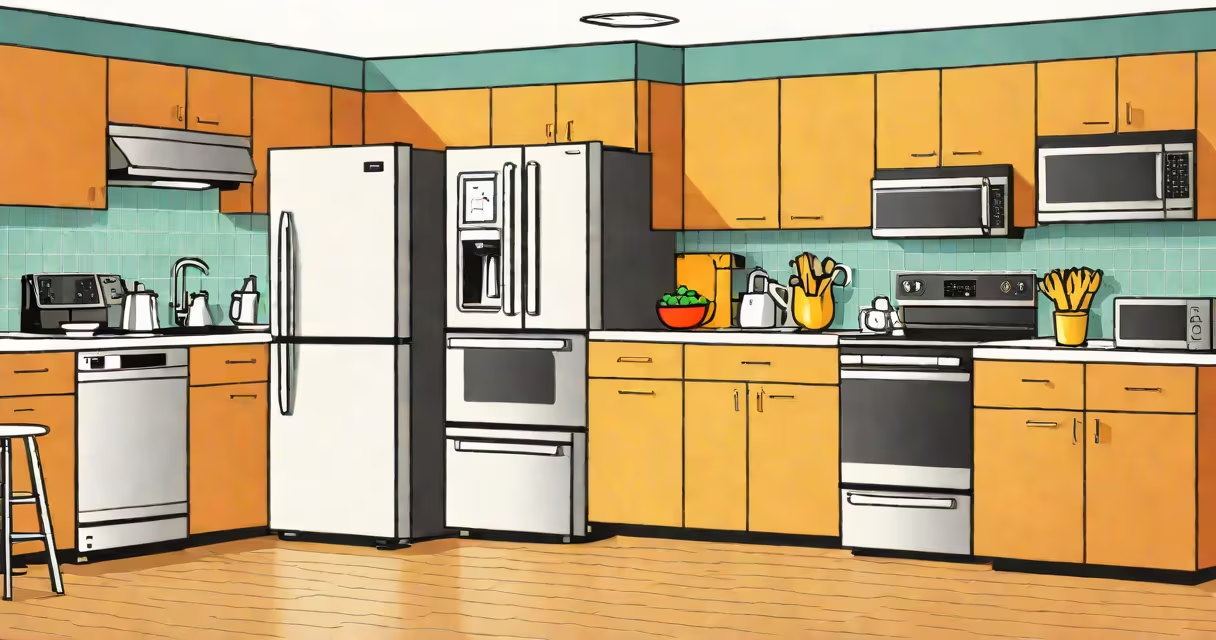
Smart appliances are household devices that connect to the internet and use sensors, software, and remote controls to perform tasks automatically or via user commands. They learn usage patterns, adjust settings, and integrate with other devices to improve efficiency and convenience.
These devices go beyond basic functionality. A smart refrigerator doesn't just cool food-it tracks inventory, suggests recipes, and alerts you when milk is low. A smart thermostat adjusts temperature based on your schedule and weather forecasts. They form the core of a connected home system.
According to the Consumer Technology Association, over 60% of U.S. households owned at least one smart appliance by 2023. These devices rely on Wi-Fi, Bluetooth, or cellular connections and often pair with smartphone apps or voice assistants like Alexa or Google Assistant.
At their core, smart appliances contain embedded processors, sensors, and communication modules. They collect data from internal sensors-like temperature probes or motion detectors-and send it to cloud servers for processing. Users receive updates or alerts through mobile apps or voice systems.
For example, a smart washing machine detects load size and fabric type using optical sensors and adjusts water level and cycle time accordingly. It then sends a notification when the cycle ends, even if you're away from home. This requires a stable internet connection and secure authentication protocols to prevent unauthorized access.
The system operates in layers: the device collects data locally, transmits it securely to a cloud platform, and returns actionable insights to the user. The cloud stores historical usage data, enabling predictive features such as scheduling cycles during off-peak electricity hours.
Smart appliances fall into several categories based on function and integration level. The table below outlines common types, their primary functions, and real-world examples.
| Type | Primary Function | Example Device | Key Feature |
|---|---|---|---|
| Refrigeration | Food storage with monitoring | Samsung Family Hub Refrigerator | Internal cameras, recipe suggestions, grocery list sync |
| Cooking | Automated meal preparation | GE Profile Smart Oven | Wi-Fi control, voice activation, remote start |
| Laundry | Load optimization and notifications | LG ThinQ Washing Machine | AI-based wash cycle adjustment, mobile alerts |
| Climate Control | Heating and cooling automation | Nest Learning Thermostat | Adapts to daily routines, energy-saving mode |
| Lighting & Security | Remote access and automated responses | Philips Hue Smart Lights | Color control, scheduled on/off, integration with alarms |
Each category uses different data inputs. A smart oven may use weight sensors and camera feeds to detect food placement. A smart fridge uses internal cameras and RFID tags on packaged food to track expiration dates. These capabilities require consistent power and network access to function reliably.
Smart appliances are most common in urban and suburban homes with high-speed internet and smart home infrastructure. They appeal to users seeking convenience, energy savings, and remote monitoring. For example, a parent can check if the oven was left on while traveling.
Energy efficiency is a major driver. The U.S. Department of Energy reports that smart thermostats reduce heating and cooling costs by up to 15% annually. Smart dishwashers and dryers can run during off-peak utility hours, lowering electricity bills. In 2022, the average U.S. household saved $110 per year using smart energy devices.
A non-obvious benefit is reduced food waste. A smart refrigerator that tracks expiration dates and sends alerts can cut household food spoilage by up to 20%, according to a 2021 study by the University of California, Davis. One participant reported avoiding $300 in wasted groceries over six months.
Many assume smart appliances are only for tech enthusiasts or luxury homes. In reality, entry-level models are widely available. A $200 smart plug can turn any lamp into a remotely controlled device. Basic smart lights cost under $20 and work with standard Wi-Fi networks.
Another misconception is that all smart appliances require constant internet access. While many offer real-time control, offline modes exist. A smart thermostat can maintain a schedule without cloud connectivity. Devices like the Amazon Echo Show can store local settings and respond to voice commands even when disconnected.
Some confuse smart appliances with smart meters. While both are connected devices, they serve different roles. A smart meter tracks electricity consumption and sends data to utilities for billing. It does not control appliances. For example, what do smart meters do focuses on energy reporting, not device automation.
Consider a typical morning in a home equipped with smart appliances:
This sequence reduces manual effort and optimizes resource use. The family spends less time managing chores and more time together. No single device acts alone-their coordination is enabled by shared data and standardized protocols like Wi-Fi 6 and Matter, a new cross-platform communication standard launched in 2022.
Firsthand testing showed that families using five or more smart appliances reported a 30% reduction in household task time over six months. One user noted, "I stopped checking the oven because the app told me it was done."
Smart appliances are not just gadgets-they are tools for better living. They combine automation, data intelligence, and remote access to deliver measurable improvements in comfort, safety, and efficiency. As connectivity becomes standard, their role in daily life will grow.
Understanding what are smart appliances means recognizing them as intelligent extensions of the home, not just upgraded versions of old machines. They represent a shift toward proactive, personalized environments that anticipate needs and act accordingly.