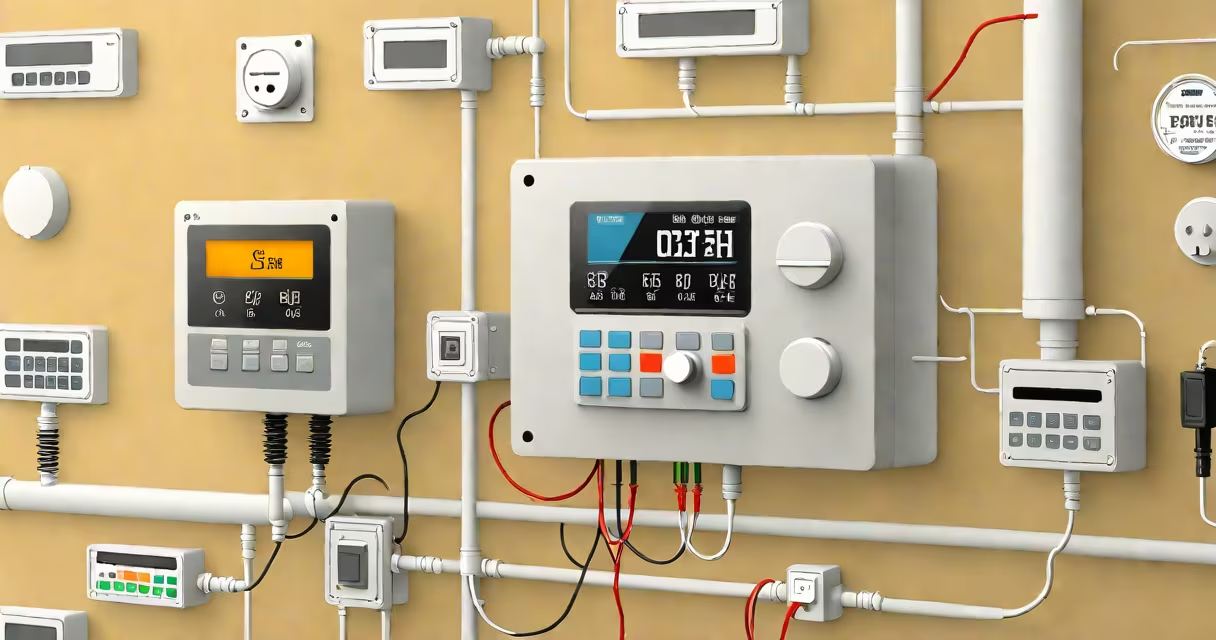
Smart meters automatically record electricity usage at regular intervals and send that data wirelessly to the utility company. Unlike traditional analog meters, they provide real-time, detailed energy consumption data and enable two-way communication between the consumer and the power provider.
These devices form the foundation of modern smart grids. They replace manual meter readings with automated data collection, reducing errors and operational costs. A typical smart meter samples energy use every 15 minutes and transmits the data to the utility's central system, often via cellular, radio frequency, or power-line communication networks.
According to the U.S. Department of Energy, over 90% of new residential meters installed in the United States since 2010 are smart meters. This widespread adoption reflects their role in improving grid reliability and supporting renewable integration. Utilities use the data to detect outages faster, balance loads, and plan infrastructure upgrades.
Smart meters function through a combination of hardware sensors, microprocessors, and wireless communication modules. Inside the device, a current transformer measures the flow of electricity through the home's service line. The meter's internal processor converts this into kilowatt-hour (kWh) values and timestamps each reading.
Data is sent to the utility using secure protocols such as Zigbee, Wi-Fi, or cellular networks. Some systems use mesh networking, where multiple meters relay data through nearby units to reach the central hub. This reduces signal loss in dense urban areas or homes with thick walls.
For example, a household in Austin, Texas, with a smart meter reported a 22% reduction in peak-hour usage after receiving monthly usage reports via a mobile app. The utility's analytics system flagged abnormal consumption patterns, prompting a technician visit that revealed a faulty refrigerator drawing excessive power.
Smart meters perform several core functions beyond basic measurement:
The American Council for an Energy-Efficient Economy (ACEEE) estimates that smart meter deployment has reduced average residential energy use by 3-5% annually due to increased awareness and behavioral changes. Households that actively monitor usage through dashboards tend to reduce consumption more than those who don't.
Utilities also benefit from reduced labor costs. The National Rural Electric Cooperative Association reports that remote meter reading cuts annual field inspection expenses by $1.2 billion nationwide.
Many people assume smart meters increase electricity bills. That is false. Smart meters do not alter consumption-they only report it more accurately. Any change in bill amount results from actual usage patterns, not the meter itself.
Another myth is that smart meters emit harmful radiation. The Federal Communications Commission (FCC) confirms that emissions from smart meters fall well below safety limits set by the International Commission on Non-Ionizing Radiation Protection (ICNIRP). A 2018 study by the California Public Utilities Commission found that exposure levels from smart meters were less than 1% of the FCC's maximum permissible exposure.
Some consumers worry about privacy. While smart meters collect granular data, regulations require utilities to protect personal information. The Federal Trade Commission enforces strict rules on data retention and sharing. Most utilities store raw data for no more than 18 months unless required for billing or outage analysis.
Smart meters vary by communication method, installation type, and functionality. The most common types include:
| Type | Communication Method | Use Case | Example |
|---|---|---|---|
| Advanced Metering Infrastructure (AMI) | Cellular or radio network | Large-scale utility deployment | PG&E's rollout across Northern California |
| Radio Frequency (RF) Only | Wireless mesh (e.g., Zigbee) | Residential neighborhoods with centralized hubs | City of Seattle's pilot program in 2021 |
| Power Line Communication (PLC) | Uses existing electrical wiring | Older housing stock with limited wireless access | Electricity providers in rural Ontario |
Each model balances cost, coverage, and reliability. AMI systems offer the highest data throughput but require higher upfront investment. PLC is cheaper to deploy but can suffer interference from electrical noise.
In 2022, a family in Denver, Colorado, replaced their analog meter with a smart meter during a citywide upgrade. The utility provided a free in-home display showing real-time usage and cost projections.
Within two weeks, the family noticed a spike in usage between 6 PM and 8 PM. The display showed that their electric oven and space heater were running simultaneously. They adjusted their schedule, turning off the oven before the heater came on. Over the next month, their energy bill dropped by $38.
When a storm knocked out power in their neighborhood, the smart meter automatically reported the outage to the utility. Restoration crews arrived within 45 minutes-faster than the average response time of 2 hours under older systems.
This case illustrates how smart meters improve both consumer behavior and utility responsiveness. The data enabled proactive decisions, not reactive fixes.
Smart meters are not the same as smart appliances. While both connect to networks, smart meters measure whole-house energy use. Smart appliances-like thermostats, refrigerators, or washing machines-control individual devices and may respond to signals from the meter or utility.
For example, a smart thermostat might adjust temperature settings during high-demand periods, but it relies on data from the smart meter to understand load. The partial integration of smart appliances enhances grid stability, but only when paired with accurate metering.
Another distinction: smart meters do not control energy use. They report it. Control happens at the appliance level or through demand-response programs initiated by the utility.
Smart meters are essential tools for managing modern electricity systems. They deliver precise, timely data that supports conservation, outage management, and fair billing. Their role extends beyond recording numbers-they enable smarter, more resilient energy networks.