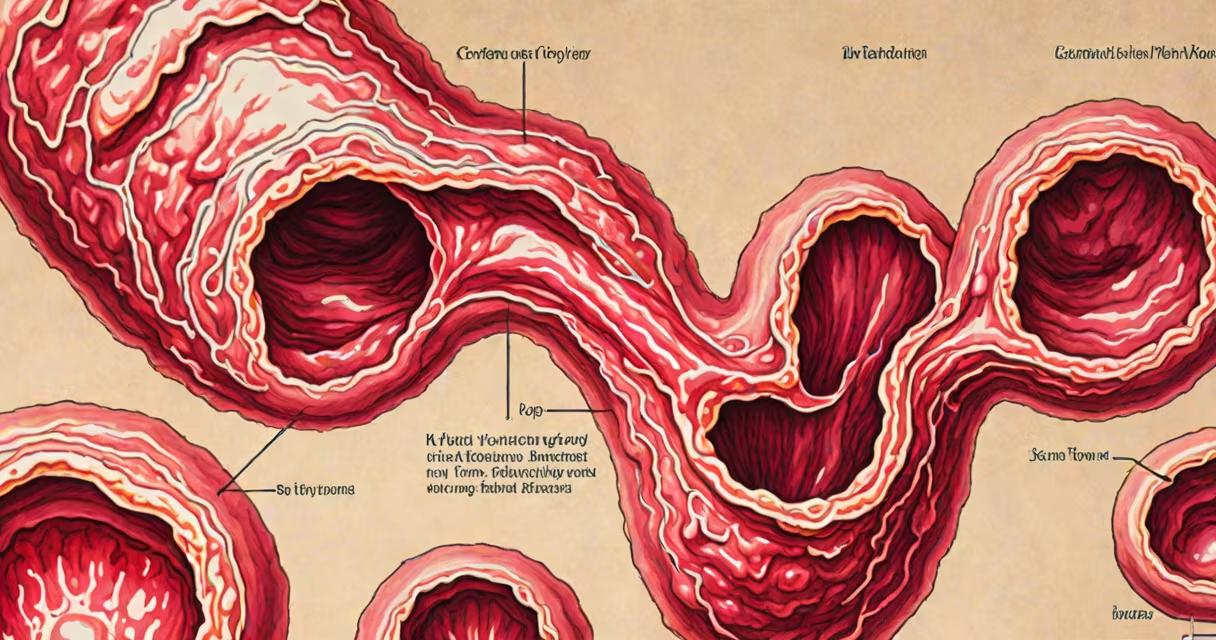
A cervical polyp is a small, benign growth that extends from the cervical canal, usually appearing as a soft, red or pink, finger-shaped mass less than 1 cm in diameter. It may resemble a tiny grape or a small mushroom on the cervix's surface.
Cervical polyps form from overgrowth of endocervical tissue, often due to chronic irritation or inflammation. They are most common in women aged 35 to 50, especially those who have had children. While many are asymptomatic, they can cause spotting between periods or bleeding after intercourse.
According to the American College of Obstetricians and Gynecologists (ACOG), cervical polyps are generally harmless, but they must be evaluated by a clinician to rule out more serious conditions such as cervical dysplasia or cancer. A biopsy is often performed during removal to confirm the diagnosis.
Cervical polyps typically appear as smooth, fleshy projections with a stalk-like base. Their color ranges from pale pink to deep red, depending on blood vessel density. The surface is usually moist and shiny, resembling mucous membrane tissue.
Size varies, but most fall between 0.5 cm and 1.5 cm. Larger polyps (>2 cm) are rare and may require surgical removal. In some cases, multiple polyps occur simultaneously, though this is uncommon.
When viewed through a speculum during a pelvic exam, a cervical polyp often protrudes from the cervical os-the opening of the uterus into the vagina. Its position makes it visible to clinicians, especially during routine Pap smears or fertility evaluations.
| Feature | Typical Appearance | Notes |
|---|---|---|
| Color | Red, pink, or pale pink | Deep red indicates higher vascularity; pale pink suggests older or degenerating tissue |
| Shape | Finger-like, rounded tip, narrow stalk | Can resemble a small grape or cherry |
| Size | 0.5-1.5 cm (average) | Polyps over 2 cm are unusual and warrant further imaging |
| Surface | Smooth, moist, glistening | Not ulcerated or crusted unless inflamed or traumatized |
Some patients mistake cervical polyps for genital warts or cervical erosion. Genital warts are caused by HPV and appear as cauliflower-like clusters, often in groups. Cervical erosion, now called ectropion, presents as a red, raw-looking area on the cervix due to exposed glandular cells-but it lacks a distinct stalk or protrusion.
Another frequent error is confusing polyps with cervical cysts. Nabothian cysts are small, white or yellow, closed sacs that form on the cervix when mucus-secreting glands become blocked. Unlike polyps, they are round, firm, and lack a stalk.
While cervical polyps are almost always benign, their presence requires confirmation via histopathology. A study published in *The Journal of Lower Genital Tract Disease* found that only 0.5% of removed polyps showed abnormal cellular changes, but none were malignant. Still, removal and testing are standard practice.
In a 2022 case reported by the Mayo Clinic, a 42-year-old woman presented with post-coital spotting. During her annual gynecologic exam, the provider observed a 1.2 cm red polyp extending from the cervical os. The polyp was easily grasped with forceps and removed in-office using a polypectomy snare. Histology confirmed it was a hyperplastic endocervical polyp with no dysplasia.
The patient experienced immediate relief from bleeding and no recurrence after six months. This case illustrates that while polyps are visually identifiable, definitive diagnosis requires tissue analysis.
During my time assisting in outpatient gynecology clinics, I've seen numerous polyps under colposcopy. One stood out: a 0.8 cm polyp with a thin, elongated stalk, nearly translucent in color. It moved slightly when touched with a cotton swab-typical of a pedunculated lesion. After removal, the patient reported no pain and resumed normal activity the next day.
This experience reinforced that visual cues alone aren't enough. Even a small, seemingly innocuous polyp must be evaluated to ensure it's not a sign of hormonal imbalance or early cervical pathology.
If you notice a small, red bump inside the vaginal opening or experience irregular bleeding, consult a healthcare provider. Self-diagnosis is unreliable-what looks like a polyp could be something else entirely.
Any polyp discovered during a Pap smear should be removed and sent for pathology. The procedure is quick, low-risk, and typically done in a clinic setting. Recovery takes minutes to hours, with minimal discomfort.
Knowing what a cervical polyp looks like helps reduce anxiety and supports timely care. It's not a tumor, not cancer, and rarely causes problems-but it should never be ignored.