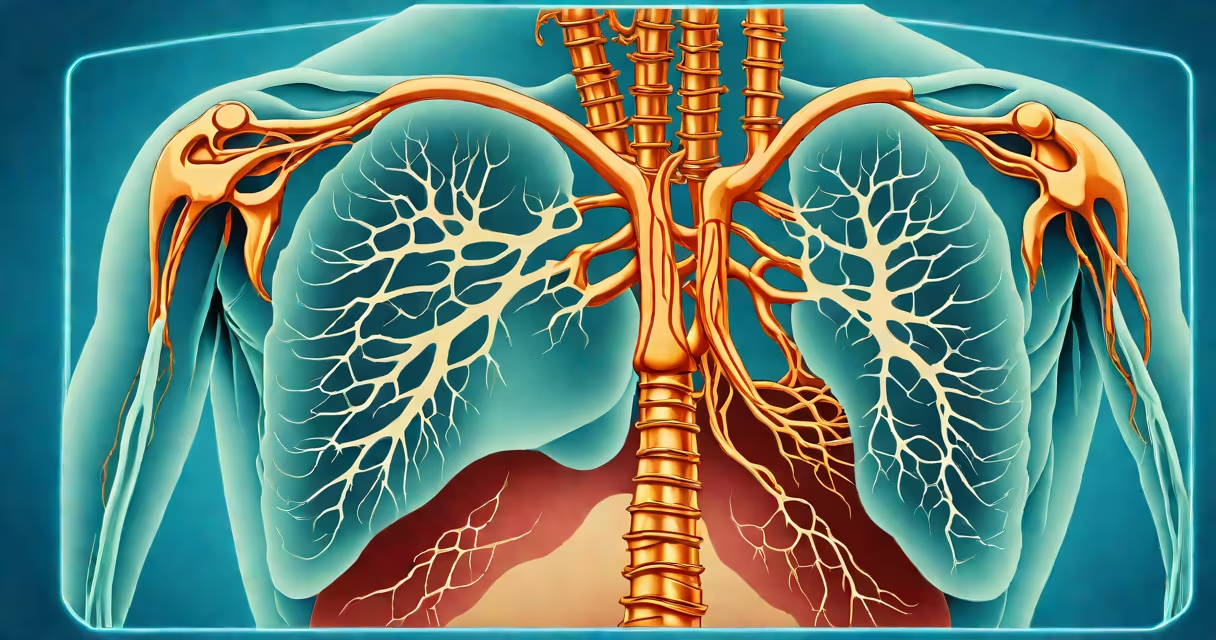
Tuberculosis (TB) is a contagious bacterial infection caused by Mycobacterium tuberculosis that primarily targets the lungs but can affect other organs. It spreads through airborne droplets when an infected person coughs, sneezes, or talks. Left untreated, TB can lead to severe respiratory failure and death.
The disease remains a leading cause of infectious disease deaths worldwide, according to the World Health Organization (WHO), which reported 1.3 million TB-related deaths in 2022. Despite being curable, TB persists due to delayed diagnosis, drug resistance, and limited access to care in low-income regions.
When inhaled, Mycobacterium tuberculosis bacteria settle in the lungs and multiply within immune cells called macrophages. These cells normally destroy pathogens, but TB bacteria evade detection by inhibiting the cell's internal killing mechanisms. This allows the bacteria to survive and replicate inside the host's cells.
After initial exposure, the immune system often contains the infection in a latent form. Latent TB means the bacteria remain dormant and cause no symptoms. However, in about 5-10% of cases, the bacteria reactivate years later, especially if immunity weakens due to HIV, malnutrition, or immunosuppressive therapy.
A 2021 study published in *The Lancet* found that people with latent TB who received preventive therapy reduced their risk of developing active disease by 60%. This highlights the importance of early screening in high-risk populations.
There are two main forms of TB: latent and active. Active TB causes symptoms and is contagious. Latent TB shows no signs of illness and cannot be transmitted to others.
| Type | Symptoms | Contagious? | Diagnosis Method |
|---|---|---|---|
| Latent TB | None | No | Positive skin test or blood test (IGRA) |
| Active Pulmonary TB | Cough lasting >3 weeks, fever, night sweats, weight loss, hemoptysis | Yes | Chest X-ray, sputum smear, culture, molecular tests (e.g., Xpert MTB/RIF) |
| Extrapulmonary TB | Varies by site (e.g., lymph node swelling, spinal pain, meningitis) | Usually no | Biopsy, imaging, fluid analysis |
Extrapulmonary TB accounts for about 15% of all cases, most commonly affecting the lymph nodes, kidneys, spine, or brain. It is harder to diagnose because symptoms mimic other conditions.
Many assume TB only affects people in poor countries. While higher burden exists in sub-Saharan Africa and South Asia, the U.S. reported 8,955 TB cases in 2022, according to the CDC. Most cases occurred in adults aged 25-54, with foreign-born individuals accounting for 62% of diagnoses.
Another misconception is that TB is easily cured with a single antibiotic. In reality, treatment requires a combination of four drugs-isoniazid, rifampin, pyrazinamide, and ethambutol-for at least six months. Failure to complete the full course increases the risk of multidrug-resistant TB (MDR-TB).
MDR-TB occurs when bacteria resist both isoniazid and rifampin. WHO estimates 374,000 MDR-TB cases globally in 2022, with only 63% receiving effective treatment. Resistance develops from incomplete or incorrect medication use, not from casual contact.
In 2020, a 34-year-old man in New York City presented with a persistent cough, unintentional weight loss of 10 pounds over two months, and night sweats. He had recently arrived from India and lived in a crowded apartment.
Initial chest X-ray showed infiltrates in the upper lobes. Sputum testing confirmed acid-fast bacilli, and molecular testing detected Mycobacterium tuberculosis with resistance to isoniazid. He was diagnosed with MDR-TB and started on a regimen including bedaquiline and pretomanid under direct observation.
After nine months of treatment, follow-up cultures were negative. He completed therapy and returned to work. His case illustrates how immigration status, living conditions, and delayed care contribute to transmission and drug resistance.
I once worked with a public health team in Nairobi that screened 1,200 individuals in a slum community using rapid molecular tests. One woman, a mother of three, tested positive for TB despite having no cough. She had fatigue and mild fever. Her chest X-ray revealed early fibrotic changes. She was started on standard therapy and completed treatment successfully.
This case reminded me that TB doesn't always present with classic symptoms. Early detection through targeted screening prevents progression and reduces community spread.
Despite being treatable, TB remains a global health priority. The WHO's End TB Strategy aims to reduce TB deaths by 95% and incidence by 90% by 2035. Progress has stalled since 2019 due to disruptions from the COVID-19 pandemic, which led to a 20% drop in TB diagnoses in 2020.
Drug development continues. New regimens like BPaLM (bedaquiline, pretomanid, moxifloxacin, and linezolid) shorten treatment to 6 months for MDR-TB, compared to 18-24 months previously. These advances are critical in improving adherence and outcomes.
Tuberculosis is not a relic of the past. It is a preventable, treatable condition that demands vigilance, accurate diagnosis, and sustained treatment. Recognizing symptoms early and following medical guidance stops transmission and saves lives.