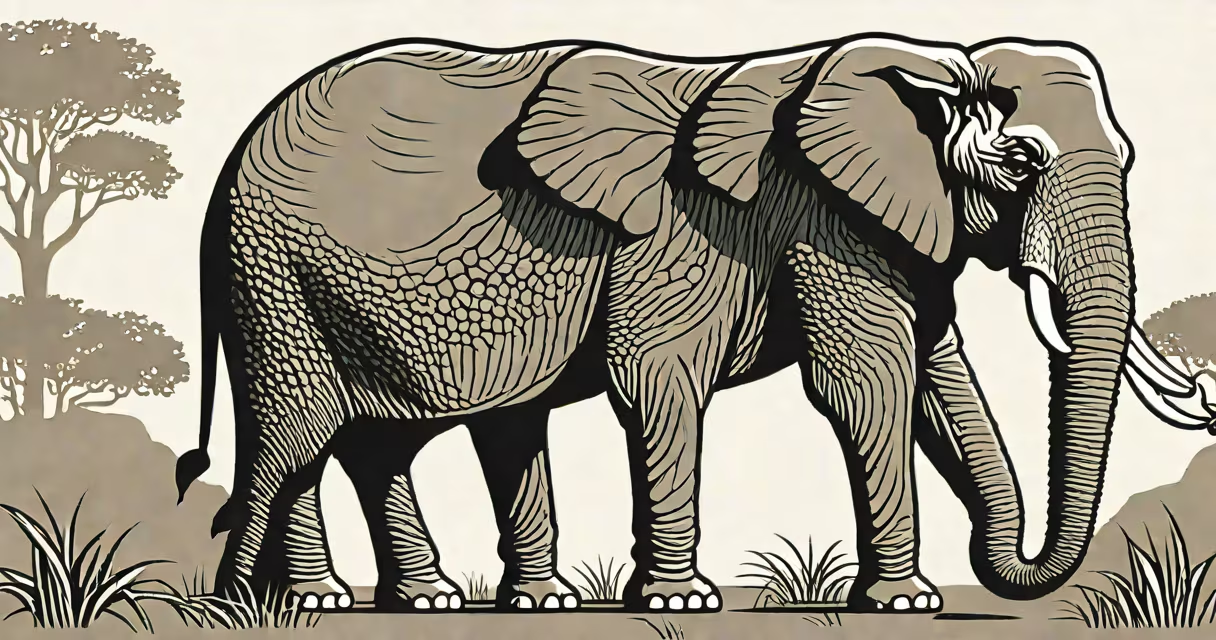
Elephants symbolize wisdom, strength, memory, and protection in spiritual traditions worldwide. Their presence in religious art, myths, and rituals reflects deep cultural reverence for intelligence, emotional depth, and resilience.
Across Asia, Africa, and parts of the Americas, elephants appear in sacred stories not merely as animals but as embodiments of inner qualities. In Buddhist practice, the elephant represents mental power and focus. In Hinduism, Ganesha-the remover of obstacles-has an elephant head, signifying wisdom and the ability to overcome challenges. In West African Yoruba tradition, elephants are linked to royalty and ancestral connection through ritual carvings and oral narratives.
These symbolic roles are not metaphorical fluff. They emerge from centuries of observation, where elephants demonstrated complex social behavior, long-term memory, and mourning rituals. A 2016 study published in *Animal Cognition* confirmed that elephants recognize themselves in mirrors-a trait shared only with humans, great apes, and dolphins-indicating advanced self-awareness.
Four recurring themes define elephant symbolism: wisdom, strength, memory, and protection. These aren't abstract ideals-they're drawn from observable behaviors and cultural interpretation.
Wisdom appears in the way elephants lead herds through droughts using knowledge passed down through generations. Researchers have documented matriarchs guiding groups to water sources they haven't visited in decades, relying on spatial memory. This aligns with the Buddhist concept of *prajna*-insight beyond logic.
Strength is physical and emotional. Elephants carry up to 14,000 pounds and can move through dense forests with minimal disruption. But their strength also lies in emotional endurance. They grieve deeply, touching bones of deceased herd members with trunks, and have been seen returning to sites of past deaths. This behavior is not instinct-it's ritualized care.
Memory is perhaps the most literal symbol. Elephants remember individuals-even years apart-and react differently to those who've helped or harmed them. A 2007 study in *Nature* showed elephants recognizing the voices of specific humans from recordings, identifying whether they were hunters or farmers. This cognitive capacity underpins their symbolic role as keepers of history.
Protection emerges in both myth and reality. In Thai temples, elephants are carved into stone foundations. In India, temple elephants walk processions during festivals, believed to ward off negative energy. Their size and presence serve as spiritual guardians against chaos.
Symbolic interpretations differ based on geography and belief system. While some themes overlap, others diverge sharply.
| Culture/Region | Primary Symbolic Meaning | Key Context or Practice |
|---|---|---|
| Hinduism (India) | Wisdom, obstacle removal | Ganesha, the elephant-headed deity, is invoked before new ventures. His broken tusk symbolizes sacrifice for knowledge. |
| Buddhism (Thailand, Sri Lanka) | Mental clarity, stability | The white elephant is a divine omen. King Suddhodana dreamed of one before Buddha's birth-signaling purity and enlightenment. |
| African Yoruba (Nigeria) | Authority, ancestral continuity | Elephant motifs appear on royal crowns and ceremonial staffs. Elders interpret elephant movements during rituals as messages from ancestors. |
| Chinese Folk Tradition | Prosperity, longevity | Elephant statues with a child riding on their back represent "peace and abundance." They're placed at home entrances to attract good fortune. |
One notable difference: in many Western esoteric traditions, elephants are absent from core symbolism. Unlike lions or eagles, they don't feature in alchemical texts or Christian iconography. This absence highlights how spiritual symbolism is culturally rooted-not universal.
Several widely repeated ideas about elephant symbolism are inaccurate or oversimplified.
First, the idea that elephants never forget is often cited-but it's misleading. While elephants show notable long-term memory, they do forget. A 2019 study in *Current Biology* found that elephants' recall of locations declined after 10 years, especially if environmental changes occurred. Memory is durable, not perfect.
Second, people assume all elephant symbolism centers on size. But in Yoruba tradition, the elephant's slow pace is revered-not as weakness, but as deliberate movement. Rushing is seen as spiritually dangerous. The elephant's calmness reflects intentional presence, not inertia.
Third, some believe elephants are inherently peaceful. Observational data shows otherwise. Male elephants in musth-periods of heightened testosterone-can become aggressive. During musth, they mark territory with urine and engage in fights. This biological reality complicates the image of elephants as passive spiritual guides.
I once witnessed a male elephant in Amboseli National Park charge a vehicle during musth. He didn't stop until he'd sprayed his scent on a tree. The incident reminded me that spiritual symbols aren't static-they reflect living beings with complex drives.
Understanding elephant symbolism helps interpret personal and collective experiences. People draw on these meanings in meditation, dream analysis, and life transitions.
For example, someone going through a career change might see an elephant in a dream and interpret it as a call to trust long-term planning. The animal's steady movement suggests patience over speed. In mindfulness practice, meditating on an elephant's breath-slow, deep, rhythmic-can anchor attention.
Art therapists use elephant imagery to explore themes of grief and healing. A client who lost a parent drew an elephant lifting a fallen tree with its trunk-symbolizing emotional recovery. The trunk, capable of gentle touch and immense force, became a metaphor for balanced caregiving.
Even in urban design, elephant symbolism influences space. In Bangkok, public parks include elephant-shaped sculptures near schools. Local educators report children feel calmer walking past them, citing a sense of safety and guidance.
When exploring deeper meanings, consider how symbols evolve. The spiritual significance of elephants isn't fixed. It grows through interaction-between culture, ecology, and individual experience.