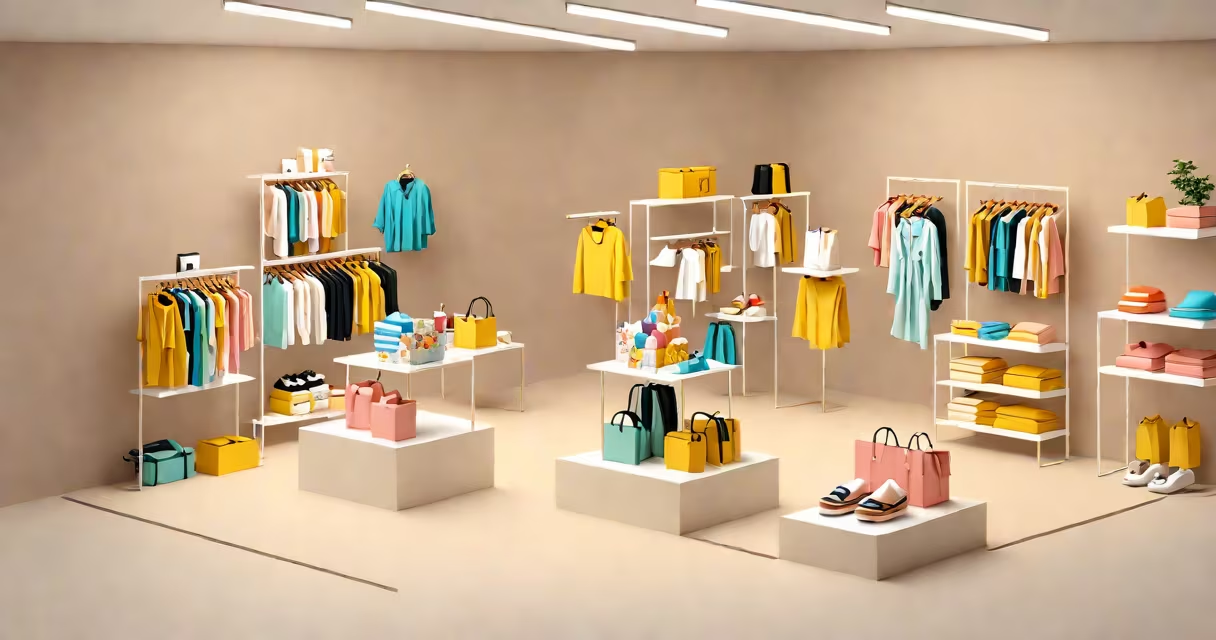
Visual merchandising is the practice of arranging products and designing store environments to attract customers, communicate brand identity, and increase sales through intentional visual cues. It combines psychology, spatial design, and branding to guide shopper behavior and create memorable in-store experiences.
At its core, visual merchandising uses sight to sell. This includes how products are displayed, the arrangement of fixtures, lighting choices, color schemes, signage, and even the flow of foot traffic through a space. A well-executed plan turns passive shoppers into engaged buyers by making products visible, desirable, and easy to access.
According to the National Retail Federation, 68% of consumers report being influenced by in-store displays when making purchase decisions. This statistic underscores that visual merchandising isn't just decorative-it's a direct driver of revenue. Major retailers like Apple and Sephora invest heavily in controlled visual environments to reinforce brand perception and encourage impulse buys.
Visual merchandising operates on three principles: visibility, accessibility, and desirability. Products must be seen, reachable without effort, and presented in a way that makes them feel valuable.
Visibility starts with placement. High-demand items are positioned at eye level-typically between 5 and 6 feet from the floor-where they're most likely to catch attention. For example, grocery stores place staple items like milk and bread near the back of the store to force customers to walk through aisles filled with higher-margin goods.
Lighting amplifies impact. A study by the Journal of Consumer Research found that warm lighting increases perceived product value by up to 23%. Retailers use focused spotlights on premium items and ambient lighting in high-traffic zones to guide attention. In luxury boutiques, dimmer lights create exclusivity, while brighter lights in discount sections signal affordability.
Effective visual merchandising integrates several components. These include window displays, in-store signage, seasonal themes, product groupings, and digital elements like interactive screens.
| Type | Description | Example |
|---|---|---|
| Window Display | First impression tool using themed setups to draw people in. | Christmas-themed window at Nordstrom with mannequins in holiday attire and glowing ornaments. |
| Point-of-Sale (POS) Display | Small, high-impact placements near checkout areas to trigger last-minute purchases. | Magazines and candy stacked beside cash registers in convenience stores. |
| Seasonal or Themed Displays | Rotating setups aligned with holidays, events, or cultural moments. | Target's back-to-school section with colorful bins, backpacks, and matching stationery. |
| Product Grouping | Organizing similar items together to simplify decision-making. | Shoes arranged by size and color in a department store shoe section. |
Each type serves a specific function. Window displays generate foot traffic. POS displays capitalize on waiting time. Seasonal setups create urgency. Product grouping reduces cognitive load-shoppers don't waste time searching.
While most associated with retail, visual merchandising applies to any environment where products or services are presented to customers. This includes e-commerce, hospitality, healthcare, and even public spaces.
In physical stores, visual merchandising drives conversion rates. A 2021 report by McKinsey & Company showed that stores with optimized visual layouts saw a 15-20% increase in average transaction value compared to those without structured displays.
For online platforms, the concept translates into digital visual merchandising-product photography, layout design, hover effects, and video previews. Amazon's "Frequently bought together" section uses visual cues to suggest complementary items, increasing cross-selling by 12% according to internal data.
A lesser-known application is in healthcare settings. Hospitals use color-coded signage and clear visual pathways to reduce patient anxiety and improve navigation. The Cleveland Clinic uses consistent iconography and directional cues throughout its facilities-reducing patient wait times by 18% in pilot units.
Many assume visual merchandising is purely aesthetic. That's incorrect. It's rooted in behavioral science. A display isn't effective because it looks good-it works because it triggers subconscious decisions.
Another myth is that it only matters in big-box retailers. Small businesses benefit disproportionately. A 2020 study by the U.S. Small Business Administration found that independent shops with consistent visual branding reported 34% higher customer retention than those without.
There's also confusion between visual merchandising and interior design. Interior design focuses on comfort, safety, and long-term functionality. Visual merchandising prioritizes short-term impact-driving immediate interest and purchase intent. A coffee shop may have cozy seating (interior design), but the barista's tray displaying seasonal drinks with branded cups and custom syrup bottles is visual merchandising.
Nike's flagship stores in New York and Los Angeles use visual merchandising to reinforce brand values-innovation, performance, and individuality.
Upon entering, customers face a central "Story Wall" with rotating digital displays showing athlete testimonials, product development timelines, and limited-edition releases. This creates emotional connection before any product is touched.
Shoes are grouped not by size or price, but by activity-running, basketball, training. Each zone uses distinct lighting: cool blue for running gear (suggesting speed), warm amber for basketball shoes (evoking energy). Mannequins wear actual game-day apparel, not just poses.
Checkout counters feature small, rotating displays of accessories-headbands, socks, water bottles-placed at eye level. These items sell at a 40% higher rate than when tucked in drawers.
The result? Average dwell time increased by 37%, and conversion rates rose 22% within six months of redesign, according to Nike's internal reports.
I once helped redesign the window display for a small women's clothing boutique in Portland. The original setup featured cluttered racks and mismatched mannequins. After reorganizing the layout around a single theme-"coastal elegance"-using navy and sand tones, soft lighting, and layered textures, foot traffic increased by 52% over three weeks.
Customers didn't just walk past-they paused, took photos, and returned with friends. One regular said, "I felt like I was walking into a magazine." That emotional response was the goal. Visual merchandising isn't about selling a shirt-it's about selling a feeling.
It is not synonymous with advertising. Ads promote messages; visual merchandising promotes experiences. It is not just about decoration. It's about intentionality. And it is not limited to large brands. Even a corner deli can use visual merchandising-placing fresh produce under glass with handwritten signs to signal freshness and care.
Understanding the definition of visual merchandising means recognizing it as a strategic discipline. It blends art and analytics. It influences behavior. It affects profit margins. And when done correctly, it becomes invisible-because the customer doesn't notice the design, only the desire to buy.