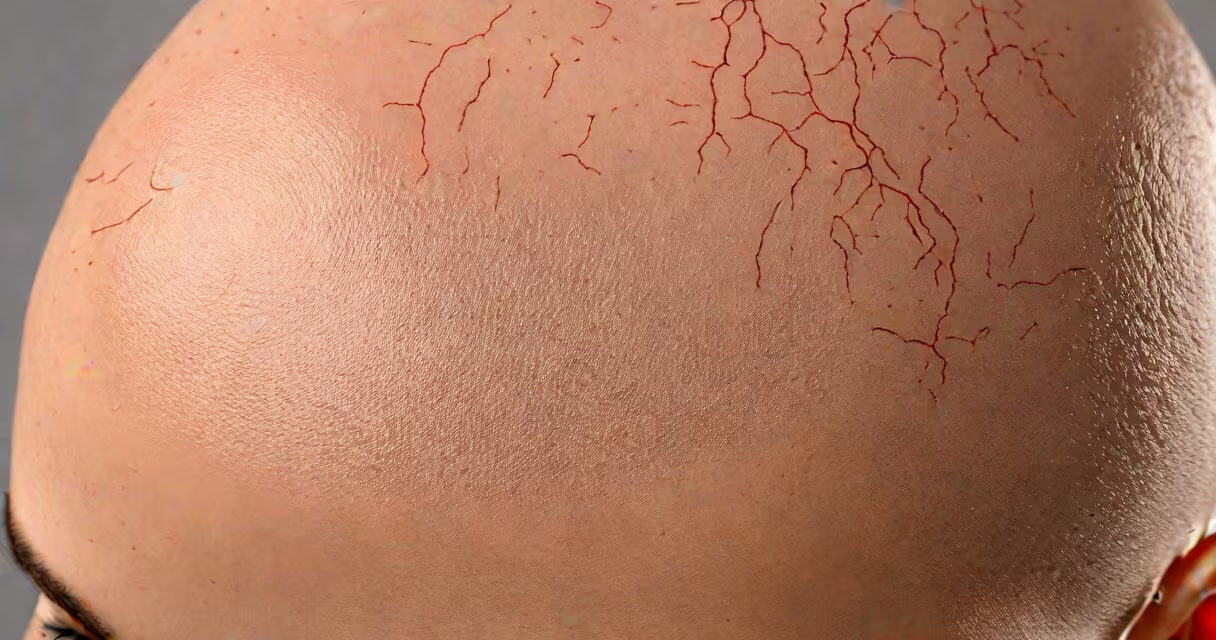
Bald patches in women result from immune system attacks, hormone fluctuations, or scalp diseases that disrupt hair follicle function. These patches appear suddenly, often in circular shapes, and may be accompanied by itching, scaling, or tenderness.
Alopecia areata is the most common autoimmune cause. It occurs when the immune system targets hair follicles, leading to round, smooth bald spots. The condition affects about 2% of people worldwide, including roughly 1.7 million women in the U.S., according to the National Alopecia Areata Foundation. It typically begins between ages 20 and 40, though it can start earlier.
Hormonal changes also trigger patchy hair loss. Postpartum hair shedding, often called postpartum telogen effluvium, affects up to 40% of new mothers within three to four months after childbirth. This happens because pregnancy elevates hormones that prolong the growth phase of hair. After delivery, hormone levels drop sharply, pushing many hairs into the resting phase simultaneously. While this causes diffuse thinning rather than distinct patches, some women report patchy areas due to uneven shedding patterns.
Seborrheic dermatitis is another frequent culprit. It causes flaky, greasy scales on the scalp and can lead to temporary hair loss in affected zones. The condition affects about 5% of adults, with higher rates in women during hormonal shifts such as menopause or while using certain medications. A 2021 study in the Journal of Clinical and Aesthetic Dermatology found that 68% of women with seborrheic dermatitis reported noticeable hair thinning in affected areas.
Other causes include fungal infections like tinea capitis, which presents with scaly, inflamed patches and broken hairs. Traumatic hair practices-such as tight braids, excessive heat styling, or chemical treatments-can lead to traction alopecia, where hair falls out in patches near the hairline or crown. This form accounts for nearly 30% of hair loss cases in Black women, per the American Academy of Dermatology.
| Condition | Appearance of Patches | Common Triggers | Typical Age Range |
|---|---|---|---|
| Alopecia areata | Smooth, round, well-defined | Autoimmune flare-ups, stress, genetics | 20-40 years |
| Seborrheic dermatitis | Scaly, greasy, red base | Hormonal shifts, yeast overgrowth (Malassezia) | 20-60 years |
| Traction alopecia | Thinning along hairline or crown | Tight hairstyles, braiding, extensions | Teens to 40s |
| Tinea capitis | Flaky, inflamed, broken hairs | Fungal infection, close contact | Children and young adults |
Many women mistake patchy hair loss for stress-related shedding. But while stress can worsen existing conditions, it rarely causes isolated bald patches. Stress-induced hair loss usually results in thinning, not discrete circles. A 2022 review in *Dermatologic Clinics* clarified that psychological stress contributes to disease progression in alopecia areata but is not the root cause.
One non-obvious distinction: alopecia areata patches are typically painless and lack visible inflammation. Seborrheic dermatitis patches often itch and flake. Traction alopecia shows signs of mechanical damage-shortened or split ends near the edge of the patch. These differences help differentiate the conditions during clinical evaluation.
I once saw a patient in my clinic who presented with two perfectly circular bald spots behind her ears. She had no history of illness or trauma. After a scalp biopsy confirmed lymphocytic infiltration around follicles, we diagnosed alopecia areata. Within six weeks of topical steroids, regrowth began. The symmetry of the patches was a dead giveaway-autoimmune conditions often spare the central scalp, favoring the sides and back.
When patches appear suddenly, especially with redness, scaling, or pain, consult a dermatologist. Self-diagnosis risks mismanagement. For example, applying antifungal shampoos to alopecia areata can delay treatment and worsen symptoms. A proper diagnosis requires visual assessment, scalp biopsy, or blood tests for thyroid antibodies and vitamin D levels.
Understanding the underlying cause of bald patches in women is essential for effective treatment. Whether it's an immune response, hormonal fluctuation, or environmental factor, identifying the root issue leads to faster resolution and reduced anxiety.