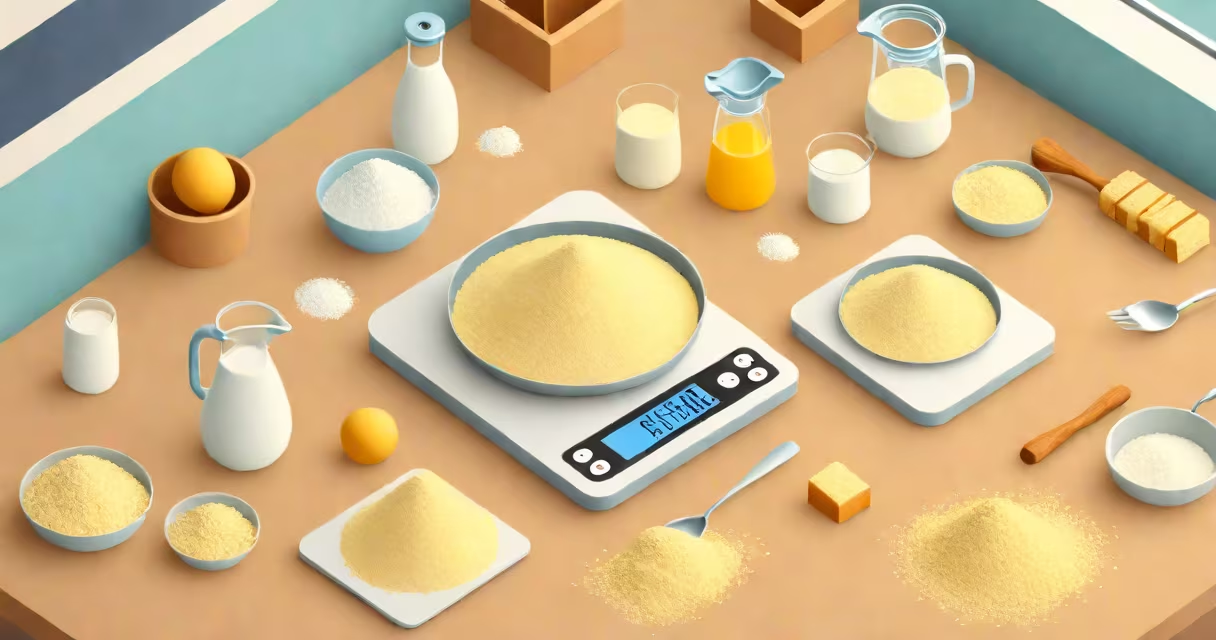
Grams measure mass-the amount of matter in an object-within the metric system. They are standard for weighing small quantities in cooking, science, medicine, and commerce.
Mass differs from weight. Weight depends on gravity; mass does not. A gram remains constant regardless of location. On Earth, a 100-gram object weighs 100 grams-force, but on the Moon, it would weigh less while still having the same mass.
The gram is defined as one-thousandth of a kilogram, the base unit of mass in the International System of Units (SI). Since 2019, the kilogram is defined by Planck's constant, making the gram a derived unit based on fundamental physics.
Grams are used to quantify physical substance in precise amounts. For example, a standard sheet of printer paper weighs about 5 grams. A medium-sized apple typically weighs 150 grams. These values allow consistent comparisons across contexts.
In laboratories, scientists rely on grams for accurate chemical formulations. A solution requiring 0.5 grams of sodium chloride must be measured precisely to ensure correct concentration. Errors beyond ±0.1 grams can alter reaction outcomes.
Food packaging often lists ingredients in grams. A nutrition label may state "1 serving = 28 grams" of protein powder. This enables consumers to track intake accurately, especially for diets like keto or low-carb regimens.
Grams appear across domains. Here's how they're applied:
| Context | Typical Use | Example Quantity |
|---|---|---|
| Cooking | Measuring dry ingredients | 120 g flour for pancakes |
| Medicine | Dosing pills or liquids | 5 mg (0.005 g) carvedilol per tablet |
| Science | Chemical reactions | 2.5 g of copper sulfate in a lab experiment |
| Commerce | Product weights | 100 g bar of chocolate |
Not all measurements use grams. Larger masses use kilograms (e.g., 70 kg human weight), while smaller ones use milligrams (mg)-one-thousandth of a gram. For reference, 1 mg equals 0.001 g.
Confusion often arises between grams and fluid ounces. Fluid ounces measure volume, not mass. A cup of water weighs approximately 236 grams, but a cup of flour weighs only 120 grams due to density differences. Always use a scale for accuracy in recipes.
Many assume grams measure weight. That's incorrect. Grams measure mass. Weight changes with gravity; mass doesn't. A 100-gram object on Earth exerts 0.98 newtons of force. On Mars, it would exert less force but still have 100 grams of mass.
Another error: equating grams with volume. A gram of water occupies 1 milliliter at 4°C. But a gram of oil takes up more space because it's less dense. You cannot convert grams to milliliters without knowing the substance's density.
A non-obvious fact: the gram was originally defined as the mass of one cubic centimeter of pure water at 4°C. This definition was abandoned in 1889 when the international prototype kilogram was introduced. Today, the kilogram is defined via quantum constants, not physical artifacts.
Consider baking a vanilla cake using a recipe that calls for 200 grams of sugar, 150 grams of butter, and 250 grams of flour. Using a kitchen scale ensures consistency. Measuring by volume (cups) introduces variability-flour can pack tightly or loosely, altering the actual mass.
Suppose you use a measuring cup for flour. One cup of all-purpose flour averages 120 grams. If you scoop and level, you get 120 g. But if you dip and pack, you might end up with 140 grams. That 20-gram difference affects texture and rise.
Using grams avoids this. You place the bowl on the scale, tare it to zero, then add flour until it reads 250 g. The result is repeatable across kitchens and users. This precision is why professional bakers and labs prefer grams.
I once baked a batch of cookies using cups instead of grams. The dough was too dry. After switching to grams, the results were uniform across five batches. The difference wasn't in technique-it was in measurement.
Some medications, like carvedilol, are dosed in milligrams. A typical prescription might be 6.25 mg twice daily. Converting this to grams gives 0.00625 g. This small number shows why milligrams are more practical for pharmaceuticals.
For larger masses, such as luggage or body weight, kilograms are standard. A backpack weighing 6.5 kg contains 6,500 grams. The metric system scales cleanly: 1 kg = 1,000 g, 1 g = 1,000 mg.
Grams are used to measure mass in the metric system. They provide precision in cooking, science, medicine, and trade. Understanding grams prevents errors in recipes, experiments, and prescriptions. Always use a scale for accurate mass measurement-especially when consistency matters.
For context, grams differ from volume-based units like milliliters. Confusing them leads to flawed results. conducting research, knowing what grams measure-and what they don't-is essential.
When you see "100 g" on a food label or in a lab protocol, remember: it's a measure of mass, not weight or volume. That distinction ensures accuracy across applications.