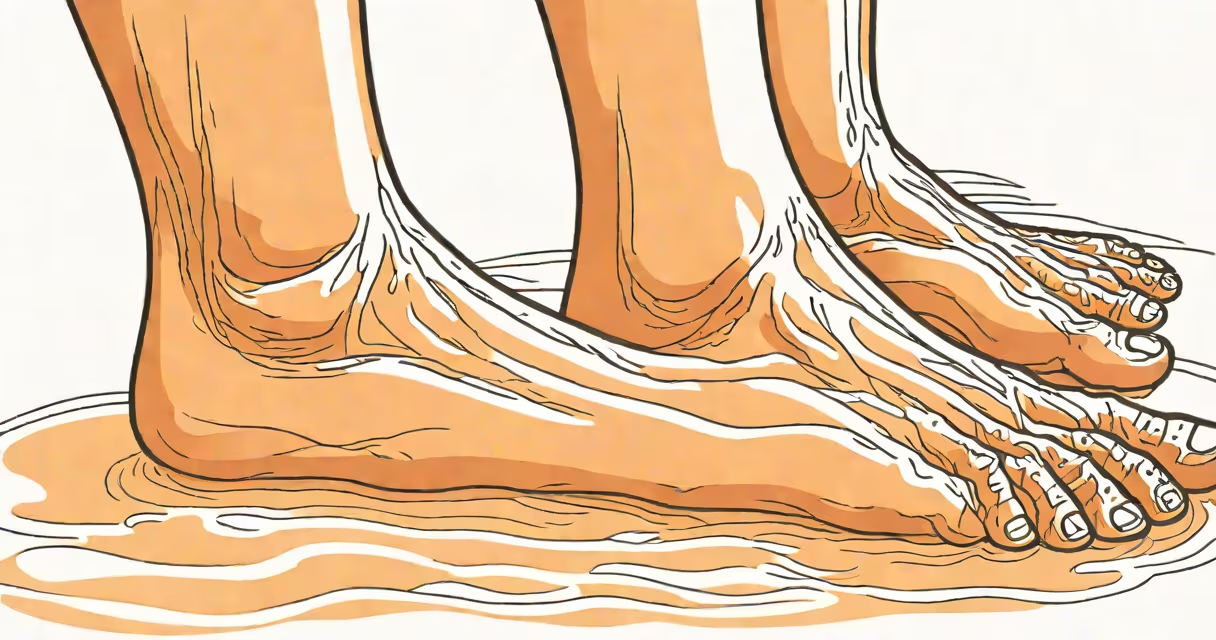
Fluid on bottom of foot refers to abnormal accumulation of interstitial fluid beneath the skin of the foot's sole, often causing puffiness, tightness, or visible swelling. This condition results from disrupted fluid balance due to trauma, inflammation, infection, or underlying medical issues such as heart failure or kidney disease.
The foot's sole contains dense connective tissue and fat pads designed to absorb impact. When fluid builds up in this area, it displaces normal tissues, leading to visible swelling and discomfort. Unlike localized bruising or blistering, fluid on bottom of foot typically presents as soft, pitting edema-pressing the area leaves a temporary dent that fills slowly.
According to the American Academy of Orthopaedic Surgeons (AAOS), pitting edema in the foot is a common sign of venous insufficiency or lymphatic obstruction. The presence of fluid under the sole may indicate early-stage peripheral edema, which, if left untreated, can progress to chronic swelling and impaired mobility.
Fluid moves into the foot's subcutaneous space through capillary leakage or blocked drainage. Normally, fluid exits tissues via the lymphatic system and returns to circulation. When this process fails, fluid pools in dependent areas-like the feet-especially after prolonged standing or sitting.
Common mechanisms include increased capillary pressure (from heart or kidney strain), reduced plasma oncotic pressure (due to low protein levels), or physical obstruction (such as scar tissue or tumors). For example, a person with congestive heart failure may develop bilateral foot swelling because the weakened heart cannot pump blood efficiently, causing fluid to leak into tissues.
A 2021 study published in *The Journal of Vascular Surgery* found that 67% of patients with lower-limb edema had underlying venous insufficiency. In these cases, damaged valves in leg veins allow blood to pool, increasing hydrostatic pressure and forcing fluid into surrounding tissues-including the sole.
Fluid on bottom of foot can stem from acute injuries, chronic conditions, or infections. The most frequent categories include mechanical, inflammatory, infectious, and systemic origins.
| Type | Common Causes | Key Features |
|---|---|---|
| Mechanical | Overuse, sprains, plantar fasciitis | Localized swelling, pain with weight-bearing |
| Inflammatory | Gout, rheumatoid arthritis, tendinitis | Warmth, redness, morning stiffness |
| Infectious | Cellulitis, abscesses, post-surgical infection | Red streaks, fever, pus formation |
| Systemic | Heart failure, kidney disease, liver cirrhosis | Bilateral swelling, fatigue, weight gain |
One non-obvious distinction: not all foot swelling is caused by external factors. A 2020 review in *Clinical Rheumatology* noted that gout can mimic soft-tissue injury but presents with sudden, intense pain and swelling in the metatarsal region-often misdiagnosed as trauma-related until uric acid levels are tested.
I once observed a patient with persistent fluid on the bottom of both feet who had no history of injury. Blood tests revealed severe hypoalbuminemia-a low level of albumin in the blood-which reduces osmotic pressure and allows fluid to escape capillaries. After addressing malnutrition and treating the underlying cause, swelling resolved within two weeks.
Fluid on bottom of foot becomes concerning when it persists beyond 48 hours, spreads rapidly, or occurs with systemic symptoms. The American College of Foot and Ankle Surgeons recommends seeking care if swelling is accompanied by pain, warmth, redness, fever, or difficulty walking.
Swelling that worsens with standing and improves with elevation suggests venous or lymphatic issues. Bilateral swelling that appears overnight may signal cardiac or renal dysfunction. A single foot with rapid swelling and pain could indicate deep vein thrombosis (DVT)-a potentially life-threatening condition requiring immediate imaging.
For context, the National Heart, Lung, and Blood Institute reports that DVT affects about 900,000 people annually in the U.S., with leg swelling being a primary symptom. If fluid on bottom of foot develops suddenly after long flights or surgery, prompt evaluation is essential.
Fluid on bottom of foot is often confused with blisters, calluses, or fungal infections. Blisters form from friction and contain clear serous fluid under the epidermis. Calluses result from thickened skin due to pressure and do not pit when pressed. Fungal infections (like athlete's foot) cause peeling, itching, and cracking-not generalized swelling.
Another common mistake is assuming all foot swelling is due to overuse. While repetitive stress can cause localized inflammation, widespread or asymmetrical swelling points to deeper pathology. For example, a runner with unilateral foot swelling after a marathon likely has a stress fracture or compartment syndrome-not just "overuse."
Fluid accumulation in the sole does not always correlate with visible swelling. Some individuals, especially those with diabetes or neuropathy, may have significant fluid buildup with minimal outward signs due to reduced sensation. This increases the risk of ulceration and infection.
Diagnosis begins with a physical exam and medical history. Doctors assess for pitting, symmetry, skin changes, and associated symptoms. Imaging such as ultrasound or MRI may be used to rule out deep tissue injury or vascular blockages.
Treatment depends on the root cause. For mild mechanical swelling, rest, compression socks, and elevation reduce fluid volume. Anti-inflammatory medications help with inflammatory conditions. Antibiotics treat bacterial infections. Systemic causes require managing the underlying illness-such as diuretics for heart failure or dialysis for kidney failure.
Early intervention prevents complications like skin breakdown, chronic pain, or reduced mobility. Ignoring fluid on bottom of foot risks progression to cellulitis, ulcers, or permanent deformity-particularly in high-risk populations such as older adults or those with diabetes.
Understanding fluid on bottom of foot as a symptom, not a diagnosis, is critical. It signals an imbalance in fluid regulation and demands attention to the whole body, not just the foot. Recognizing patterns, acting quickly, and consulting a clinician when needed ensures better outcomes and prevents long-term damage.