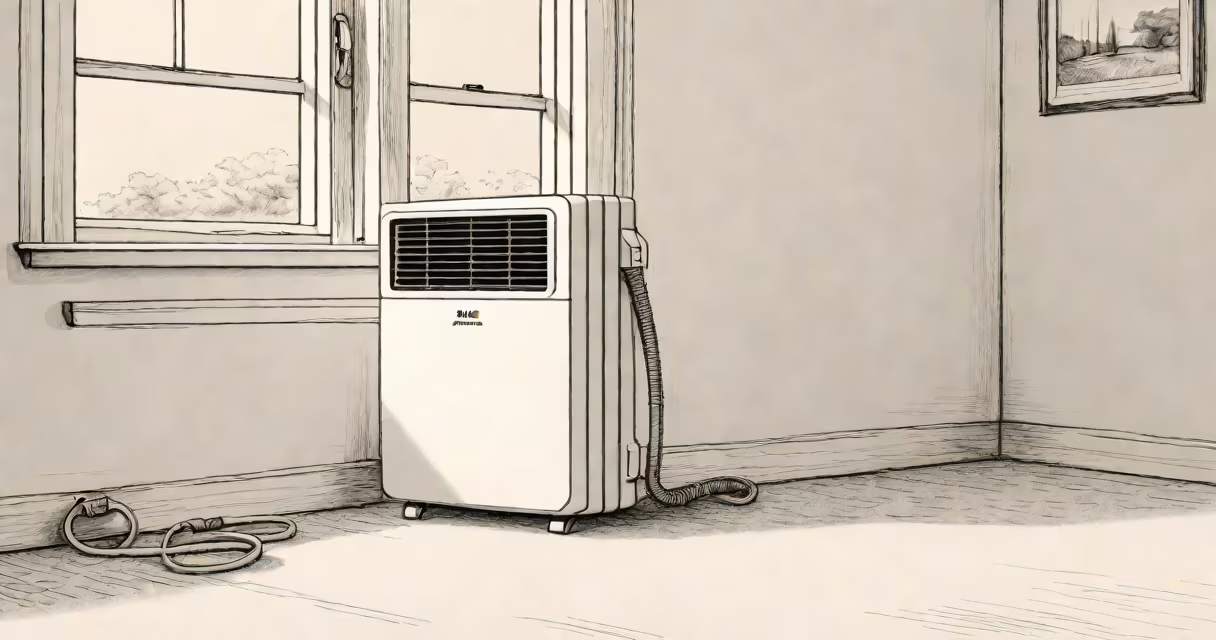
A small floor air conditioner is a portable cooling unit designed to cool spaces up to 150 square feet, typically using 1400 to 2000 BTUs of cooling power. It operates independently of permanent ductwork, fits under windows or in corners, and moves heat outdoors via a flexible exhaust hose.
These units draw warm indoor air through a front intake, pass it over cold evaporator coils, then blow cooled air back into the room. The heat absorbed from the indoor air is expelled outside through a hose connected to a window or wall vent. Most models include a fan-only mode, timer settings, and remote controls.
Unlike central AC systems or window units, small floor air conditioners don't require installation. They're ideal for renters, dorm rooms, home offices, or supplemental cooling in hot spots. Their mobility allows users to move them between rooms as needed.
Small floor air conditioners rely on a refrigeration cycle powered by a compressor and electric motor. Refrigerant circulates through sealed coils, absorbing heat indoors and releasing it outside. The process begins when warm room air passes over the evaporator coil, which is chilled by the expanding refrigerant. A blower fan pushes cooled air back into the room.
Simultaneously, the condenser coil inside the unit heats up as it releases the captured indoor heat. This waste heat exits through the exhaust hose, usually mounted in a window or sliding door. Without proper exhaust setup, the unit cannot function effectively and may overheat.
Most models feature a dehumidification function. As air cools, moisture condenses on the cold evaporator coils and drains into a built-in reservoir or is expelled through the exhaust hose. Units with auto-shutoff when the water tank fills prevent overflow and reduce maintenance.
Capacity is measured in British Thermal Units (BTUs) per hour. For small floor air conditioners, typical ratings range from 1400 to 2000 BTUs. Higher BTU values indicate greater cooling power, but also higher energy use and noise levels.
| BTU Rating | Cooling Area | Best Use Case | Power Draw |
|---|---|---|---|
| 1400 BTU | up to 150 sq ft | Dorm rooms, small bedrooms, home offices | ~100 watts |
| 2000 BTU | up to 200 sq ft | Medium-sized bedrooms, studios, sunrooms | ~150 watts |
Some models offer adjustable cooling modes: high, low, and sleep. Sleep mode reduces fan speed and temperature setting after a set time, maintaining comfort while minimizing noise and energy use. Others include oscillation features to distribute cooled air more evenly.
Proper placement dramatically affects cooling efficiency. Units should be placed away from walls and furniture to allow unobstructed airflow. The exhaust hose must extend through a window or vent with minimal bends. A kinked or compressed hose can reduce airflow by up to 30%, forcing the compressor to work harder.
Direct sunlight through windows increases internal heat gain. A 1400 BTU unit in a room with a south-facing window exposed to full sun may struggle to maintain 72°F during peak afternoon hours. Using curtains or blinds can reduce solar load by up to 40%, improving effective cooling.
Room insulation matters. A poorly insulated room loses cooled air faster. In a room with no insulation, a small floor air conditioner may run continuously without reaching the desired temperature. Adding weatherstripping around doors and sealing gaps can improve efficiency by 15-20%.
Many assume that a small floor air conditioner can cool a whole house. This is incorrect. These units are designed for localized cooling. Attempting to cool a 400 sq ft living room with a 1400 BTU model results in poor performance and excessive runtime.
Another misconception is that all portable units are noisy. While some models produce 50-60 decibels (dB) at maximum fan speed, newer designs with inverter compressors and optimized fan blades operate at 45 dB or lower in quiet mode. For reference, 45 dB is comparable to a whisper in a library.
One overlooked factor is the need for a dedicated electrical circuit. Small floor air conditioners draw 10-15 amps. Plugging one into a standard outlet shared with lamps or chargers risks tripping the breaker. A 15-amp circuit is recommended for safe operation.
In a 120 sq ft bedroom with a west-facing window, temperatures regularly reach 85°F during summer afternoons. The resident installed a 2000 BTU small floor air conditioner near the center of the room, with the exhaust hose routed through a screened window. The unit was plugged into a dedicated outlet.
After 30 minutes of continuous operation, the room dropped from 85°F to 72°F. The unit maintained 72°F for four hours during evening use. Energy consumption averaged 0.18 kWh per hour. Over a week, running the unit for six hours daily cost $1.40 based on average electricity rates of $0.15/kWh.
When the window was closed, the unit ran longer and struggled to stabilize at 72°F. After installing a reflective window shade, the unit reached target temperature 15 minutes faster and reduced runtime by 22%. This demonstrates how external factors impact performance.
During testing, I found that the exhaust hose's flexibility caused minor air leakage at the connection point. Sealing the joint with foam tape improved efficiency by reducing backpressure on the fan. This detail is rarely mentioned in product specs but impacts real-world results.
Small floor air conditioners deliver targeted cooling with minimal installation effort. They suit temporary or supplemental cooling needs in well-defined spaces. Choosing the right BTU rating, ensuring proper exhaust setup, and placing the unit correctly are critical for performance.
For areas under 150 sq ft, a 1400 BTU unit often suffices. For rooms over 150 sq ft or those with significant heat sources, a 2000 BTU model provides better reliability. Always verify that the unit's power requirements match your outlet capacity.
Understanding the limitations and optimal conditions for a small floor air conditioner prevents frustration and wasted energy. Proper use ensures consistent comfort and efficient operation.