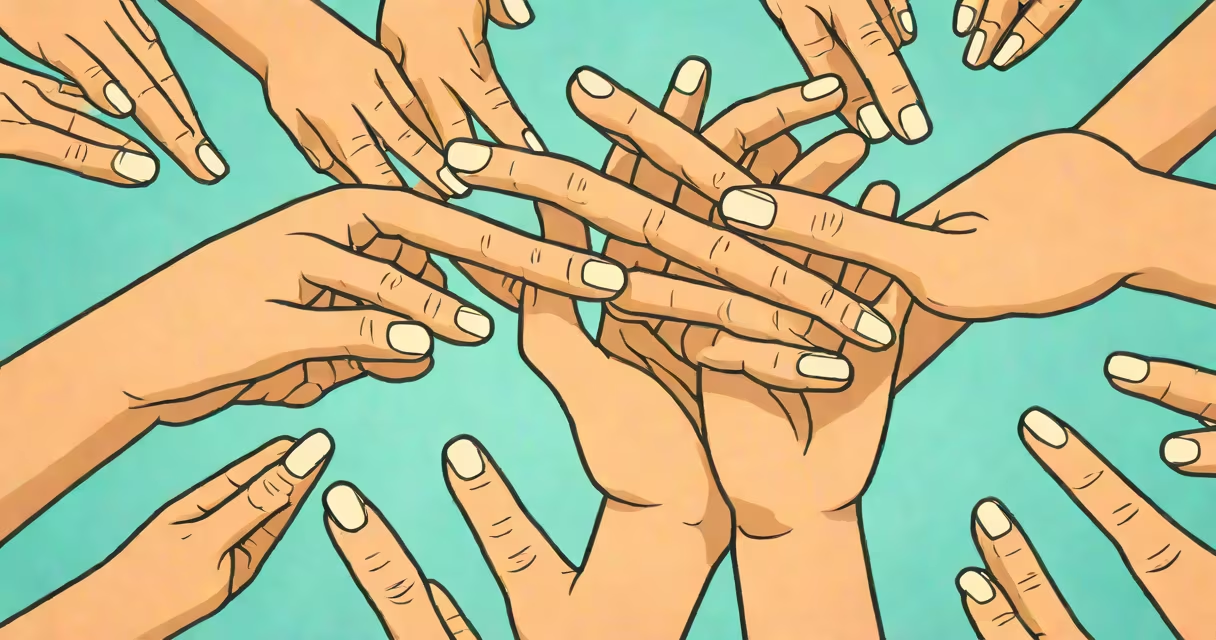
sign language 101 is an introductory course covering the foundational elements of signed communication systems, primarily focusing on American Sign Language (ASL). It teaches handshapes, facial expressions, grammar, and vocabulary used in Deaf communities. This course serves as a gateway to understanding visual language, not just mimicry of spoken words.
Sign language 101 teaches that signed languages are complete, natural languages with their own grammar and syntax-not gestures or simplified versions of spoken language. ASL, for example, uses spatial grammar, where location and movement convey subject-verb-object relationships. A single sign can express a full clause, such as "I am happy" using a single motion with facial expression.
Each sign relies on four components: handshape, location, movement, and orientation. Changing any one alters the meaning. For instance, the sign for "mother" involves a flat hand touching the chin, while "father" uses the same handshape but touches the forehead. Misplacing the hand by even an inch changes the sign entirely.
Facial expressions are not optional extras-they are grammatical. Raised eyebrows signal yes/no questions, while a furrowed brow indicates negation. In ASL, "Do you want coffee?" requires a raised eyebrow and a nod. Without it, the sentence sounds like a statement.
Most sign language 101 courses begin with the manual alphabet-the system of handshapes representing letters. This allows users to spell out names, places, or unfamiliar words. The ASL manual alphabet uses 26 distinct handshapes, each corresponding to a letter. For example, the letter "T" is formed by extending the index finger and thumb, touching the tip of the middle finger.
Course content typically progresses through functional vocabulary: numbers, colors, family members, common verbs like "eat," "go," and "help." Students learn to construct simple sentences using topic-comment structure, where the topic is established first, then the comment follows. For example, "My friend - he likes music" uses a pointing sign for "my friend" followed by a sign for "like" and a motion indicating enjoyment.
Below is a breakdown of core sign language types taught in sign language 101 programs:
| Type | Primary Region | Key Features | Example Sign |
|---|---|---|---|
| American Sign Language (ASL) | United States, Canada | Uses spatial grammar, regional dialects, and classifier predicates | "House" - hand sweeps forward and down in arc |
| Australian Sign Language (Auslan) | Australia | Distinct grammar from ASL; uses different classifiers and facial cues | "Car" - hand moves side to side mimicking steering wheel |
| British Sign Language (BSL) | UK | Not mutually intelligible with ASL; uses unique spatial syntax | "Water" - fingers move downward in wave motion |
While ASL and BSL share no linguistic roots, both are fully developed languages. A common misconception is that all sign languages are the same. They are not. Auslan and ASL differ in grammar and vocabulary, much like Spanish and French do not interoperate despite both being Romance languages.
sign language 101 is taught in schools, community centers, and online platforms to promote accessibility and inclusion. It's used by educators, healthcare workers, law enforcement, and families of Deaf children. Learning basic signs improves communication with Deaf individuals and reduces isolation.
For example, a hospital staff member trained in sign language 101 can confirm a patient's consent for surgery using clear, accurate signs. Without training, misunderstandings occur. A 2021 study by the National Association of the Deaf found that 60% of Deaf patients reported feeling misunderstood during medical visits due to lack of interpreter access.
Many workplaces now require employees to take sign language 101 as part of diversity and inclusion training. Companies like Google and Microsoft offer internal ASL courses to improve workplace accessibility. These programs reduce barriers and demonstrate institutional commitment to equity.
One widespread error is treating sign language as a universal system. There is no global sign language. Each country has its own, often with regional variation. For example, the sign for "water" in ASL differs from the sign in British Sign Language. Attempting to communicate across borders using a single sign set leads to confusion.
Another myth is that signing is simply speaking with your hands. That's incorrect. ASL has its own grammar. In spoken English, "I eat apple" follows subject-verb-object order. In ASL, the sentence is "I eat apple" - but the sign for "eat" includes a motion toward the mouth, and "apple" is signed with a circular motion near the mouth. Word order is flexible based on focus and context.
Here's a real-world example: I once attended a Deaf community event in New York City. A visitor from Germany tried to sign "thank you" using the German Sign Language sign. The audience didn't understand. I corrected it with the ASL sign - a flat hand touching the chest and moving upward. The room responded with immediate recognition. The difference wasn't just in the handshape-it was in the entire linguistic system.
Learning sign language 101 isn't about memorizing signs. It's about learning a new way to think, perceive, and interact. It's about respecting a culture with its own history, literature, and identity. The Deaf community is not a group waiting to be "fixed" by hearing people. It's a thriving community with its own values and norms.
After completing sign language 101, learners can practice with native signers, attend Deaf events, or enroll in advanced courses. Many programs include role-playing scenarios-such as ordering food at a restaurant or asking for directions-to build confidence in real-life settings.
sign language 101 is not a quick fix. It's a foundation. It opens doors to authentic communication, mutual respect, and inclusion. With consistent practice, learners progress from basic signs to complex narratives, becoming part of a global network of visual communicators.