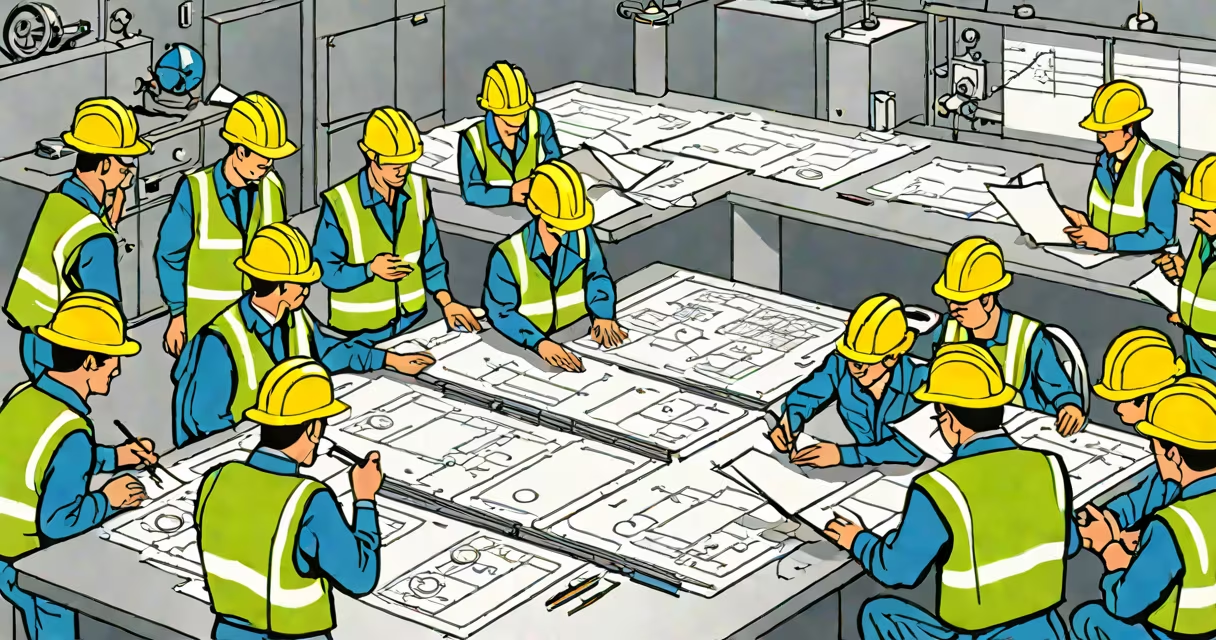
A safety management group is a cross-functional team responsible for developing, implementing, and monitoring organizational safety policies to prevent workplace incidents and ensure regulatory compliance. It typically includes representatives from operations, human resources, engineering, and senior leadership, ensuring safety integrates into daily workflows.
These groups operate under formalized procedures outlined in standards such as ISO 45001 and OSHA guidelines. Their core function is proactive hazard identification, risk assessment, and continuous improvement of safety protocols. They meet regularly to review incident reports, audit safety performance, and adjust training programs based on emerging risks.
For example, at a manufacturing plant in Ohio, the safety management group identified a recurring issue with machine guarding during quarterly reviews. After analyzing five near-miss reports over six months, they mandated redesigned guards and added visual signage. Within three months, reported incidents dropped by 68%, according to internal safety logs.
The group functions through structured meetings, documented action plans, and clear accountability. Each member brings expertise relevant to their department's operational risks. For instance, an industrial engineer may assess equipment hazards, while HR handles employee training records and psychological safety concerns.
Meetings follow a standardized agenda: review recent incidents, discuss audit findings, assign corrective actions, and track progress. Decisions are recorded in a central log accessible to all stakeholders. This transparency reduces delays and ensures follow-through.
According to the National Safety Council, organizations with formal safety management groups report 40% fewer lost-time injuries than those without. The group's success hinges on consistent data collection and leadership buy-in-not just reactive responses.
Each member of the safety management group holds a defined role. The chairperson, often a senior safety officer or operations manager, leads meetings and ensures decisions are implemented. The secretary maintains minutes and tracks action items.
Technical specialists evaluate machinery, chemicals, or processes for potential hazards. A safety auditor conducts periodic site inspections using checklists aligned with OSHA 1910 standards. These audits are not one-off events-they occur every quarter and feed directly into the group's risk register.
Human resources representatives focus on behavioral safety, including reporting culture and mental health support. They analyze anonymous surveys to detect patterns of underreporting or fear of retaliation. Research from the Journal of Occupational and Environmental Medicine shows that workplaces with strong reporting cultures see a 30% increase in early hazard detection.
| Role | Primary Responsibility | Example Action |
|---|---|---|
| Chairperson | Lead meetings, approve action plans | Approves a new lockout/tagout procedure after review |
| Engineering Representative | Evaluate physical hazards in production areas | Identifies a faulty pressure relief valve during inspection |
| HR Liaison | Monitor safety culture and reporting behavior | Recommends revised training after survey shows low confidence in reporting |
| Safety Auditor | Conduct unannounced site checks | Finds missing fire extinguisher labels during routine audit |
Many assume a safety management group is solely responsible for enforcing rules. That's incorrect. Its role is advisory and systemic-not disciplinary. It identifies gaps, recommends changes, and monitors outcomes. Enforcement remains with supervisors and HR.
Another error is treating the group as a temporary fix after an accident. The group must exist continuously, not just during crisis response. According to OSHA, sustained safety improvements require ongoing oversight. Organizations that disband their safety group after an incident see a 55% higher recurrence rate within 12 months.
Some confuse the safety management group with the safety committee. While similar, the committee is often a smaller, advisory body focused on policy input. The group is larger, accountable for execution, and tied to measurable outcomes. A 2022 study in the American Journal of Industrial Medicine found that companies with both structures had 2.3 times better safety performance scores than those with only one.
I observed a safety management group in action at a chemical processing facility in Texas. During a monthly meeting, the team reviewed a spill incident involving a corrosive fluid. The engineering rep noted inadequate secondary containment. The HR liaison reported that workers hadn't received updated spill response training in over 18 months.
The group assigned three tasks: redesign the containment system (engineering), update training modules (HR), and conduct a refresher drill in two weeks (operations lead). All were tracked in a shared dashboard. Two months later, during a surprise audit, no deficiencies were found. The facility maintained zero recordable incidents for the following quarter.
Organizations with mature safety management groups report faster incident resolution, lower insurance premiums, and improved employee retention. The U.S. Bureau of Labor Statistics notes that companies with structured safety teams have 37% lower turnover in high-risk industries.
A safety management group is not a bureaucratic layer-it's a strategic asset. It turns safety from a compliance checkbox into a living practice embedded in operations, culture, and decision-making.