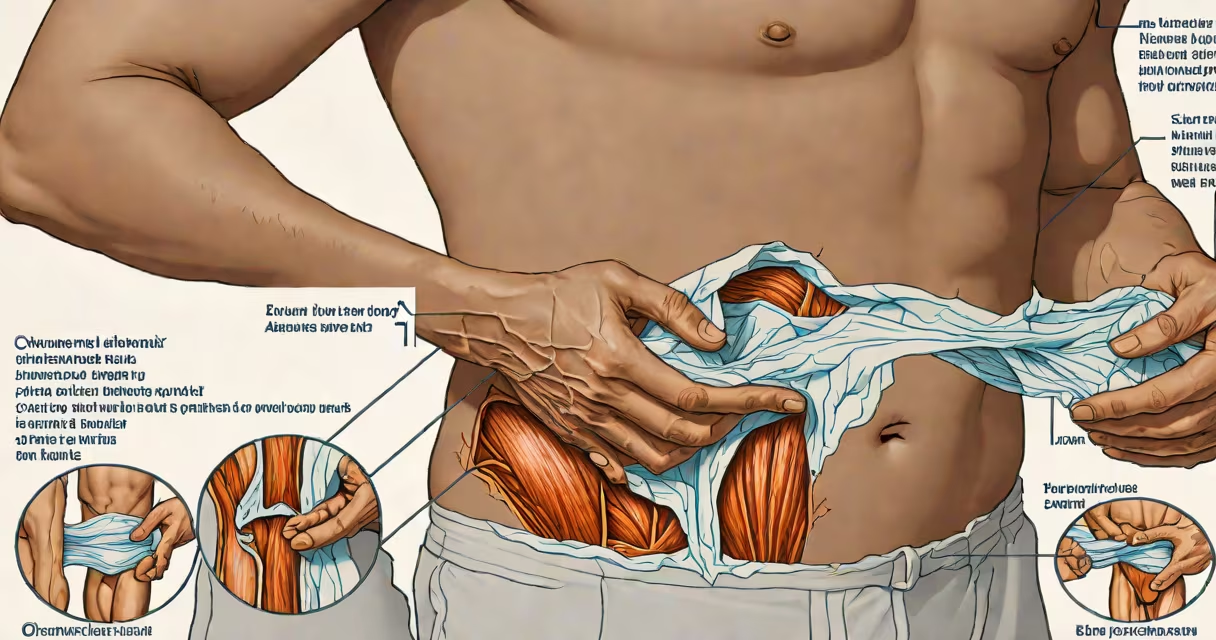
A pulled abdominal muscle, or abdominal strain, usually heals within 2 to 6 weeks, depending on the grade of injury. Mild strains may resolve in under three weeks with rest and basic care. Severe tears involving muscle fiber rupture can take six weeks or longer, especially if surgical repair is needed.
Abdominal muscles include the rectus abdominis, external and internal obliques, and transverse abdominis. These muscles stabilize the core, support posture, and assist in movements like bending, twisting, and lifting. A strain occurs when fibers stretch beyond their capacity, often during sudden exertion such as heavy lifting, explosive movement, or repetitive twisting.
Healing time depends on the injury's severity. Grade 1 strains involve minor tearing and minimal pain. Grade 2 strains feature moderate tearing and noticeable weakness. Grade 3 injuries are complete ruptures requiring medical intervention. Recovery timelines differ between grades.
The body follows a predictable biological sequence during muscle repair. After injury, inflammation begins within minutes. Blood flow increases to the site, bringing immune cells to clear damaged tissue. This phase lasts 24 to 72 hours and causes swelling, tenderness, and warmth.
Once inflammation subsides, the repair phase begins. Fibroblasts produce collagen to form scar tissue, bridging torn fibers. This stage lasts 1 to 3 weeks. During this time, gentle movement helps align collagen fibers properly, reducing stiffness and improving strength. Overstretching too soon disrupts alignment and prolongs recovery.
Remodeling follows, lasting 4 to 12 weeks. Scar tissue strengthens and adapts to mechanical load. Full function returns only when the repaired muscle withstands normal activity without pain. Returning to sports or heavy lifting before remodeling completes risks re-injury.
Medical guidelines from the American Academy of Orthopaedic Surgeons (AAOS) classify muscle strains into three grades based on physical exam and imaging findings. Healing times reflect these categories.
| Grade | Damage | Recovery Time | Common Symptoms |
|---|---|---|---|
| 1 | Minor fiber stretching | 1-3 weeks | Mild soreness, slight weakness |
| 2 | Partial tear, visible on MRI | 3-6 weeks | Pain with movement, bruising, reduced strength |
| 3 | Complete rupture, often requires surgery | 6+ weeks, sometimes months | Sharp pain, visible bulge, inability to contract muscle |
Grade 3 injuries are rare but serious. They may result in a hernia-like appearance called abdominal muscle protrusion, where muscle tissue pushes through the fascia. This condition requires evaluation by a surgeon and may need surgical repair to prevent complications.
For most people, recovery begins with 2-3 days of rest. Ice applied for 15 minutes every 2 hours reduces swelling. Compression with a supportive bandage helps limit movement and prevents further strain. Elevating the upper body slightly during rest may ease discomfort.
Most pulled abdominal muscles improve with conservative treatment. However, certain signs indicate a need for professional assessment. Persistent pain beyond three weeks, increasing swelling, or numbness in the abdomen warrants imaging, such as ultrasound or MRI.
I experienced a Grade 2 strain while doing weighted sit-ups. Pain worsened after two days despite rest. An ultrasound confirmed partial tearing. My doctor advised avoiding core exercises for four weeks and prescribed a physical therapy program. By week five, I resumed light training with modified form. Full return took seven weeks.
Several factors slow recovery. Age reduces muscle regeneration speed. Smoking impairs blood flow, delaying nutrient delivery to injured tissue. Poor nutrition, especially low protein intake, limits collagen synthesis. Chronic conditions like diabetes affect wound healing and increase infection risk.
Returning to activity too early is the most common cause of prolonged recovery. A study published in the British Journal of Sports Medicine found that athletes who resumed training before 80% of strength returned had a 40% higher re-injury rate. Gradual progression is essential.
Physical therapy accelerates healing. Therapists use controlled exercises to rebuild strength and coordination. A 2021 review in the Journal of Orthopaedic & Sports Physical Therapy showed that patients receiving guided rehab recovered 25% faster than those managing care independently.
Week 1-2: Focus on rest, ice, compression. Avoid crunches, planks, and twisting motions. Light walking is acceptable if pain-free.
Week 3-4: Begin gentle stretching. Try seated forward bends or supine knee-to-chest stretches. Introduce isometric contractions-pressing hands against the abdomen without moving the trunk.
Week 5-6: Add resistance training using light weights or bands. Perform bird-dog and dead bug exercises to rebuild core stability. Monitor for pain or tightness.
After six weeks, if pain-free and strength returns to baseline, resume normal activities. Return to sports or heavy lifting should wait until full strength is regained. A healthcare provider can assess readiness using functional tests.