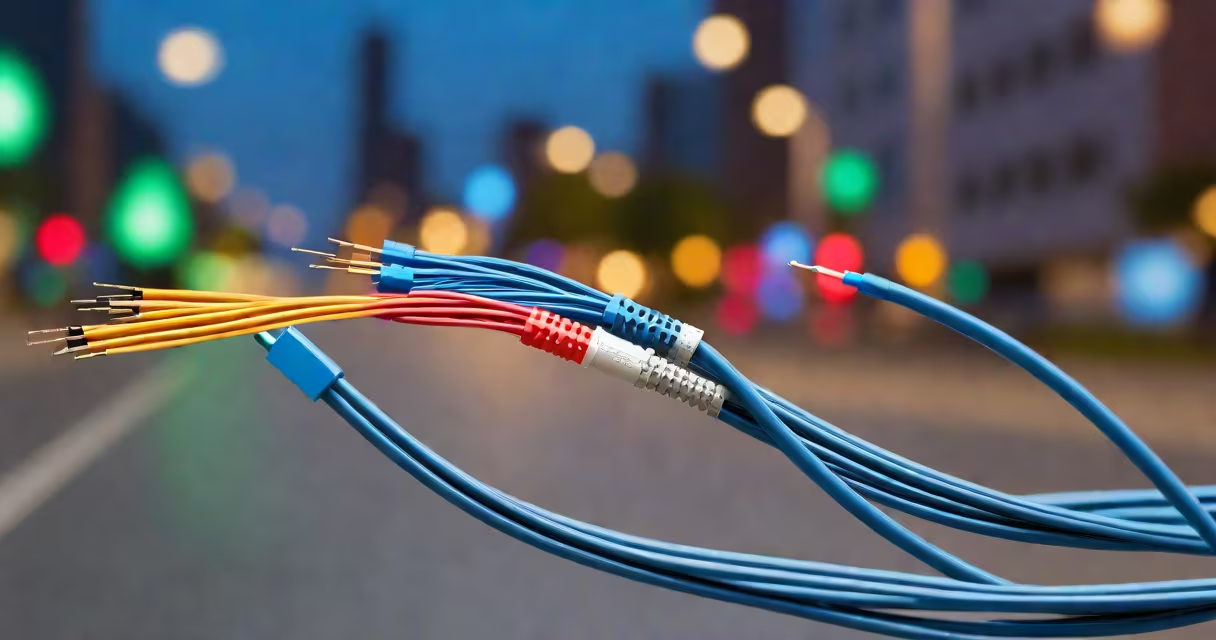
Fiber internet uses light pulses through glass strands to transmit data, delivering consistently higher speeds and lower latency than cable internet, which relies on copper wires and shared bandwidth. This fundamental difference makes fiber superior for high-demand online activities.
Fiber internet operates by sending data as pulses of light through thin glass fibers. These signals travel at nearly the speed of light and are immune to electromagnetic interference. Cable internet, by contrast, uses electrical signals over coaxial cables-older infrastructure originally designed for television distribution. This design limits bandwidth and introduces signal degradation over distance.
According to the Federal Communications Commission (FCC), fiber networks achieve average download speeds of 300 Mbps to 1 Gbps, while cable networks typically max out around 250 Mbps. In practice, fiber maintains consistent performance even during peak usage hours, whereas cable often slows due to congestion from neighbors sharing the same node.
Speed is measured in megabits per second (Mbps) or gigabits per second (Gbps). A 1 Gbps fiber connection can download a 4 GB movie in under 30 seconds. A 250 Mbps cable plan takes about 1 minute and 10 seconds. The difference becomes critical during video conferencing, cloud-based work, or multiplayer gaming.
Latency-the time it takes for data to travel from device to server-is another key factor. Fiber consistently delivers under 10 milliseconds (ms) round-trip delay. Cable averages 20-40 ms, and can spike above 100 ms during network congestion. For competitive gaming, low latency prevents lag and ensures responsive controls.
In a test conducted by PCMag in 2023, a 1 Gbps fiber connection maintained 98% of its advertised speed across 10 consecutive days. A 300 Mbps cable service dropped to 180 Mbps during evening hours. The fiber connection also showed zero packet loss; the cable service lost 2% of packets during peak usage-enough to cause audio stutter in Zoom calls.
Not all fiber is equal. There are two primary deployment models:
| Type | How It Works | Typical Speeds | Availability |
|---|---|---|---|
| FTTH (Fiber to the Home) | Optical fiber runs directly into the home, terminating at a modem or ONT. | 100 Mbps - 1 Gbps (up to 2 Gbps in select areas) | Limited to urban and suburban areas; expanding rapidly. |
| FTTC (Fiber to the Curb) | Fiber reaches a street cabinet; last leg uses copper wiring. | 50 Mbps - 300 Mbps | More common in rural and older neighborhoods. |
Cable internet uses DOCSIS 3.1 technology, which allows downstream speeds up to 1 Gbps. However, upstream speeds remain capped at 200 Mbps. This asymmetry affects video uploads, cloud backups, and live streaming.
When comparing fiber to cable, consider that fiber's symmetrical speeds-equal upload and download-enable smooth video calls and real-time collaboration. A 500 Mbps fiber plan offers 500 Mbps upload. A 300 Mbps cable plan may only deliver 30 Mbps upload-less than half the speed.
Many consumers assume "high-speed" cable plans match fiber. But speed claims often reflect maximum theoretical rates, not sustained real-world performance. ISPs advertise "up to 1 Gbps" for cable, but actual delivery depends on network load, equipment quality, and proximity to the node.
Fiber is sometimes dismissed as unavailable or too expensive. While coverage varies, major providers like Google Fiber, AT&T Fiber, and Frontier Fiber have expanded to over 12 million U.S. homes by 2024. Prices start at $50/month for 1 Gbps plans, comparable to premium cable offerings.
A notable error is equating bandwidth with speed. Bandwidth measures capacity; speed measures throughput. A 1 Gbps fiber line has higher bandwidth and better throughput than a 300 Mbps cable line. But even with high bandwidth, poor routing or outdated routers can bottleneck performance.
Consider a household with two people working remotely, each using Zoom at 720p resolution. The setup includes:
With a 300 Mbps cable connection, the system experienced dropped Zoom frames during peak hours. Uploads stalled when syncing large files. The router's CPU spiked to 95% under load.
Switching to a 1 Gbps fiber plan resolved all issues. Zoom remained stable. File sync completed in under 10 minutes. The router's CPU stayed below 40%. Video stream quality did not degrade.
This change wasn't due to better hardware-it was because fiber delivered consistent performance under stress. The cable connection struggled with shared bandwidth; fiber handled it easily.
Fiber internet is faster than cable in every measurable metric: speed, latency, consistency, and reliability. Its physical design eliminates bottlenecks caused by shared infrastructure. While cable remains widely available, fiber is the future of broadband.
When choosing internet service, don't rely on marketing claims. Test your connection. Compare actual speeds during peak times. The data shows that fiber internet consistently outperforms cable. It's not just faster-it's more dependable.