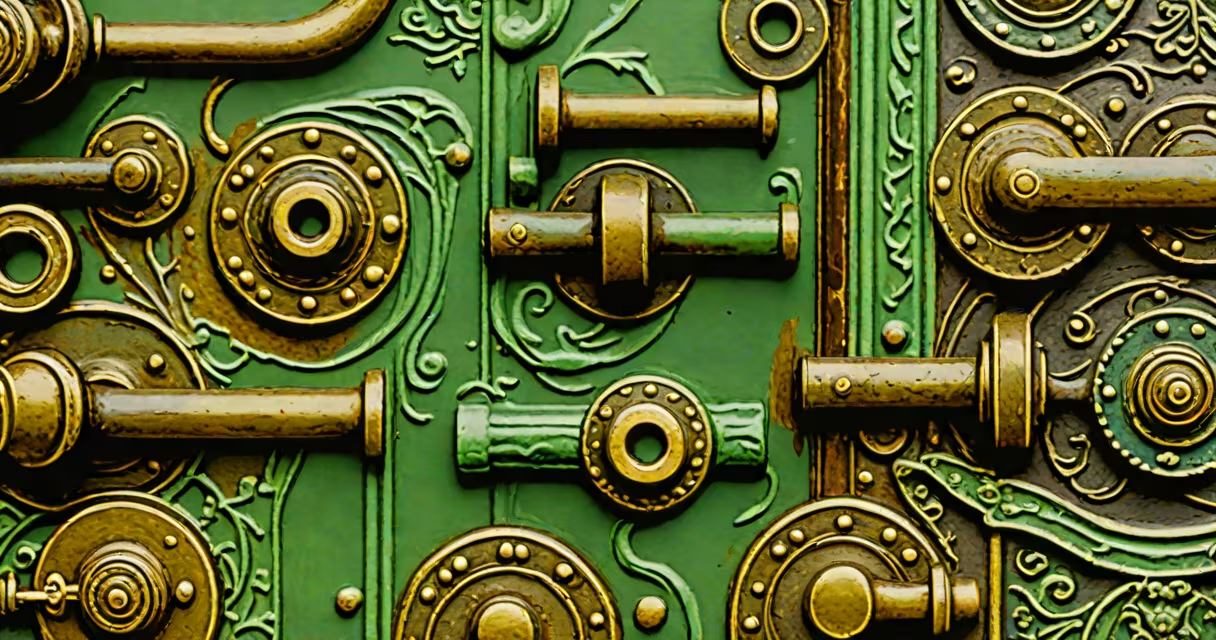
Aged brass displays a rich, uneven surface with greenish-blue, brown, and gold tones due to oxidation and environmental exposure. It often features textured patches, slight pitting, and a soft sheen rather than a mirror finish.
The visual transformation begins within months of exposure to air and moisture. Copper in the alloy oxidizes faster than zinc, forming copper carbonate and copper sulfate compounds. These deposits create the characteristic verdigris-blue-green crusts seen on old statues and fixtures. Over years, layers build up, creating depth and variation across the surface.
Real-world examples include the Statue of Liberty's green patina, which developed over 130 years. Its original copper skin turned green due to reactions with saltwater and air. While not brass, this illustrates how copper-rich alloys change color. True aged brass, such as vintage door handles or antique lamps, shows similar effects but with warmer base tones due to higher zinc content.
Brass is an alloy of copper (60-70%) and zinc (30-40%). When exposed to oxygen, moisture, and pollutants, copper oxidizes into copper oxide (black), then further reacts with carbon dioxide and water to form basic copper carbonates-greenish compounds known as patina. Zinc also oxidizes, but slower, leaving behind a layered, textured surface.
Environmental factors accelerate aging. Coastal areas speed up corrosion due to salt spray. Indoor settings with high humidity or poor ventilation cause slower but steady changes. Direct sunlight can dry out surface layers, leading to flaking or uneven coloration.
For example, a brass doorknob in a 1920s bathroom may show dark brown patches near the center (where hands frequently touched), while edges remain golden-yellow. This contrast results from both chemical reaction and mechanical wear.
Aged brass is not uniformly green. The color depends on the environment, alloy composition, and duration of exposure. Common appearances include:
| Color Range | Typical Cause | Example Use |
|---|---|---|
| Golden-brown to amber | Early-stage oxidation, low humidity | Antique clocks, vintage light fixtures |
| Greenish-blue (verdigris) | Long-term exposure to moisture and CO₂ | Outdoor sculptures, garden ornaments |
| Dark gray to black | High sulfur content in air (e.g., industrial zones) | Old plumbing fittings, factory equipment |
| Mottled mix of colors | Variable conditions over decades | Restored furniture, vintage jewelry |
Many assume aged brass is always green. That's incorrect. The dominant hue depends on local climate and material purity. High-zinc brass (like architectural-grade brass) tends toward deeper golds and browns, while lower-zinc versions develop greener tones faster.
Another misconception: aged brass is always dull. Some surfaces retain a soft luster despite discoloration. A well-maintained antique chandelier may have a muted shine beneath its greenish layer, especially under direct light.
Aged brass is often mistaken for bronze or painted finishes. Bronze contains tin and has a darker, cooler tone. It forms a different type of patina-often bluish-black-due to tin oxide formation. Brass, being copper-zinc, produces brighter greens and yellows.
Painted brass mimics aging but lacks texture. Painted surfaces appear flat and uniform. Scratches reveal underlying metal or primer, unlike real patina, which grows through the surface. A real aged brass fixture will show color gradients and micro-cracks in the patina layer.
I once inspected a vintage hotel lobby chandelier with a greenish coating. At first glance, it looked like paint. But upon close inspection, the green spots were thicker in crevices and varied in tone. Using a magnifier, I saw tiny crystalline structures-signs of actual chemical growth. Replacing the finish would have destroyed historical authenticity. The original brass was preserved.
Designers value aged brass for its warmth and history. It adds character to interiors without appearing artificial. A 1950s-style bar with aged brass railings feels lived-in, not staged.
Restoration professionals avoid polishing away patina unless necessary. Removing it erases provenance. The U.S. National Park Service guidelines state that original finishes on historic objects should be preserved unless damage threatens structural integrity. Polishing aged brass risks losing cultural context.
For example, a 1930s brass elevator panel in a New York City landmark building was cleaned using mild vinegar and cotton swabs. The process removed surface grime but left the patina intact. The result maintained authenticity while improving clarity.
Understanding aged brass prevents misidentification and supports responsible preservation. Whether restoring a family heirloom or selecting materials for a period-themed space, knowing how real aging appears ensures accuracy and respect for material history.
Recognizing the difference between genuine aged brass and imitation finishes improves design decisions and long-term maintenance. The real thing shows variation, texture, and depth-qualities no paint or coating can replicate.