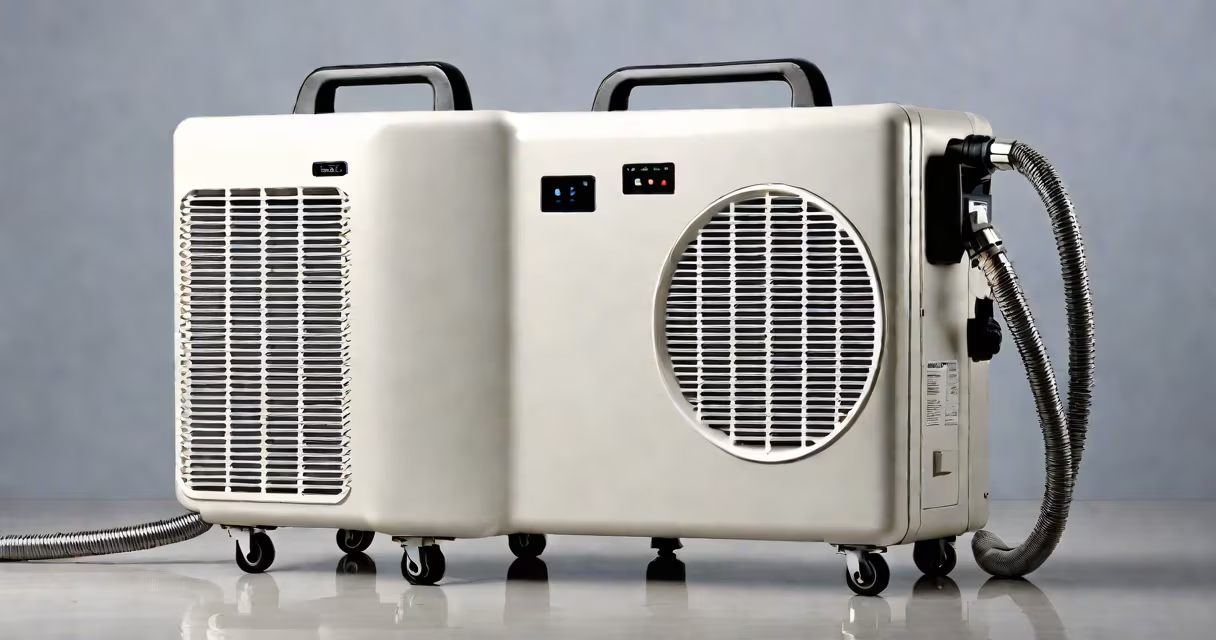
A portable air unit is a self-contained cooling device that removes heat and humidity from indoor spaces without requiring ductwork or permanent installation. It operates on standard electrical outlets and uses a hose to vent hot air outdoors through a window or wall.
These units are designed for temporary or supplemental cooling in homes, offices, dorm rooms, or small commercial spaces. They typically range from 6,000 to 18,000 BTUs in cooling capacity, with higher numbers indicating greater cooling power. Unlike central or window-mounted systems, portable air units move easily between rooms due to built-in wheels and handles.
According to the U.S. Department of Energy, portable air conditioners average 80-90% energy efficiency compared to central AC systems, though they perform less efficiently in high-humidity environments. Their portability makes them ideal for renters, seasonal use, or spaces where permanent HVAC upgrades aren't feasible.
Portable air units function via a refrigeration cycle. A compressor pressurizes refrigerant, which flows through coils to absorb indoor heat. The cooled air is blown into the room, while the heated refrigerant travels to an external condenser coil, where it releases heat through a flexible exhaust hose.
The unit draws warm indoor air through a front intake, passes it over cold evaporator coils, then expels the cooled air back into the room. Simultaneously, the hot air from the condenser is pushed out through the exhaust hose. This process requires a venting setup-usually a window adapter-to prevent heat buildup indoors.
Most models include a dehumidification mode. As the evaporator coils cool, moisture condenses on them and drains into a built-in reservoir or through a continuous drain hose. Units with automatic shutoff when the water tank fills prevent overflow and reduce maintenance.
Portable air units consist of four core parts: a fan system, compressor, condenser coil, and exhaust hose. The fan pulls air through the unit and pushes cooled air back into the room. The compressor powers the refrigeration cycle. The condenser coil releases heat, and the hose directs hot air outside.
Units differ primarily by size, cooling capacity, and venting configuration. The most common types are:
| Type | Cooling Capacity | Best For | Exhaust Hose Setup |
|---|---|---|---|
| Single-Hose | 6,000-12,000 BTU | Small rooms (up to 300 sq ft) | One hose for exhaust; draws air from room to replace lost pressure |
| Double-Hose | 12,000-18,000 BTU | Medium to large rooms (300-500 sq ft) | One hose for exhaust, one for intake; maintains indoor air pressure |
| Compact Desktop | 6,000-8,000 BTU | Dorms, desks, small workspaces | Often includes a removable hose for easy storage |
Double-hose units are more efficient because they draw replacement air from outside rather than pulling it from the room. The Consumer Reports 2023 testing found double-hose models maintained 15-20% better cooling performance over 8 hours compared to single-hose units under identical conditions.
Many users assume portable air units cool as effectively as central AC. This is incorrect. Portable units lose efficiency due to heat transfer through the exhaust hose and the need to draw air from the room for ventilation. The U.S. Environmental Protection Agency notes that single-hose units can increase indoor temperature slightly during operation due to the net heat gain from drawing air from the space.
Another misconception is that these units can cool entire homes. Most models are rated for specific square footage. A 12,000 BTU unit performs optimally in spaces under 400 sq ft. Cooling larger areas leads to constant cycling, reduced dehumidification, and higher energy costs.
One non-obvious fact: noise levels vary. Units with lower decibel ratings (below 50 dB) are quieter but often require larger fans or advanced sound dampening. The Hisense P12K model, for example, runs at 52 dB on low fan speed-comparable to a quiet library-but increases to 68 dB at maximum cooling, which may disrupt sleep.
Consider a bedroom measuring 15 ft by 23 ft (345 sq ft) with a west-facing window that receives direct afternoon sun. Room temperature averages 85°F during summer. A 12,000 BTU double-hose portable air unit was installed near the window with a rigid exhaust hose routed through a screened window adapter.
After 30 minutes of operation, the unit lowered the temperature to 75°F. The relative humidity dropped from 68% to 52%. The unit ran continuously for 2 hours before cycling off. During this time, it consumed 1.2 kWh of electricity, costing approximately $0.15 based on a national average rate of $0.125/kWh.
When the outdoor temperature reached 95°F, the unit struggled to maintain 75°F. It cycled on and off every 10 minutes. This indicates that the unit's performance degrades in extreme heat unless paired with shading or insulation.
Use a portable air unit when permanent installation isn't possible. Renters, college students, or people in older buildings without AC ducts benefit most. They're also useful for spot-cooling during heatwaves or in poorly ventilated basements.
For consistent cooling in a single room, a portable unit offers flexibility and immediate setup. However, for whole-home cooling, central AC remains superior. The ENERGY STAR program rates portable units with a minimum EER (Energy Efficiency Ratio) of 10.0. Units below this threshold are not eligible for rebates.
When selecting a model, prioritize double-hose designs for better efficiency. Look for units with adjustable thermostats, programmable timers, and auto-restart after power loss. Always verify that the exhaust hose fits your window type-common adapters include sliding, casement, and awning windows.
Portable air units are not a universal solution. They work best in controlled environments with minimal heat sources. When used correctly, they deliver targeted cooling without structural changes. But they are not replacements for properly sized, whole-house systems.