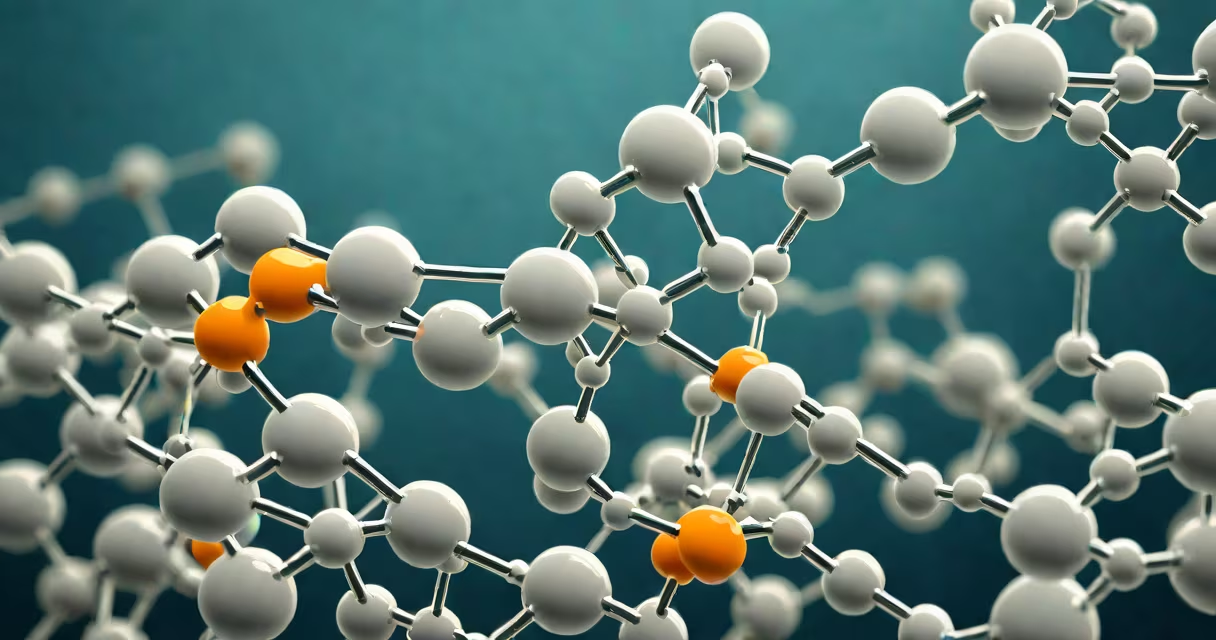
Amino acids are organic compounds that serve as the fundamental units of proteins, enabling structural integrity, enzymatic activity, and signaling within living organisms. They consist of a central carbon bonded to an amino group (-NH₂), a carboxyl group (-COOH), a hydrogen atom, and a variable side chain (R-group) that determines each amino acid's unique properties.
There are 20 standard amino acids encoded by the genetic code in humans. These molecules link via peptide bonds to form polypeptide chains, which fold into functional three-dimensional proteins. This process occurs during translation, where ribosomes read mRNA sequences to assemble amino acids in a specific order dictated by codons.
The human body synthesizes 11 of these amino acids de novo, while the remaining nine-histidine, isoleucine, leucine, lysine, methionine, phenylalanine, threonine, tryptophan, and valine-are essential and must be obtained through diet. Deficiencies in essential amino acids lead to impaired growth, weakened immunity, and metabolic dysfunction.
Each amino acid contributes distinct chemical characteristics based on its R-group. For example, glycine has a hydrogen as its side chain, making it small and flexible. In contrast, cysteine contains a sulfur atom capable of forming disulfide bridges, stabilizing protein structures like insulin and antibodies.
Proteins perform diverse roles: enzymes catalyze biochemical reactions (e.g., amylase breaks down starch), structural proteins maintain cell shape (e.g., keratin in hair), and transport proteins carry molecules (e.g., hemoglobin transports oxygen). The sequence of amino acids determines a protein's final shape and function.
Non-protein roles include neurotransmitter synthesis. Tryptophan is converted into serotonin, a mood-regulating brain chemical. Tyrosine becomes dopamine and norepinephrine, influencing focus and stress response. This shows amino acids act beyond mere building blocks-they are precursors to important signaling molecules.
Amino acids are categorized by side chain properties. The following table outlines the 20 standard amino acids grouped by chemical behavior:
| Type | Examples | Key Properties |
|---|---|---|
| Nonpolar (hydrophobic) | Alanine, Valine, Leucine, Isoleucine, Methionine | Repel water; cluster in protein interiors |
| Polar uncharged | Serine, Threonine, Asparagine, Glutamine | Form hydrogen bonds; often on protein surfaces |
| Acidic (negatively charged) | Aspartate, Glutamate | Carry negative charge at physiological pH; involved in enzyme active sites |
| Basic (positively charged) | Lysine, Arginine, Histidine | Carry positive charge; bind DNA and stabilize protein folding |
| Sulfur-containing | Cysteine, Methionine | Cysteine forms covalent crosslinks; methionine initiates protein synthesis |
Some amino acids have special roles. Proline introduces kinks in polypeptide chains due to its rigid ring structure, affecting protein folding. Glycine, being the smallest, allows tight turns in protein loops. Tyrosine and tryptophan absorb UV light, contributing to protein stability under sunlight exposure.
Many assume all amino acids are created equal in nutrition. This is incorrect. While all 20 are necessary for health, the body cannot synthesize nine essential ones. Without dietary intake, deficiency symptoms appear quickly-muscle wasting, poor wound healing, and reduced immune function.
Another misconception is that amino acids are only relevant to muscle growth. While branched-chain amino acids (BCAAs-leucine, isoleucine, valine) are popular among athletes, they play broader roles. Leucine activates mTOR, a pathway regulating cell growth and autophagy. Disruption of this system is linked to cancer progression and aging-related decline.
Amino acids are not interchangeable. Substituting one amino acid for another-even a similar one-can alter protein function. For example, sickle cell anemia results from a single amino acid substitution: glutamic acid replaced by valine in hemoglobin β-chain. This change causes red blood cells to deform under low oxygen, leading to pain crises and organ damage.
Consider the enzyme lysozyme, found in tears and saliva. It breaks down bacterial cell walls. Its active site contains a precise arrangement of amino acids: glutamic acid (Glu35) donates a proton, and aspartate (Asp52) stabilizes the transition state. Altering either residue reduces enzymatic efficiency by over 99%.
In agriculture, supplementing animal feed with lysine and threonine improves growth rates in pigs and poultry. Studies show a 15% increase in weight gain when diets are balanced for essential amino acids. This reflects real-world impact: proper amino acid ratios improve productivity and reduce waste.
On a personal note, during a summer research internship at a university lab, I observed how altering the amino acid sequence in a recombinant protein led to aggregation and loss of function. Even a single mutation-tyrosine to phenylalanine-disrupted folding. This hands-on experience confirmed that amino acid identity matters at the molecular level.