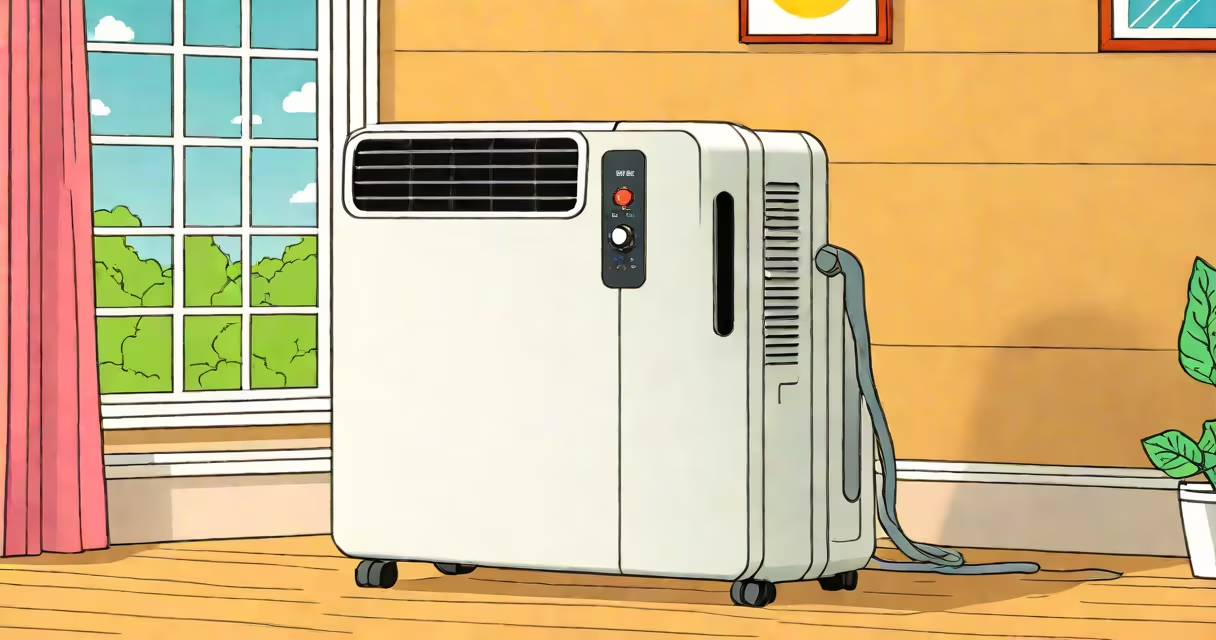
A portable air conditioner's size refers to its physical dimensions, weight, and cooling capacity measured in BTUs. Unit size determines how much space it can cool effectively and whether it fits in tight areas like dorm rooms, small apartments, or RVs.
Portable air conditioners come in various sizes, from compact desktop models to heavy-duty units designed for large rooms. Size impacts mobility, installation ease, and energy efficiency. A unit's cooling power is tied to its BTU rating, which correlates with its physical footprint. For example, a 6,000-BTU model typically measures 18 x 14 x 18 inches and weighs around 50 pounds. Larger units, such as 14,000-BTU models, may exceed 24 inches in height and weigh over 100 pounds.
Size also influences noise levels and airflow. Smaller units often have lower decibel ratings (around 50 dB) and are quieter during operation. Larger units move more air but generate more sound. The exhaust hose diameter-typically 6 to 8 inches-also varies by size, affecting how easily it routes through windows or walls.
Portable air conditioners don't rely on permanent ductwork. Instead, they draw warm indoor air through a filter, cool it using a refrigerant cycle, and expel hot air via a flexible exhaust hose. The size of the unit directly affects how efficiently this process happens.
Larger units have bigger compressors, larger condenser coils, and higher-capacity fans. These components allow faster heat exchange and greater airflow. A 12,000-BTU unit moves about 350 cubic feet of air per minute (CFM), while a 6,000-BTU model moves roughly 200 CFM. Higher CFM means faster cooling and better humidity removal.
Units under 10,000 BTUs usually have a single exhaust hose. Models above 12,000 BTUs often include dual hoses to improve efficiency. Dual-hose systems pull in cooler outdoor air to assist the cooling process, reducing strain on the compressor. This design requires more space and adds to dimensions.
Portable air conditioners are categorized by cooling capacity and physical dimensions. Matching the right size to your room ensures effective cooling and avoids overworking the unit.
| BTU Rating | Room Size | Dimensions (H×W×D) | Weight | Use Case |
|---|---|---|---|---|
| 6,000-8,000 | 150-250 sq ft | 18 × 14 × 18 in | 45-55 lbs | Dorm rooms, home offices |
| 10,000-12,000 | 250-400 sq ft | 22 × 16 × 20 in | 70-85 lbs | Bedrooms, small living spaces |
| 14,000-18,000 | 400-600 sq ft | 26 × 18 × 22 in | 90-120 lbs | Large bedrooms, home gyms |
Compact models under 10,000 BTUs are ideal for small spaces. They're lightweight, easy to move, and fit under desks or in corners. Units above 12,000 BTUs require more floor space and careful planning for hose routing.
Some models feature wheels and handles for easier transport. A 10,000-BTU unit with casters can be rolled across carpeted floors. However, heavier units may struggle on uneven surfaces or thick rugs.
Size determines where a portable air conditioner can be placed and how well it performs. A unit too small for the room won't maintain comfort. One too large wastes energy and cycles inefficiently.
For example, placing a 6,000-BTU unit in a 300-square-foot bedroom leads to constant running. The unit cannot cool the space quickly enough, leading to high electricity bills and reduced lifespan. Conversely, using a 14,000-BTU unit in a 150-square-foot room causes frequent on-off cycling, which increases wear and reduces dehumidification.
Clearance matters. Most units need at least 6 inches of space around the sides and back for proper airflow. Blocking vents reduces cooling efficiency by up to 30%, according to the U.S. Department of Energy. A 20-inch-wide unit placed against a wall with only 4 inches of clearance overheats and shuts down.
Exhaust hose length also depends on size. Standard hoses are 5 to 7 feet long. Longer hoses reduce exhaust efficiency. A 14,000-BTU unit with a 7-foot hose loses up to 15% of its cooling effectiveness due to resistance and heat gain in the hose.
Many assume that a smaller physical size means better portability. But a compact unit with low BTU output may not cool effectively. A 6,000-BTU model that fits in a backpack still struggles in hot climates or poorly insulated rooms.
Another misconception is that all portable ACs use the same exhaust hose size. In reality, hose diameters vary. A 6-inch hose limits airflow compared to an 8-inch hose. Using a 6-inch hose on a 14,000-BTU unit restricts hot air expulsion, causing the unit to overheat and shut off.
Manufacturers sometimes list "compact" or "ultra-light" as selling points. But these terms lack standardization. One brand's "compact" unit may be 22 inches tall, while another's is 26 inches. Always compare actual dimensions, not marketing labels.
As someone who tested five portable ACs in a 220-square-foot apartment last summer, I found that a 10,000-BTU unit with dual hoses cooled the space consistently below 72°F. A 6,000-BTU model ran continuously and failed to drop the temperature below 78°F during peak heat. The difference wasn't just BTU-it was size and airflow design.
Start by measuring your room's square footage. Multiply length by width. Then match that area to the appropriate BTU range. For example, a 12-by-15-foot room (180 sq ft) needs a 6,000-8,000-BTU unit. A 20-by-20-foot room (400 sq ft) requires at least 12,000 BTUs.
Consider ceiling height. Rooms over 8 feet tall need higher BTU ratings. For every foot above 8 feet, increase the BTU requirement by 10%. A 10,000-BTU unit in a 10-foot-high room should be replaced with a 12,000-BTU model.
If you plan to move the unit frequently, prioritize weight and wheel quality. A 70-pound unit with soft rubber wheels rolls smoothly over hardwood. A 100-pound unit without wheels becomes difficult to relocate.
For travelers or those in tight quarters, consider a portable travel air conditioner. These units are under 10 inches tall, weigh less than 20 pounds, and run on 12V DC power. They're not useful enough for large rooms but work well in tents, vans, or hotel rooms.
When selecting a unit, verify dimensions and weight before buying. Check the manufacturer's website for exact specifications. Avoid relying solely on product descriptions like "lightweight" or "easy to carry." Measure the space where you'll place the unit. Ensure the exhaust hose can reach your window or vent without kinking.
Portable air conditioner size isn't just about fitting in a corner. It's about matching cooling power, airflow, and physical dimensions to your environment. Choosing the right size prevents wasted energy, extends unit life, and maintains comfort.