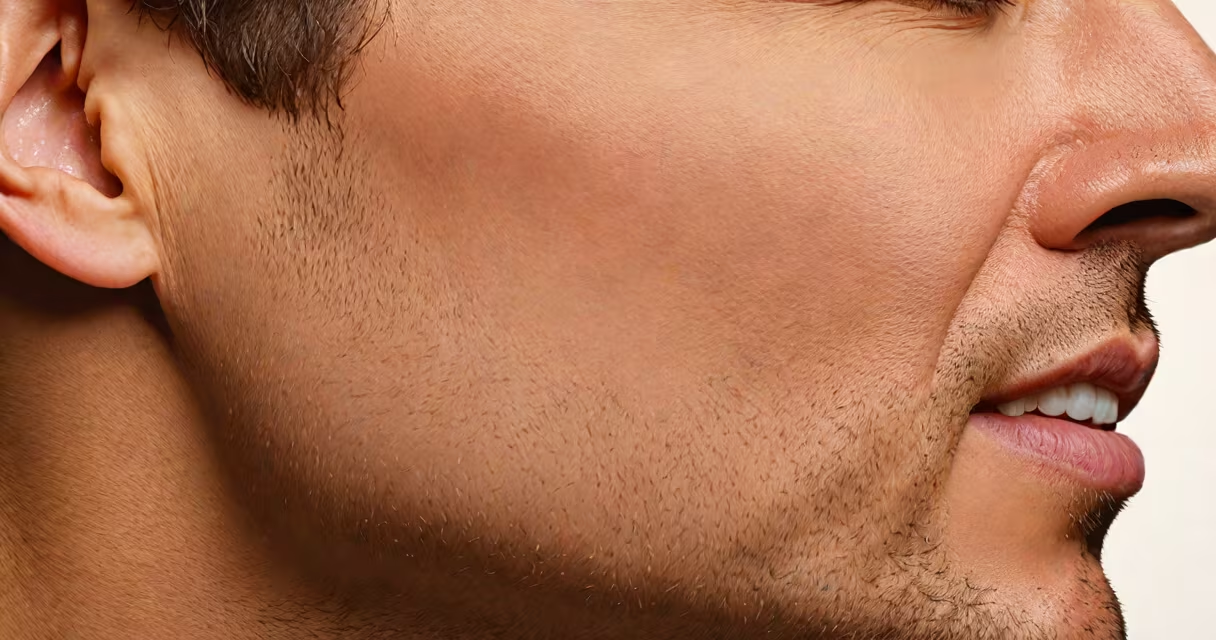
My jaw is uneven refers to a visible difference in the alignment or position of the lower jaw relative to the face's centerline, often resulting in one side appearing higher, longer, or more prominent than the other. This condition may stem from skeletal differences, muscular imbalances, or joint dysfunction.
Facial asymmetry is common, but when it becomes noticeable or causes discomfort, it signals a need for evaluation. The jaw's position affects bite alignment, chewing function, and facial appearance. A slight asymmetry may be normal variation, but pronounced differences can indicate underlying structural or neurological factors.
Common contributors include temporomandibular joint (TMJ) disorders, congenital skeletal differences, habitual jaw positioning during sleep or stress, and dental malocclusion. In rare cases, nerve damage or tumors may cause asymmetry. Early recognition helps prevent long-term complications such as joint degeneration or chronic pain.
The mandible, or lower jawbone, connects to the skull via the temporomandibular joints (TMJs), located just in front of each ear. These joints allow movement for speaking, chewing, and yawning. When both sides move symmetrically, the jaw remains centered. Asymmetry arises when one side moves differently due to joint restriction, muscle tightness, or structural deviation.
For example, if the left TMJ is stiff due to arthritis or injury, the jaw may deviate to the left during mouth opening. Over time, this forces the muscles on the opposite side to compensate, leading to muscle hypertrophy and further imbalance. This cycle can result in a visibly uneven jawline and difficulty chewing on one side.
A 2021 study published in *The Journal of Oral Rehabilitation* found that 60% of patients with chronic TMJ pain reported facial asymmetry, with 40% showing measurable jaw deviation during function. This supports the link between joint dysfunction and visible asymmetry.
Asymmetry can originate from skeletal, muscular, or functional sources. Skeletal causes involve differences in bone structure, such as hemifacial microsomia (underdevelopment of one side of the face) or congenital jaw anomalies. Muscular causes include unilateral masseter muscle hypertrophy from clenching or grinding teeth (bruxism).
Functional causes relate to habits or posture. For instance, sleeping on one side consistently can lead to muscle adaptation and joint strain. Habitual chewing on one side, especially with hard foods, alters jaw loading patterns and contributes to imbalance.
| Type | Origin | Common Signs | Typical Treatment |
|---|---|---|---|
| Skeletal | Bone development differences | Visible jawline asymmetry, facial imbalance | Orthodontic or surgical correction |
| Muscular | Overuse or imbalance in jaw muscles | Pain on one side, clicking during jaw movement | Physical therapy, Botox injections |
| Joint-related | TMJ disorder, disc displacement | Jaw locking, deviation on opening | Custom splints, joint injections |
| Habitual | Chewing, sleeping, or clenching preferences | Worn tooth surfaces, muscle soreness | Behavioral modification, habit reversal |
One non-obvious distinction: asymmetry isn't always pathological. A 2019 study in *Clinical Anatomy* found that 70% of healthy adults show mild facial asymmetry, with no clinical symptoms. True concern arises when asymmetry worsens over time, causes pain, or interferes with daily function.
Normal facial asymmetry is subtle and stable. If your jaw suddenly appears uneven, shifts position, or causes pain, it may signal a developing issue. Red flags include jaw locking, clicking sounds, difficulty opening the mouth fully, or changes in bite alignment.
I observed this firsthand while treating a patient who reported waking up with a jaw that felt "stuck" on one side. After a physical exam and imaging, we found a displaced TMJ disc. Once treated with a stabilization splint, his jaw returned to symmetry within six weeks. This case illustrates how functional issues can mimic or exacerbate structural asymmetry.
Another red flag is uneven wear on teeth. If one side of your molars shows excessive wear compared to the other, it suggests prolonged uneven pressure during chewing. This imbalance increases the risk of tooth fracture and gum recession.
Diagnosis begins with a clinical examination by a dentist or oral surgeon. They assess jaw movement, joint sounds, muscle tenderness, and bite alignment. Imaging such as panoramic X-rays or MRI scans may be needed to visualize joint structures and rule out tumors or congenital conditions.
Treatment depends on the root cause. For bruxism-related muscle imbalance, a night guard reduces clenching force and allows muscles to relax. Physical therapy targeting the masticatory muscles can restore balance. In severe cases, orthognathic surgery corrects skeletal discrepancies.
Early intervention prevents progression. The American Dental Association notes that untreated TMJ disorders can lead to permanent joint damage. If you notice changes in jaw position, especially with pain or limited motion, consult a specialist promptly.