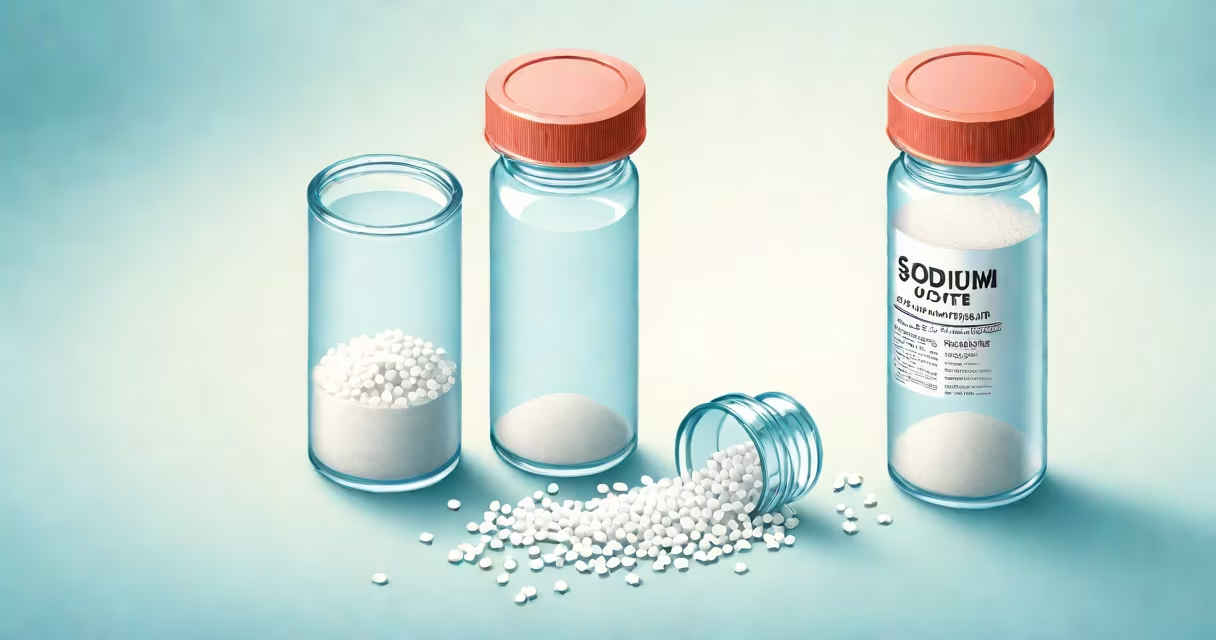
A sodium carboxylate salt is a compound formed when a carboxylic acid loses a proton and bonds with a sodium ion. These salts are water-soluble, thermally stable, and commonly used in food, pharmaceuticals, and industrial chemistry.
Sodium carboxylate salts result from the neutralization reaction between a carboxylic acid and a sodium base such as sodium hydroxide. For example, acetic acid reacts with NaOH to produce sodium acetate and water. This process removes the acidic hydrogen from the COOH group, forming the carboxylate anion (COO⁻), which then pairs with Na⁺ to create a stable ionic compound.
The general structure is R-COO⁻Na⁺, where R is an alkyl or aryl chain. The strength of the bond depends on the size and polarity of R. Longer chains increase hydrophobicity, reducing solubility in water. Sodium carboxylates with short R groups-like acetate (R = CH₃)-are highly soluble and widely used.
Carboxylic acids have a polar OH group that can donate a proton (H⁺). When exposed to a base like NaOH, the OH dissociates, leaving a negatively charged oxygen. The resulting carboxylate ion attracts a positively charged sodium ion through electrostatic forces, forming a salt.
This reaction is reversible. Adding strong acid to a sodium carboxylate regenerates the parent carboxylic acid. For example, adding HCl to sodium acetate produces acetic acid and sodium chloride. This property enables controlled release in drug delivery systems.
In aqueous solutions, sodium carboxylate salts dissociate completely into ions. Sodium acetate, for instance, splits into Na⁺ and CH₃COO⁻. The acetate ion can act as a buffer in biological systems, maintaining pH stability. This function is critical in cell culture media and fermentation processes.
Several sodium carboxylate salts exist, each derived from a specific carboxylic acid. Their applications vary based on chain length, solubility, and thermal behavior.
| Carboxylic Acid | Sodium Salt Name | Common Use | Source/Standard |
|---|---|---|---|
| Acetic acid | Sodium acetate | Food preservative, heat pack filler | FDA GRAS list (21 CFR §184.1836) |
| Propionic acid | Sodium propionate | Bread mold inhibitor | EFSA Panel on Food Additives (2017) |
| Butyric acid | Sodium butyrate | Anti-inflammatory agent in gut health supplements | Nature Communications, 2021 |
| Benzoic acid | Sodium benzoate | Preservative in soft drinks and pickles | WHO International Programme on Chemical Safety (1993) |
Sodium acetate is the most widely used. It appears in instant hand warmers due to its high enthalpy of crystallization. When dissolved in water, it remains in solution until triggered-usually by bending a metal disk-which causes rapid solidification and heat release. A single packet generates ~100°C for 15 minutes.
Contrary to common belief, sodium carboxylate salts are not inherently toxic. Regulatory bodies classify many as safe at typical exposure levels. The FDA lists sodium acetate as Generally Recognized As Safe (GRAS) for use in food. However, excessive intake may lead to metabolic alkalosis in rare cases, especially in individuals with kidney impairment.
Industrial applications include textile dyeing, where sodium carboxylates stabilize dyes and improve color fastness. In polymer production, they serve as catalysts or stabilizers. Sodium lauryl sulfate, though technically a sulfonate, illustrates how sodium salts improve surfactant performance-similar principles apply to carboxylates.
In agriculture, sodium carboxylates are used in herbicide formulations. They improve penetration into plant tissues and reduce runoff. Research shows sodium dihydrogen phosphate (not a carboxylate) is often confused with sodium carboxylates in pesticide contexts, but the two classes differ in chemical behavior and environmental impact.
One non-obvious fact: sodium carboxylate salts can influence microbial growth in ways beyond pH control. Sodium lactate, for example, suppresses Listeria monocytogenes in deli meats not just by lowering pH but by disrupting membrane integrity. This dual mechanism makes it effective at lower concentrations than expected.
Some assume all sodium salts are harmful due to sodium's association with hypertension. But sodium carboxylate salts contribute minimal sodium load in practical uses. A 10g serving of bread containing 0.5% sodium propionate adds only 15 mg of sodium-well below daily recommended limits.
Another confusion arises between sodium carboxylate salts and sodium carbonate. While both are sodium salts, carbonate (Na₂CO₃) is basic and used in cleaning agents. Carboxylates are weaker bases and more selective in their interactions. Mixing them in solution can cause precipitation, especially in hard water.
I once tested sodium acetate in a classroom experiment to demonstrate exothermic crystallization. After dissolving 100g in 200mL water and cooling it slowly, I triggered crystallization by touching a metal spoon to the solution. The temperature spiked from 25°C to 85°C within seconds-a clear visual demonstration of energy release during phase change.
Sodium carboxylate salts are not interchangeable with other sodium compounds. Their functionality stems from the carboxylate group's ability to coordinate metals, resist oxidation, and participate in weak hydrogen bonding. These traits enable use in chelation, buffering, and emulsification.
For example, sodium citrate (derived from citric acid) is used in blood storage solutions. It binds calcium ions, preventing clotting. This function relies on the carboxylate's multidentate coordination-something sodium chloride cannot do.
When selecting a sodium carboxylate salt, consider solubility, pH effect, and compatibility with other ingredients. In formulation work, a 1% solution of sodium acetate raises pH by 0.5 units in distilled water. This small shift matters in sensitive systems like enzyme assays.
Understanding sodium carboxylate salt requires knowing its origin, behavior, and limitations. It is not a universal additive. Its effectiveness depends on matching the correct salt to the application. Always verify regulatory status and safety data before use.