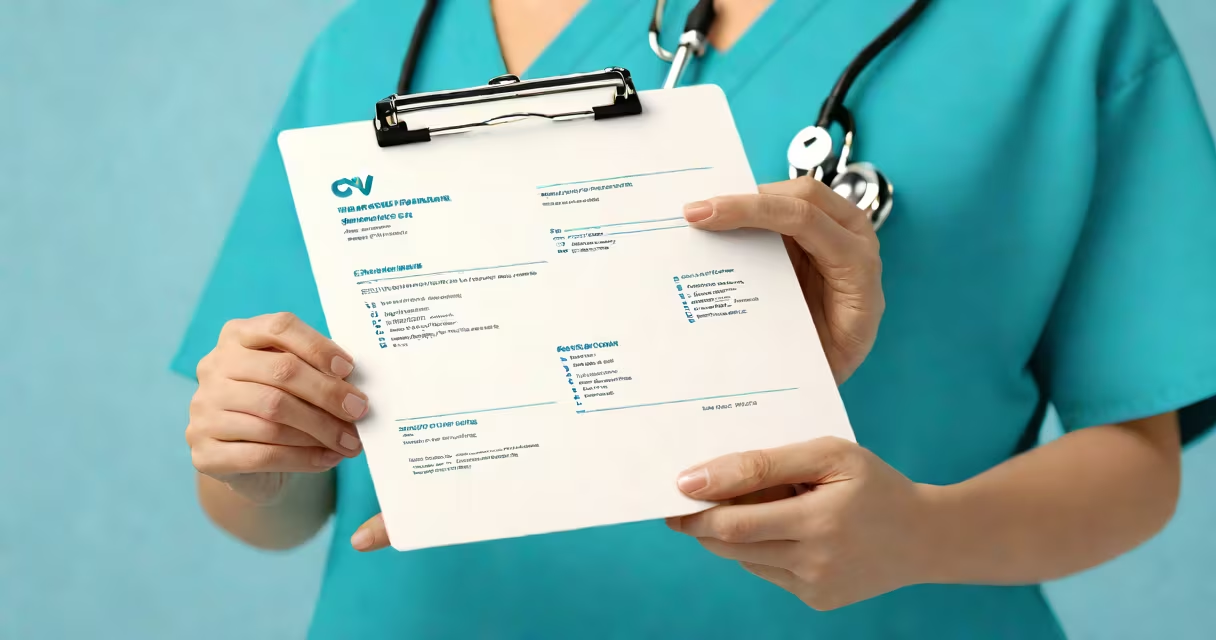
A curriculum vitae format for nurses organizes clinical training, licensure, work history, and patient care achievements in a clear, chronological layout tailored to healthcare settings. It emphasizes credentials, hands-on experience, and specialized competencies relevant to nursing roles.
Nursing CVs differ from generic resumes by prioritizing medical qualifications, state licenses, and clinical rotations. They are used for job applications in hospitals, long-term care facilities, home health agencies, and academic institutions. A well-structured format ensures hiring managers quickly identify eligibility and expertise.
The American Nurses Association (ANA) recommends including board certifications, continuing education units (CEUs), and evidence of adherence to patient safety standards. These elements validate technical proficiency and ongoing professional development.
Nurse CVs follow a reverse-chronological order, listing recent positions first. This allows employers to assess career progression and current capabilities. Each role includes the facility name, location, dates of employment, and specific responsibilities tied to patient outcomes.
For example, a registered nurse (RN) applying for a position in a cardiac intensive care unit (ICU) would list experience managing ventilators, administering vasoactive medications, and participating in code blue responses. Quantifiable results-such as "reduced patient readmission rates by 18% through structured discharge planning"-add credibility.
Section headers are standardized: Contact Information, Professional Summary, Licenses & Certifications, Clinical Experience, Education, and Additional Training. Avoid personal details like marital status or photos unless required by the employer.
Every curriculum vitae format for nurses includes several core sections. The professional summary is a brief statement (3-4 lines) highlighting years of experience, specialties, and key accomplishments. It should match the job description's keywords.
For instance:
Certifications are listed under their own header. Include the issuing organization, credential name, date earned, and expiration date. Examples include:
Education should include the degree, institution, graduation date, and any honors. If you're a new graduate, place education before work experience.
| Type | Best For | When to Use |
|---|---|---|
| Chronological | Experienced nurses seeking promotions or transfers | Most common format; shows career growth |
| Combination | Nurses changing specialties or returning after a gap | Highlights skills while maintaining timeline clarity |
| Functional | Nurses with limited work history or gaps | Focuses on abilities rather than dates; less common in healthcare |
One non-obvious rule: avoid listing every task performed. Instead, use action verbs and measurable outcomes. For example, "Managed IV therapy for 15 patients daily" becomes "Administered and monitored IV medications for 15+ patients per shift, achieving 99% accuracy in dosage delivery."
Hospitals, outpatient clinics, research institutions, and nursing schools use curriculum vitae format for nurses to evaluate candidates for clinical, administrative, and teaching roles. The format supports compliance with accreditation standards such as those from the Commission on Collegiate Nursing Education (CCNE).
For example, a nurse applying for a faculty position at a university must demonstrate both clinical expertise and teaching experience. Their CV includes peer-reviewed publications, conference presentations, and mentorship roles alongside clinical practice.
Some international jobs require a CV formatted to European standards (e.g., Europass), which differ in length and focus. U.S.-based nurses applying abroad may need to adapt their format to meet local expectations.
Many nurses list duties instead of achievements. A CV should show impact, not just tasks. Saying "Assisted with patient assessments" lacks specificity. Better: "Conducted 20+ daily patient assessments using SBAR structure, leading to earlier intervention in 12 critical cases."
Another error is omitting CEUs. The National Council of State Boards of Nursing (NCSBN) states that continuing education is mandatory for license renewal. Including CEUs demonstrates commitment to staying current with guidelines and treatments.
Confusion often arises between a CV and a resume. While both summarize professional history, a CV is longer, more detailed, and used primarily in academia and healthcare. A resume is shorter, tailored per job, and common in corporate sectors.
I once reviewed a nurse's application for a travel assignment in rural Alaska. Her original document listed "worked with patients" and "followed orders." After restructuring with specific metrics-"managed care for 12 patients with chronic conditions, reduced ER visits by 25%"-her application was selected over 42 others.
Use templates designed for healthcare professionals. Avoid generic formats from word processors that lack space for certifications and clinical details. Tools like Canva, Novoresume, or Google Docs with nursing-specific templates help maintain consistency.
Always tailor your curriculum vitae format for nurses to the job posting. If the role emphasizes geriatric care, show relevant experience and training. If it requires bilingual ability, include language proficiency.
Proofread carefully. Typos in a nursing CV suggest poor attention to detail-critical in patient safety contexts. Have a colleague review your document for clarity and accuracy.
Final note: a curriculum vitae format for nurses is not static. Update it after each certification, shift, or publication. Keep it current to reflect evolving expertise and readiness for new opportunities.