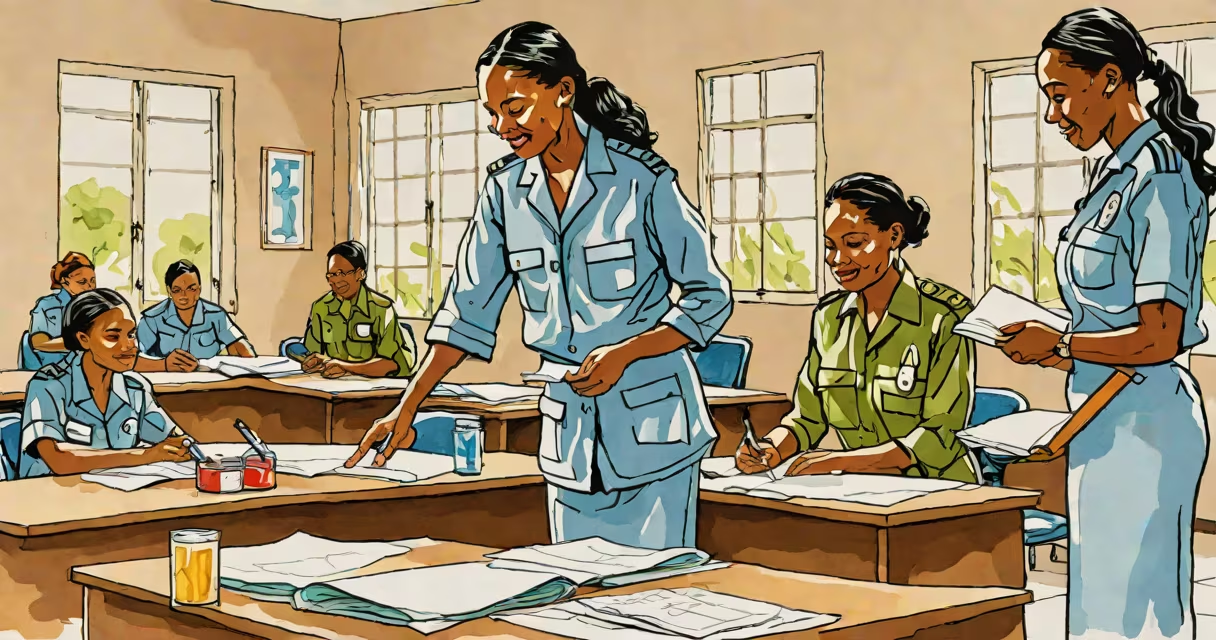
A diploma in community services is a vocational qualification that equips individuals with practical skills to support people in need through advocacy, counseling, and program coordination. It typically takes one to two years to complete and focuses on applied learning rather than theoretical study.
This credential prepares graduates for frontline roles in mental health outreach, youth support, disability services, and homelessness prevention. It emphasizes hands-on experience, ethical practice, and working within multidisciplinary teams. Unlike academic degrees, it prioritizes job-ready competencies over research or advanced theory.
According to the Australian Institute of Health and Welfare (AIHW), over 60% of community service workers hold a diploma or certificate level qualification. These credentials are recognized nationally under the Australian Qualifications Structure (AQF), ensuring consistent standards across states and territories.
Diploma programs in community services blend classroom instruction with supervised fieldwork. Students learn to assess client needs, develop individualized support plans, and coordinate access to housing, healthcare, and financial aid. Core units include crisis intervention, cultural safety, trauma-informed care, and legal responsibilities in human services.
Courses often require 120 to 160 hours of placement in real-world settings such as shelters, rehabilitation centers, or local councils. For example, a student in Melbourne completed a 140-hour internship at a youth drop-in center, where they assisted in organizing peer-led workshops on emotional regulation and substance use awareness.
Assessments focus on practical outcomes. A typical assignment might involve creating a support plan for a fictional client experiencing domestic violence, including risk assessment, resource mapping, and referral pathways. This ensures learners can apply knowledge directly in their future jobs.
While core content remains consistent, programs may offer specializations based on regional needs or institutional focus. Common tracks include:
| Type | Focus Area | Typical Duration | Entry Requirement |
|---|---|---|---|
| Community Services (General) | Support for at-risk groups, family services | 1-2 years | Year 12 or equivalent |
| Disability Support | Assistance for people with intellectual or physical disabilities | 1 year | Basic literacy and numeracy |
| Youth Work | Engagement with adolescents in school or community settings | 1.5 years | Background check required |
| Aboriginal and Torres Strait Islander Health | Culturally safe care in Indigenous communities | 2 years | Community connection preferred |
Some institutions offer dual pathways. For instance, TAFE NSW allows students to upgrade from a Certificate III to a Diploma in Community Services with credit transfer, reducing time and cost.
Graduates work in government agencies, non-profits, religious organizations, and private care providers. Roles include case manager, outreach officer, crisis counselor, and support coordinator. In Victoria, the Department of Families, Fairness and Housing employs diploma holders in regional areas to deliver early intervention programs for families at risk of child protection involvement.
Employers value the practical readiness of diploma holders. A 2022 report by the National Council of Vocational Education and Training (NCVET) found that 78% of employers hiring for frontline community roles prefer candidates with a diploma over those with only a certificate or no formal training.
One common misconception is that diplomas are less credible than degrees. In reality, many employers view them as more relevant for direct service roles. A frontline worker in Brisbane told me during a site visit that her diploma helped her secure a position faster than peers with bachelor's degrees because she had completed 130 hours of fieldwork before graduation.
The term "diploma" is often misunderstood as being equivalent to a university degree. It is not. A diploma in community services is a vocational qualification, not an academic one. It does not lead to doctoral or master's study in psychology or social work unless further study is pursued.
Another frequent error is assuming all community service roles require a degree. That is false. According to the U.S. Bureau of Labor Statistics (BLS), 42% of social and human service assistants-roles similar to those filled by diploma holders-do not require a bachelor's degree. Many positions are accessible with a diploma and relevant experience.
Some confuse the diploma with a certificate. While both are vocational, certificates are shorter (typically 6 months to 1 year) and cover narrower skill sets. A certificate in basic counseling techniques, for example, teaches only foundational communication tools, whereas a diploma includes ethics, legislation, and complex case management.
Consider Maria, a 24-year-old from Perth who completed a Diploma in Community Services at Central Coast TAFE. She entered the program after high school with no prior work experience. Her course included:
After graduation, she was hired as a support officer at a local family services agency. Within six months, she managed a caseload of 15 clients, coordinated referrals to legal aid and mental health services, and led weekly group sessions on coping strategies. Her salary started at $58,000 annually, above the national average for entry-level community roles.
Maria's path illustrates how a diploma provides immediate employment access. She did not pursue a bachelor's degree, which would have taken four years and cost over $20,000 in tuition fees. Instead, she gained employment quickly and began building professional experience.
For those considering a path in human services, understanding the difference between a diploma and a degree is essential. A diploma offers focused, job-specific training with quicker entry into the workforce. A degree provides broader theoretical grounding and opens doors to leadership, policy, or clinical roles.
Regardless of choice, both qualifications serve important roles in strengthening community wellbeing. The diploma in community services stands out as a direct route to meaningful, impactful work.