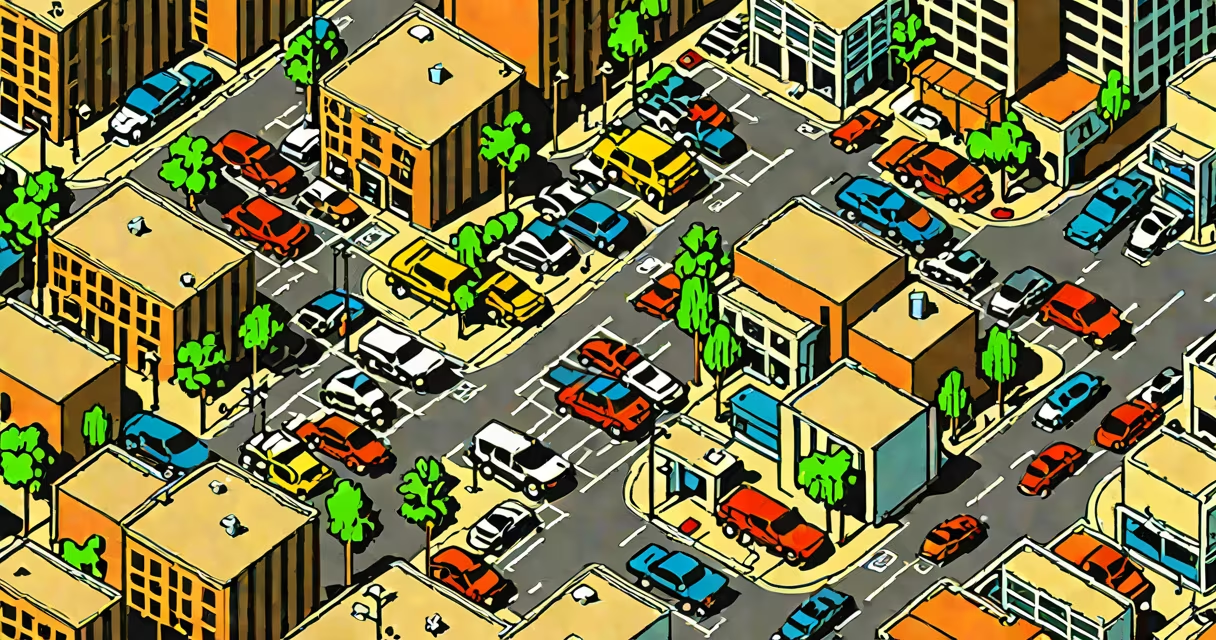
LA city parking refers to the network of regulated street parking spaces managed by the City of Los Angeles Department of Transportation (LADOT), including metered zones, time-limited spots, and designated permit areas. These rules apply to vehicles parked on public streets and sidewalks within city boundaries.
Los Angeles enforces parking regulations through signage, automated meters, and patrols by parking enforcement officers. Violations result in citations issued by LADOT or the LAPD Parking Division. The system aims to maintain traffic flow, ensure access for residents and businesses, and manage limited curb space efficiently.
Each zone has specific rules based on location, time of day, and vehicle type. For example, residential zones may allow longer stays for residents with permits, while commercial districts enforce strict time limits during business hours. Failure to comply can lead to towing or fines ranging from $50 to $200 depending on the violation.
Parking in LA is governed by posted signs and digital systems. Meters accept credit cards, mobile payments via the ParkMobile app, and cash. Most meters operate between 8 a.m. and 6 p.m., Monday through Saturday, though exceptions exist in certain neighborhoods.
Enforcement is handled by LADOT's Parking Enforcement Division. Officers patrol assigned zones, issue citations for expired meters, illegal parking, or blocking fire hydrants. Automated cameras also monitor high-violation areas, especially near schools and transit hubs. Data from these systems feed into city-wide analytics used to adjust zone policies.
For example, in West Hollywood, a metered spot costs $2.50 per hour. If a driver parks for 90 minutes without paying, they receive a $75 citation. The fine increases to $150 if the vehicle remains parked past 2 p.m. in a zone with a 2-hour limit. This enforcement model reduces double-parking and improves turnover in busy areas.
The city divides parking into distinct categories based on function and regulation. Understanding these helps avoid fines and plan trips effectively.
| Type | Time Limits | Permits Required? | Common Locations |
|---|---|---|---|
| Metered | 1-4 hours (varies) | No | Downtown, Santa Monica, Venice Beach |
| Residential | 2-4 hours (residents only) | Yes (resident permit) | Residential neighborhoods like Hancock Park, Silver Lake |
| Commercial | 1-2 hours (business hours) | No | Shopping districts, financial corridors |
| Disabled Access | 4 hours (with placard) | Yes (state-issued placard) | Any zone with accessible parking spaces |
Residential permit zones require registration with LADOT. Residents must apply online or in person, provide proof of address, and pay a $10 annual fee. Once approved, they receive a permit displayed on the dashboard. Non-residents without permits cannot park in these zones for more than 2 hours.
Commercial zones often have shorter time limits during peak business hours (9 a.m.-5 p.m.) to encourage turnover. Businesses may request extended parking for deliveries, but approval is not automatic. A 2023 audit by the LA City Controller's Office found that 38% of commercial zone violations occurred during weekday afternoons, suggesting enforcement gaps during high-demand periods.
Many drivers assume that parking in a residential zone without a permit is acceptable if they're only there briefly. This is false. Even a 10-minute stop in a residential zone without a valid permit results in a citation. LADOT's enforcement policy treats all unauthorized parking equally, regardless of duration.
Another misconception is that parking near a fire hydrant is safe if the car is not touching it. In LA, vehicles must remain at least 10 feet away from fire hydrants. A 2022 incident in Koreatown showed that a car parked 12 feet from a hydrant was still towed because the fire department deemed it obstructing emergency access. The city uses visual inspection standards, not precise measurements, to determine obstruction.
A lesser-known rule: parking in a bike lane-even partially-is illegal. In 2021, LADOT cited 1,240 vehicles for blocking bike lanes across the city. The penalty is $100, and the vehicle may be towed. This rule applies even if the driver is loading or unloading cargo.
Consider a visitor arriving at the Staples Center for a Lakers game. They drive to 11th Street between Figueroa and Grand Avenue. The area is a mixed-use zone with metered spots and a 2-hour limit. The visitor parks at 5:30 p.m., pays $3.50 via ParkMobile, and plans to stay until 7:30 p.m.
At 7:15 p.m., a parking officer walks by and notices the meter is expired. The officer issues a $75 citation. The visitor can contest it online within 21 days, providing proof of payment and a photo of the meter receipt. If the appeal is denied, the fine increases to $150. However, if the visitor had renewed the meter before 7:30 p.m., no citation would have been issued.
This scenario illustrates how timing and payment accuracy matter. The city uses GPS-tracked enforcement routes to prioritize high-traffic zones. Downtown LA sees 120 enforcement actions per day on average, with 62% resulting in citations.
LA city parking rules cover all public streets and sidewalks within city limits. This includes areas near transit stations, hospitals, and tourist attractions. The system supports mobility goals set in the 2020 Mobility Plan, which aims to reduce single-occupancy vehicle trips by 20% by 2030.
Businesses rely on predictable parking availability. A 2022 study by UCLA's Institute of Transportation Studies found that 68% of small retailers in Boyle Heights reported a drop in foot traffic when parking enforcement increased by 30%. The study concluded that consistent enforcement improves sidewalk safety and encourages walking, but excessive penalties can harm local economies.
Residents benefit from resident-only zones, which reduce congestion and increase access to curbside space. In neighborhoods like Echo Park, resident parking permits reduced illegal parking by 41% between 2019 and 2022, according to LADOT data.
When visiting LA, always check the posted sign before parking. Many drivers miss the "No Parking" sign under a tree canopy or assume a blue zone allows unlimited time. Always verify the zone type and time limit using the official LADOT website or the ParkLA app.
For those needing long-term parking, consider off-street lots or garages. Downtown LA has over 150 parking facilities with rates starting at $15 per day. Some offer monthly passes for commuters.
Understanding LA city parking prevents fines, avoids towing, and ensures smoother travel. Always confirm zone rules before parking, especially in high-traffic or tourist-heavy areas.