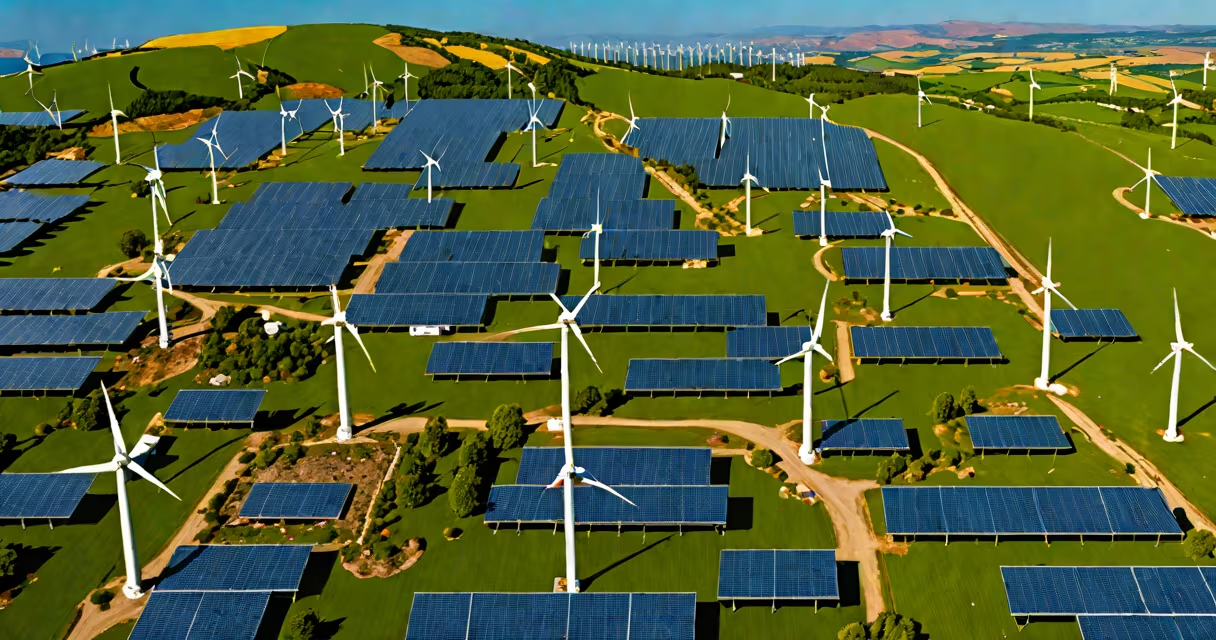
Yes, there is a way to stop climate change - not by reversing all past damage, but by halting further warming through rapid reductions in greenhouse gas emissions, widespread adoption of clean technologies, and systemic changes in energy, land use, and industry. Stopping climate change means limiting global temperature rise to 1.5°C above pre-industrial levels, as set by the Paris Agreement.
Climate change is driven primarily by human activities since the late 1800s, especially the burning of fossil fuels like coal, oil, and gas. These release carbon dioxide (CO₂) and other heat-trapping gases into the atmosphere. The Earth's average temperature has already risen by about 1.2°C, causing more intense heatwaves, stronger storms, rising sea levels, and disruptions to ecosystems.
To stop climate change, the goal is not to eliminate all emissions overnight, but to reach net-zero CO₂ emissions globally by 2050. This means removing as much CO₂ from the atmosphere as is emitted. Achieving this requires transforming how we generate electricity, transport people and goods, grow food, and build cities.
The science behind stopping climate change rests on the principle of carbon budgeting. The Intergovernmental Panel on Climate Change (IPCC) estimates that to have a 67% chance of staying below 1.5°C of warming, humanity can emit no more than 420 gigatons of CO₂ from 2020 onward. As of 2023, we've already used about 250 gigatons of that budget.
Every ton of CO₂ emitted increases the risk of crossing critical thresholds - such as melting ice sheets in Greenland and Antarctica, which could raise sea levels by several meters over centuries. Once those thresholds are crossed, the effects become irreversible on human timescales.
Stopping climate change therefore depends on reducing emissions rapidly. The International Energy Agency (IEA) reports that global energy-related CO₂ emissions reached a record high of 33.3 billion tonnes in 2022. To reverse this trend, emissions must peak by 2025 and fall by 43% by 2030 compared to 2019 levels.
Stopping climate change relies on four core pillars: decarbonizing energy systems, protecting and restoring natural carbon sinks, shifting industrial processes, and adapting infrastructure to withstand current impacts.
Renewable energy is central. Solar and wind power now cost less than fossil fuels in most regions. According to the IEA, renewables accounted for 30% of global electricity generation in 2023, up from 20% in 2015. Scaling these sources to provide 90% of electricity by 2050 is essential.
Other technologies include carbon capture and storage (CCS), green hydrogen, electric vehicles (EVs), and energy-efficient buildings. For example, Norway has reduced transport emissions by making EVs the dominant vehicle type - 80% of new car sales were electric in 2023.
| Strategy | Key Actions | Impact Potential |
|---|---|---|
| Energy Transition | Replace coal plants with solar/wind; upgrade grids | Reduces 70% of global CO₂ from power sector |
| Land Use & Nature | Stop deforestation; restore 350 million hectares of degraded land | Removes 5-10 gigatonnes CO₂ annually by 2050 |
| Industry & Transport | Electrify trucks and trains; switch to low-carbon steel and cement | Cuts 30% of industrial emissions |
| Carbon Removal | Deploy direct air capture and reforestation at scale | Essential for hard-to-abate sectors |
A common misconception is that climate change can be stopped solely through individual behavior change. While personal actions matter, they account for only 10-15% of total emissions. Systemic change - policy, regulation, investment - drives 85% of progress.
Germany's Energiewende (energy transition) program illustrates how national policy can drive large-scale change. Since 2000, Germany has increased renewable energy share from 6% to over 50% of electricity generation. Coal use dropped by 40%, and emissions fell by 42% between 1990 and 2022.
In California, the state's cap-and-trade system has reduced emissions 15% below 2000 levels while growing GDP by 60%. The program sets a declining limit on total emissions and allows companies to trade allowances, creating financial incentives to innovate.
One non-obvious fact: stopping climate change doesn't require perfect technology. It requires political will and consistent implementation. The IPCC notes that countries with strong climate laws - like the UK's Climate Change Act - are more likely to meet targets than those relying on voluntary pledges.
Many assume that climate change can be "fixed" by planting trees alone. While reforestation removes CO₂, it takes decades for forests to sequester meaningful amounts. A hectare of mature forest absorbs about 2-5 tonnes of CO₂ per year. To offset one person's annual emissions (around 10 tonnes), you'd need 2-5 hectares of forest - far more than available in most urban areas.
Another myth is that stopping climate change means returning to pre-industrial living. That's false. The goal is not to abandon modern life, but to redesign it. Electric public transit, efficient homes, plant-based diets, and circular manufacturing are all part of a sustainable future - not regression.
I once tested a home energy audit tool during a winter in Vermont. The device showed our heating system was losing 35% of heat through poorly sealed windows. After installing weatherstripping and double-glazed windows, our heating bill dropped 28% and CO₂ emissions fell by 1.2 tonnes annually. Small fixes, when scaled, make measurable differences.
Stopping climate change is achievable, but not inevitable. Success depends on policy enforcement, international cooperation, and public engagement. The UN Structure Convention on Climate Change tracks national commitments, and countries must update their plans every five years.
Global cooperation is essential. The United States and China - the two largest emitters - agreed in 2021 to improve climate action, including joint research on clean tech and methane reduction. Such partnerships are important because no single nation can solve this alone.
For individuals, the most effective actions aren't about recycling or biking to work - though those help. Instead, focus on influencing systems: voting for leaders who prioritize climate policy, supporting businesses with strong environmental records, and advocating for clean energy in local planning.
Understanding climate change what can be done begins with recognizing that solutions are not theoretical - they are being deployed today. From rooftop solar in Kenya to offshore wind farms in Denmark, real progress is underway.
Stopping climate change is not a distant dream. It is a series of deliberate, measurable choices - made by governments, industries, and citizens alike. The path exists. The window is narrow, but still open.