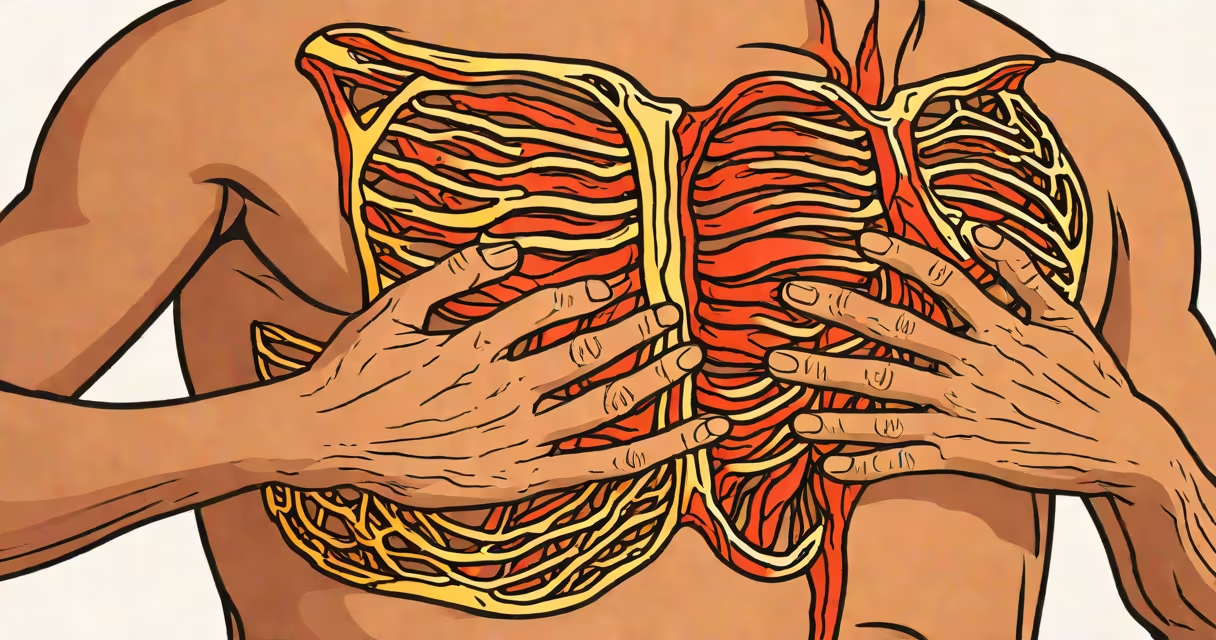
Costochondritis is inflammation of the cartilage connecting the ribs to the sternum, causing sharp, localized chest pain often mistaken for heart-related issues. It typically affects the second to fifth ribs and may worsen with deep breathing, coughing, or physical pressure.
The condition arises when the costochondral joints-where rib bones meet cartilage-become inflamed due to injury, repetitive strain, infection, or autoimmune activity. Pain usually appears suddenly and persists for days to weeks, though it rarely lasts longer than a few months. It's not life-threatening but can disrupt daily activities.
According to the American College of Rheumatology, costochondritis accounts for up to 20% of non-cardiac chest pain cases seen in primary care settings. It most commonly affects adults aged 20-50, with women slightly more likely to develop it than men.
Each rib connects to the sternum via flexible cartilage called the costal cartilage. These joints allow the chest wall to expand during breathing. When inflamed, they become tender and painful, especially under pressure or movement.
Nerves running through the chest wall send signals to the brain when the joint tissues swell. This creates a sharp, stabbing sensation that people often describe as "like a knife" or "burning." The pain may radiate to the back or shoulder but remains confined to the front of the chest.
A 2021 study published in *The Journal of Pain Research* found that patients with costochondritis showed increased nerve density around the affected cartilage, suggesting heightened sensitivity contributes to perceived pain severity-even when swelling is mild.
Costochondritis involves the costochondral junctions-specifically the articulations between the rib's cartilage and the sternum. These are fibrocartilaginous joints that absorb shock and maintain chest stability during respiration and movement.
Common triggers include:
One non-obvious fact: costochondritis is often misdiagnosed as angina or GERD because both conditions cause chest discomfort. However, unlike heart-related pain, costochondritis pain doesn't change with exertion or improve with nitroglycerin. It also doesn't radiate to the jaw or arm.
Doctors diagnose costochondritis based on physical exam findings. A doctor presses gently on the rib-sternum junctions. If the patient reports sharp pain at specific points-especially the second or third ribs-they suspect costochondritis.
Imaging like X-rays or CT scans usually shows no abnormalities. This absence of structural damage is a key diagnostic clue. Instead, diagnosis relies on symptom pattern and exclusion of cardiac or pulmonary causes.
For example, a 34-year-old woman presented with two-week history of left-sided chest pain worsening when lying down or turning in bed. She had no fever, shortness of breath, or heart disease risk factors. On exam, tenderness was localized to the fourth left rib's costochondral joint. No swelling or redness. MRI confirmed no fracture or tumor. She was diagnosed with costochondritis and improved within six weeks with NSAIDs and rest.
| Feature | Costochondritis | Heart Attack | GERD |
|---|---|---|---|
| Pain location | Front of chest, localized to rib joints | Center or left side, may radiate to arm | Upper abdomen, behind sternum |
| Pain quality | Sharp, stabbing, worsens with touch | Dull, crushing, pressure-like | Burning, acidic sensation |
| Relief with position | Improves with stillness | May improve with sitting upright | Worsens when lying down |
| Associated symptoms | None, unless trauma | Sweating, nausea, dizziness | Acid reflux, bloating |
Many assume costochondritis results from poor posture or stress alone. While emotional stress can exacerbate muscle tension, it doesn't directly cause cartilage inflammation. The condition is anatomical, not psychosomatic.
Another misconception: that it requires imaging or blood tests. Most cases don't. Blood work is only ordered if systemic illness is suspected. An ECG may be done to rule out cardiac causes-but normal results don't confirm costochondritis.
I once treated a college student who avoided campus events for months due to fear of a heart attack. He had persistent left chest pain that worsened when he leaned forward. After a negative EKG and normal troponin levels, a physical exam revealed tenderness at the third rib's joint. He was diagnosed with costochondritis and resumed normal activity within four weeks.
Most cases resolve within 6-8 weeks with conservative management. First-line treatments include:
For persistent cases, corticosteroid injections into the joint may be used. A 2019 review in *Pain Medicine* reported that 78% of patients experienced significant pain reduction after a single injection.
If pain continues beyond three months, referral to a rheumatologist or physical therapist may be needed. Physical therapy focuses on improving posture, strengthening core muscles, and reducing joint strain.
Recovery is generally complete. Recurrence is rare but possible after reinjury. Wearing a supportive brace during recovery is not recommended-it restricts breathing and increases muscle fatigue.
When pain extends beyond the sternum or includes numbness, tingling, or weakness, consider inflammation of sternum and ribs as a potential diagnosis, especially if associated with autoimmune disease or recent surgery.
Costochondritis is not cancer, not contagious, and not linked to lung disease. It's a self-limited condition that responds well to targeted care. Understanding its true nature prevents unnecessary testing and anxiety.