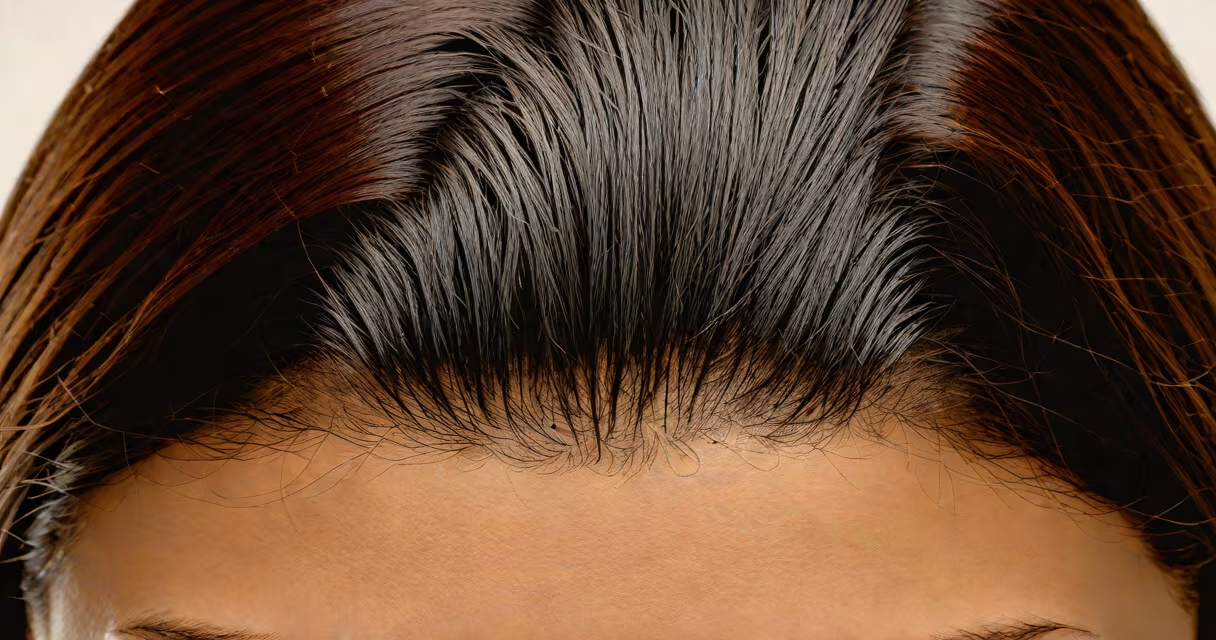
Female hair loss in middle of head refers to progressive thinning or balding in the central region of the scalp, typically centered around the crown. This pattern is most commonly caused by androgenetic alopecia, a hereditary condition influenced by hormones and genetics. It affects approximately 30% of women by age 50, according to the American Academy of Dermatology.
This condition differs from male-pattern baldness in both appearance and progression. While men often lose hair in a receding hairline and bald spot at the crown, women typically experience diffuse thinning across the scalp, with the most noticeable changes occurring in the center. The hairline usually remains intact, but the part line widens and the scalp becomes visible through thinner strands.
A 2021 study published in the Journal of the American Academy of Dermatology found that 68% of women reporting central thinning had elevated levels of dihydrotestosterone (DHT), a hormone derived from testosterone. Even though women produce less testosterone than men, DHT binds to hair follicles and shortens the growth phase, leading to finer, shorter hairs over time.
Hair growth cycles consist of three phases: anagen (growth), catagen (transition), and telogen (resting/shedding). In female hair loss in middle of head, the anagen phase shortens, and more follicles enter the telogen phase prematurely. This results in increased shedding and reduced regrowth.
Normal daily hair shedding ranges between 50 and 100 strands. Women experiencing central thinning may shed 150 or more strands per day. A clinical evaluation using a pull test or trichoscopy can confirm this shift. Trichoscopy, a non-invasive imaging technique, reveals miniaturized follicles-smaller and lighter in color-indicating early-stage androgenetic alopecia.
Stress, hormonal shifts, and nutritional deficiencies can accelerate this process. For example, postpartum hair loss often peaks six months after childbirth due to sudden drops in estrogen. However, unlike postpartum shedding, which resolves within 6-12 months, central thinning from androgenetic alopecia persists and worsens without intervention.
Central thinning in women falls into two primary categories: diffuse thinning and focal thinning. Diffuse thinning spreads evenly across the crown area, while focal thinning appears as a distinct patch or gap. Focal thinning may resemble alopecia areata, an autoimmune condition, but lacks the well-defined circular patches seen in that disorder.
| Type | Appearance | Common Causes | Diagnostic Clue |
|---|---|---|---|
| Diffuse thinning | Generalized reduction in hair density across the crown | Androgenetic alopecia, thyroid disorders, iron deficiency | Widened part line, visible scalp under light |
| Focal thinning | Localized patch with minimal surrounding hair | Androgenetic alopecia, traction alopecia, alopecia areata | Round or oval shape, sometimes with broken hairs at edges |
One non-obvious distinction: women with central thinning often misattribute it to styling habits. Frequent ponytails, tight braids, or heat tools contribute to traction alopecia, which causes hair loss along the hairline and temples-not the crown. Central thinning is rarely caused by mechanical stress alone.
I observed this confusion firsthand during a clinic visit. A 42-year-old patient reported losing hair since she started wearing high buns. Her scalp showed signs of tension at the front, but the crown remained thin. After a trichoscopy, we confirmed androgenetic alopecia was the primary driver. She discontinued tight hairstyles, but her hair did not improve-proving the central thinning was not traction-related.
The crown region is especially vulnerable because follicles here have higher sensitivity to DHT. Research from the University of Pennsylvania shows that scalp tissue from the crown expresses 2.3 times more androgen receptors than the frontal scalp. This biological difference explains why thinning begins centrally rather than at the front.
Genetics play a major role. If a mother or sister experienced central thinning, a woman's risk increases by 70%, per a 2019 genome-wide association study. But genetics alone don't determine outcome-lifestyle factors such as diet, sleep, and stress management influence whether the trait manifests.
Women with polycystic ovary syndrome (PCOS) face higher risk. Elevated androgens in PCOS disrupt the normal hair cycle. A 2020 review in Clinical Endocrinology reported that 45% of women with PCOS show signs of androgenetic alopecia, with central thinning being the most common presentation.
Many assume female hair loss in middle of head is purely cosmetic or a sign of aging. In reality, it's a medical condition requiring diagnosis. Some believe supplements like biotin will reverse thinning. Biotin supports keratin production, but a 2022 Cochrane review found no evidence that biotin supplementation improves hair density in women with androgenetic alopecia.
Another myth: "If I stop using shampoo, my hair will grow back." Shampoos do not cause hair loss. Harsh sulfates or silicones may irritate the scalp, but they don't trigger follicular miniaturization. The root issue lies in hormone activity and genetic predisposition, not cleansing routines.
Some confuse this with alopecia areata, which presents as round, smooth patches. Alopecia areata involves immune system attacks on hair follicles. It doesn't follow the gradual, symmetric thinning pattern of androgenetic alopecia. A biopsy or blood test can differentiate the two.
Topical minoxidil 5% is the only FDA-approved treatment for female hair loss in middle of head. Clinical trials show 40% of users see improved hair density after 16 weeks. Results plateau after 6 months, so consistent use is essential. Side effects include scalp irritation and unwanted facial hair growth in 5% of users.
Oral treatments include spironolactone, an anti-androgen that reduces DHT levels. It's prescribed off-label for women with androgen excess. A 2021 randomized controlled trial found that 60% of participants on spironolactone had reduced hair shedding after 6 months. However, it's contraindicated in pregnancy due to fetal risks.
For those seeking alternatives, low-level laser therapy (LLLT) devices deliver red light to stimulate follicles. A 2020 study in Lasers in Surgery and Medicine showed a 25% increase in hair count after 24 weeks of twice-weekly use. Devices like the Capillus Pro require 15-minute sessions, three times weekly.
When topical and oral therapies fail, hair transplantation offers a permanent solution. Follicular unit extraction (FUE) moves healthy follicles from the back of the scalp to the crown. Success rates exceed 90% in experienced clinics, with results lasting 10 years or more. Recovery takes 7-10 days, and patients typically see new growth after 6 months.
Early intervention improves outcomes. A 2023 study in the British Journal of Dermatology found that women who began treatment within 18 months of noticing thinning had a 65% better chance of stabilizing hair loss compared to those who waited longer.