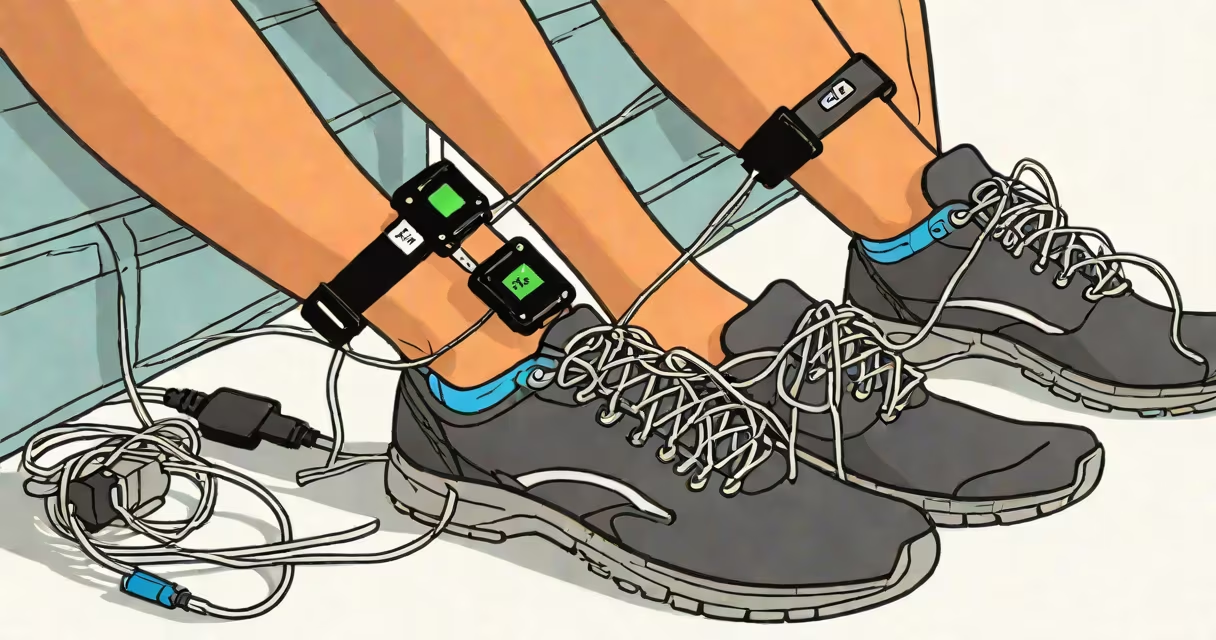
An ankle monitor is a wearable electronic device used to track the location and movement of individuals under court-ordered supervision, typically as an alternative to incarceration. These devices use GPS, cellular, and sometimes Bluetooth technology to report real-time location data to law enforcement or probation agencies.
The primary purpose of an ankle monitor is to enforce compliance with legal conditions such as curfews, exclusion zones, or geographic restrictions. A person wearing one may be required to stay within a designated area, such as their home or a specific neighborhood, during certain hours. Violations trigger alerts sent to supervising authorities.
According to the U.S. Department of Justice, electronic monitoring is used in over 150,000 cases annually across state and federal systems. Devices are often mandated for individuals convicted of misdemeanors, released on bail, or serving probation. The technology supports both public safety and reduced prison populations.
Ankle monitors function through a combination of hardware and software. The device itself is a small, waterproof unit worn around the ankle, secured with a tamper-resistant strap. Inside, it contains a GPS receiver, a cellular modem, and a battery. Some models include motion sensors and temperature detectors.
Data is transmitted every 15 to 60 minutes to a central monitoring station. The system checks whether the wearer is within approved boundaries. If the device detects movement outside those limits, an alert is sent to the supervising agency. For example, if someone on house arrest leaves their residence between 10 PM and 6 AM, the system flags the event.
Monitors also detect attempts to remove or damage the device. If the wearer tries to take it off, the system sends an immediate alarm. The device includes a unique ID and is paired with a specific individual through a registration process. This ensures accountability and prevents substitution.
There are three main categories of ankle monitors based on tracking method:
| Type | Tracking Method | Use Case | Accuracy |
|---|---|---|---|
| GPS-only | Global Positioning System | Outdoor tracking, long-range monitoring | Within 3-5 meters |
| Cellular triangulation | Signal strength from cell towers | Indoor use, urban areas | 10-100 meters |
| Hybrid (GPS + cellular) | Combines both methods | Most common; high reliability | 1-3 meters indoors, 3-5 meters outdoors |
Some monitors also support Bluetooth-based proximity checking. This allows the system to verify that the wearer remains within range of a designated home base station. If the person walks away from the house, the monitor logs the departure.
A lesser-known feature is audio verification. Certain systems require the wearer to speak a random phrase into the device at scheduled intervals. This confirms the person is physically present and not using a dummy or duplicate device.
Ankle monitors are most frequently used in three scenarios: pretrial release, probation, and post-release supervision. In pretrial settings, courts may allow defendants to remain free while awaiting trial if they agree to wear a monitor. This reduces jail overcrowding and maintains employment.
For probation, monitors ensure compliance with court orders. A study by the National Institute of Justice found that 82% of monitored probationers adhered to curfew requirements, compared to 57% without monitoring. The presence of the device acts as a deterrent to violating conditions.
After release from prison, some states mandate ankle monitoring for sex offenders or individuals convicted of violent crimes. California's Sex Offender Management Board requires GPS monitoring for Level 3 offenders for up to 10 years. The goal is to prevent reoffending and enable community reintegration under oversight.
One widespread misunderstanding is that ankle monitors can track a person's every movement in real time. In reality, updates occur every 15 to 60 minutes, depending on the model and service plan. There is a delay between actual movement and system notification.
Another misconception is that the device can detect alcohol or drug use. While some programs combine ankle monitors with breathalyzers or urine testing, the monitor itself does not detect substances. The device only tracks location and physical presence.
A less obvious point: ankle monitors are not always worn continuously. Some programs allow temporary removal for medical appointments or travel with prior approval. However, unauthorized removal results in immediate reporting and potential arrest.
In 2022, a man in Texas was charged with misdemeanor theft and granted pretrial release with a GPS ankle monitor. His court order required him to remain within a 1-mile radius of his home between 8 PM and 6 AM. The system recorded his movements via satellite data.
On the third night, the system flagged a violation: he had left his residence at 9:14 PM and walked 1.3 miles to a convenience store. The alert reached the probation officer within 12 minutes. Upon investigation, the man admitted he went to buy snacks and apologized. He was not arrested but received a warning and additional counseling.
This case illustrates how ankle monitors serve as tools for accountability, not punishment. They provide objective data that supports fair decision-making in the justice system.
The use of ankle monitors raises privacy concerns. The American Civil Liberties Union (ACLU) has challenged the practice in several states, arguing that continuous surveillance infringes on constitutional rights. In 2021, the ACLU filed a lawsuit against a county in Florida over mandatory monitoring for low-level offenses, citing disproportionate impact on marginalized communities.
However, courts have upheld the legality of monitored release in many cases. The Supreme Court ruled in *United States v. Jones* (2012) that GPS tracking without a warrant constitutes a search under the Fourth Amendment. As a result, authorities must obtain judicial authorization before installing a monitor in most cases.
Despite debates, electronic monitoring remains widely adopted. The Bureau of Justice Statistics reports that over 2 million people were under some form of electronic supervision in 2023, with ankle monitors being the most common device.
Understanding ankle monitor meaning involves recognizing it as a tool of supervision, not punishment. It enables alternatives to incarceration, supports rehabilitation, and enhances public safety through data-driven oversight. The technology is not perfect, but when applied fairly and transparently, it serves a clear role in modern criminal justice.